In the world of Asian pastry production, few ingredients are as culturally significant—and technically demanding—as mung bean paste and red bean paste. For manufacturers preparing mooncakes, traditional bakery items, and modern fusion pastries, selecting the right filling is not simply a matter of flavor. Texture consistency, sweetness balance, oil absorption, and shelf life stability all play critical roles. Mung Bean Paste & Red Bean Paste: Traditional Filling Ingredients for Mooncake & Bakery are more than heritage components; they are precision-engineered ingredients that determine product quality and consumer acceptance.
As seasonal demand for mooncakes and premium baked goods continues to grow across Asia and international markets, bakery producers must understand how these traditional pastes function within large-scale production systems. From lotus-style mooncakes to steamed buns and baked pastries, the technical properties of bean paste fillings influence everything from shaping efficiency to finished mouthfeel.
This article explores the characteristics, processing considerations, and industrial applications of mung bean paste and red bean paste in modern bakery environments.
Understanding Mung Bean Paste & Red Bean Paste: Traditional Filling Ingredients for Mooncake & Bakery
At their core, mung bean paste and red bean paste are legume-based fillings produced through cooking, grinding, sweetening, and controlled moisture reduction. However, in commercial settings, they are formulated with specific technical parameters to ensure repeatable performance.
Mung Bean Paste: Smooth Texture and Neutral Profile
Mung bean paste is typically made from peeled mung beans that are boiled, mashed, sweetened, and cooked into a dense paste. In mooncake production, mung bean paste is often chosen for its smooth, fine texture and mild flavor profile.
Key characteristics include:
Fine, homogenous consistency
Light yellow color
Moderate sweetness
Low fiber residue
Because the hull is removed before processing, mung bean paste offers a refined mouthfeel that is ideal for baked mooncakes and delicate pastries. It can also serve as a base for flavored fillings, such as pandan, durian, or chocolate-infused variations.
Red Bean Paste: Distinct Flavor and Traditional Appeal
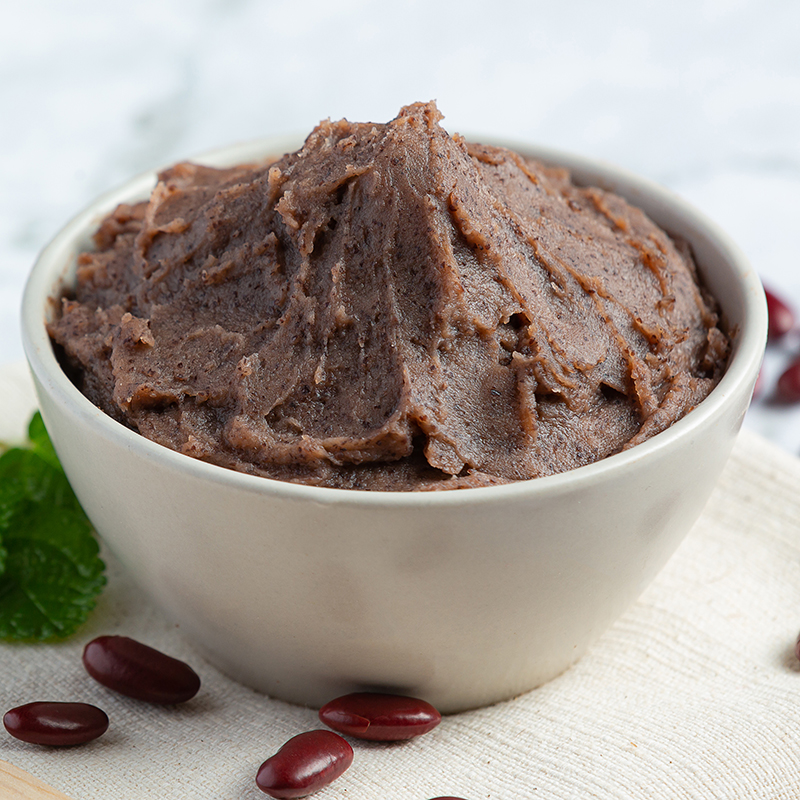
Red bean paste, typically made from adzuki beans, retains more of the bean’s natural character. Depending on processing style, it may be smooth or slightly coarse.
Characteristics include:
Deep reddish-brown color
Naturally sweet, earthy flavor
Slightly higher fiber content
Rich traditional profile
In many Asian markets, red bean paste is associated with authenticity and heritage bakery products. It is widely used in mooncakes, steamed buns, sesame balls, and baked breads.
Both fillings fall under the broader category of sweet bean paste and are integral to traditional pastry manufacturing across East and Southeast Asia.
Functional Role in Mooncake Production
When evaluating Mung Bean Paste & Red Bean Paste: Traditional Filling Ingredients for Mooncake & Bakery, mooncake application remains one of the most technically demanding contexts.
Texture and Moldability
Mooncakes require fillings that can be shaped into precise spheres before being wrapped with dough. If the paste is too soft, it may deform during wrapping. If too dry, it may crack under pressure.
Optimal filling texture should:
Maintain structural integrity during molding
Resist oil separation
Provide smooth cutting after baking
Industrial bean pastes are therefore produced with controlled moisture content and fat ratios to ensure consistent machinability.
Oil Content and Mouthfeel
Many commercial formulations incorporate vegetable oil to enhance smoothness and reduce dryness. The oil level directly influences:
Mouthfeel richness
Shelf life stability
Resistance to staling
An imbalance can lead to surface oil leakage or overly dense texture.
Baking Stability
Mooncakes undergo baking at moderate temperatures. Fillings must withstand heat exposure without:
Excessive expansion
Moisture migration
Surface cracking
Properly formulated mung bean paste and red bean paste maintain stable internal moisture levels, ensuring product integrity throughout baking and cooling phases.
Industrial Processing and Quality Control
For large-scale manufacturers, Mung Bean Paste & Red Bean Paste: Traditional Filling Ingredients for Mooncake & Bakery must meet strict quality control standards.
Raw Material Selection
Bean quality significantly affects final paste performance. Important parameters include:
Uniform bean size
Cleanliness and absence of defects
Controlled moisture content
Consistent starch composition
Variability in raw beans can alter viscosity and sweetness perception.
Cooking and Refining Process
The production process typically involves:
Soaking beans
Controlled boiling
Grinding into puree
Filtration (for smooth texture variants)
Sugar incorporation
Concentration through heating
Precise temperature and agitation control prevent scorching and uneven caramelization.
Moisture Management and Shelf Life
Moisture content influences microbial stability and storage life. Industrial fillings are concentrated to reduce water activity while preserving spreadability.
Proper packaging and hygienic handling further support extended shelf life under ambient conditions.
Industrial production of mung bean paste and red bean paste should follow internationally recognized food safety frameworks such as the Codex Alimentarius General Principles of Food Hygiene to ensure microbiological stability and safe distribution.
Applications Beyond Mooncakes
While mooncakes remain a flagship application, Mung Bean Paste & Red Bean Paste: Traditional Filling Ingredients for Mooncake & Bakery extend far beyond seasonal production.
Bakery and Bread Fillings
In baked buns and sweet breads, bean paste must tolerate fermentation processes. It should:
Resist moisture migration into dough
Maintain defined filling boundaries
Avoid excessive sweetness
Red bean paste is commonly used in Asian-style soft breads, while mung bean paste can serve as a neutral base for flavored variants.
Confectionery and Snack Products
Bean paste fillings are also used in:
Mochi and glutinous rice cakes
Pastry rolls
Layered cakes
Fusion desserts
Consistency and flavor balance are essential for consumer satisfaction across product categories.
Modern Fusion Applications
As consumer preferences evolve, manufacturers experiment with hybrid concepts—combining traditional bean pastes with chocolate, nuts, or fruit inclusions. Mung bean paste, due to its mild taste, often functions as a versatile base for innovation.
Producers seeking reliable ingredient sources often explore established suppliers through platforms such as CocoaNusa’s official website (https://cocoanusa.com/) to evaluate available filling solutions for diverse bakery needs.
Sensory Expectations and Consumer Trends
Understanding market expectations is essential when working with Mung Bean Paste & Red Bean Paste: Traditional Filling Ingredients for Mooncake & Bakery.
Authenticity vs. Modernization
Consumers increasingly seek a balance between tradition and innovation. While classic red bean mooncakes remain popular, younger demographics show interest in:
Reduced sugar variants
Smoother textures
Creative flavor infusions
Manufacturers must align formulation strategies with shifting taste profiles.
Sugar Reduction Considerations
As health awareness grows, sugar levels in bean pastes may be adjusted. However, reducing sugar affects:
Water activity
Texture firmness
Microbial stability
Careful reformulation ensures that shelf life and mouthfeel remain uncompromised.
Export Market Requirements
For international distribution, fillings must comply with regulatory standards regarding preservatives, labeling, and ingredient declarations. Stability during shipping and storage under varying climate conditions is also critical.
Technical Comparison: Mung Bean Paste vs. Red Bean Paste
From a functional standpoint, mung bean paste and red bean paste offer distinct advantages.
Texture
Mung bean paste: smoother, finer, ideal for premium baked mooncakes.
Red bean paste: slightly grainier, suitable for traditional applications.
Flavor Profile
Mung bean paste: mild and adaptable.
Red bean paste: characteristic earthy sweetness.
Visual Appeal
Mung bean paste: light yellow tone, adaptable with natural coloring.
Red bean paste: naturally deep red-brown.
The choice ultimately depends on target product positioning, regional preference, and technical requirements.
Conclusion: Choosing the Right Filling for Sustainable Bakery Success
In today’s competitive bakery industry, ingredient selection directly influences product performance and brand reputation. Mung Bean Paste & Red Bean Paste: Traditional Filling Ingredients for Mooncake & Bakery represent more than cultural staples—they are carefully engineered components that determine texture consistency, baking stability, and shelf life reliability.
By understanding differences in moisture management, oil content, and gel structure, manufacturers can optimize production efficiency and consumer satisfaction. Whether developing classic mooncakes or contemporary fusion pastries, selecting high-quality bean paste fillings ensures consistent results across seasonal production peaks and year-round bakery operations.
For businesses seeking dependable solutions, evaluating technical specifications and supplier capabilities remains a prudent step toward long-term product stability and market competitiveness.