Table of Contents
- Definitions and Processing
- Flavor and Color
- Nutritional Differences
- Uses in Recipes
- Cost and Availability
- Popular Brands and Quality
- Storage and Shelf Life
- Health Perceptions in the Wellness Community
- Impact of Processing on Flavor and Health
- Environmental Considerations
- Cultural Significance
- Recipes Featuring Cocoa and Cacao
- Expert Opinions and Research Studies
- Conclusion
Many people ask you to consider how processing shapes taste and nutrition when comparing cocoa powder vs cacao powder differences; you should know that fermentation, roasting, and alkalization create distinct profiles. cocoa powder vs cacao powder differences influence flavor intensity, antioxidant levels, and fat content, so you can choose based on use and health goals. understanding cocoa powder vs cacao powder differences helps you evaluate labels and preparation methods, and practical testing reveals the best fit for your recipes given cocoa powder vs cacao powder differences.
Definitions and Processing
When you parse the basics, cacao refers to minimally processed nibs or powders from fermented beans, while cocoa typically denotes roasted, pressed, and sometimes alkalized powder; these processing steps determine flavor, fat content and phenolic retention. Fermentation often lasts 2–7 days and roasting ranges roughly 110–140°C, with press cakes retaining about 10–24% fat after butter extraction. The phrase cocoa powder vs cacao powder differences shows up in how those steps alter pH, color and measurable flavanol levels.
Sources of Powder
You’ll find most commercial powders derive from three main varieties: Forastero (≈80% global supply), Criollo and Trinitario. West Africa (Ivory Coast, Ghana) supplies bulk, often destined for high-heat roast and pressing; Ecuador and Peru produce more fine-flavor beans used by craft grinders. Looking at cocoa powder vs cacao powder differences, origin affects polyphenol profiles and tannin-driven bitterness, so your source selection changes both taste and nutritional markers.
Processing Techniques
Producers typically follow fermentation, drying, roasting, winnowing, grinding and pressing; some add alkalization (Dutching) after pressing. You should note fermentation length and roast temperature dictate volatile development, while pressing removes most cocoa butter to make powder. In discussions of cocoa powder vs cacao powder differences, the presence or absence of alkalization and roast intensity is often the deciding factor for flavor, solubility and antioxidant levels.
By the numbers: Dutching can raise powder pH from ~5 to 6–8 and is linked to substantial flavanol losses—studies report reductions up to around 60% compared with natural processing. You can expect press-cake fat reductions to the 10–24% range, and lighter roasting (≤120°C) preserves more heat-sensitive polyphenols. Industrial batch sizes and time-at-temperature also explain why artisanal “raw” cacao powders retain higher measured flavanols than bulk cocoa mills.
Differences in Production Methods
Large-scale manufacturers often roast hotter and use hydraulic pressing plus alkalization to standardize color and taste, whereas bean-to-bar makers may roast lower, cold-press and skip Dutching to preserve complexity. If you compare cocoa powder vs cacao powder differences, production intent—consistency for mass baking versus flavor retention for specialty bars—maps directly to method choices and final nutritional assays.
Practically, these method choices alter your baking and health outcomes: natural, non-alkalized powders (pH ~5–6) react with baking soda, giving leavening lift, while Dutch-processed powders (pH ~7–8) don’t. You can also expect darker, milder-flavored Dutch powders with lower measured flavanols, which highlights how cocoa powder vs cacao powder differences matter when you select for either culinary function or antioxidant content.
Flavor and Color
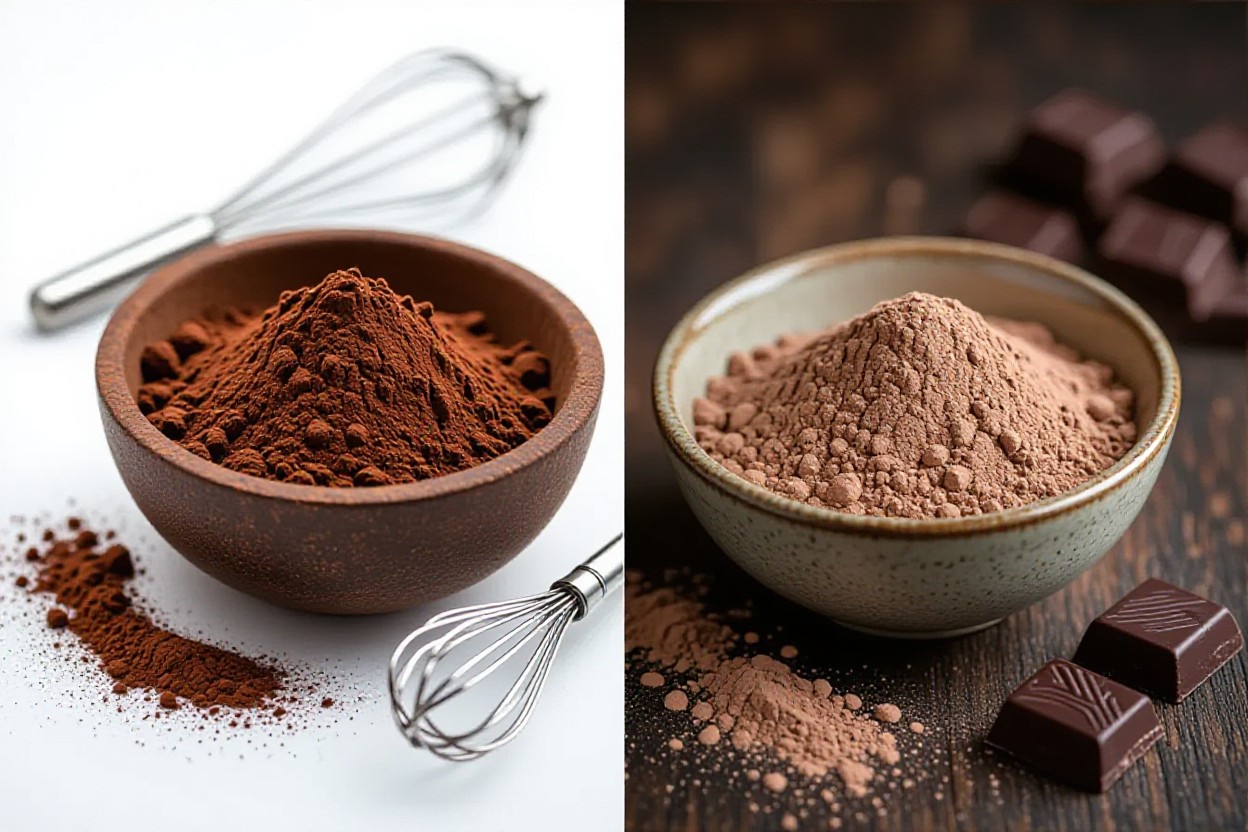
You can explore how processing shifts aroma and hue in more depth in this guide Cacao Powder vs Cocoa: Key Differences & Health Benefits, since cocoa powder vs cacao powder differences show up most in taste and appearance—from acidity to pigment stability—affecting how you use each in recipes and formulations.
Taste Profiles
You’ll notice raw cacao often delivers brighter, fruity notes and more bitter tannins, while alkalized cocoa tends toward mellow, uniform chocolateiness; studies report polyphenol retention can be 20–60% higher in minimally processed cacao, so cocoa powder vs cacao powder differences influence bitterness, astringency, and perceived sweetness in 70–90% dark chocolate blends.
Color Comparison
You’ll see cacao powders range from deep reddish-brown to almost black, while natural cocoa is lighter and Dutch-processed cocoa becomes very dark brown after alkalization; pH shifts from ~5 (natural) to 7–8 (Dutch) drive these cocoa powder vs cacao powder differences and change how color holds in milk versus water-based recipes.
Color: Quick Comparison
| Cacao Powder | Processed/Dutch Cocoa |
|---|---|
| Deep, reddish to dark brown | Uniform dark brown to near-black |
| Lower pH (~5–6) | Higher pH (~7–8) from alkalization |
| Color varies by bean and roast | More predictable color for commercial use |
Additional detail: you’ll find that bean origin and roast (e.g., 120–140°C roast times) create subtle red or floral hues in cacao, while alkalization neutralizes anthocyanins and yields the stable, darker pigments favored in confectionery; these cocoa powder vs cacao powder differences affect visual appeal in icings and beverages.
Color Drivers
| Cause | Result |
|---|---|
| Alkalization | Darkens color, raises pH, reduces acidity |
| Bean origin/fermentation | Reddish or floral undertones in natural cacao |
Influence of Processing on Flavor
You should note that roasting temperature and alkalization alter volatile compounds: light roast preserves fruity esters, heavy roast increases Maillard-derived caramel notes, and Dutch process lowers perceived acidity; overall cocoa powder vs cacao powder differences stem from these steps, with flavor shifts measurable in sensory panels and GC-MS profiles.
More info: you can quantify change—polyphenol levels may drop 10–50% with intense roasting and up to 60% with combined high heat plus alkalization—so cocoa powder vs cacao powder differences are not just sensory but biochemical, impacting antioxidant assays and how you balance recipes for bitterness, acidity, and mouthfeel.
Nutritional Differences
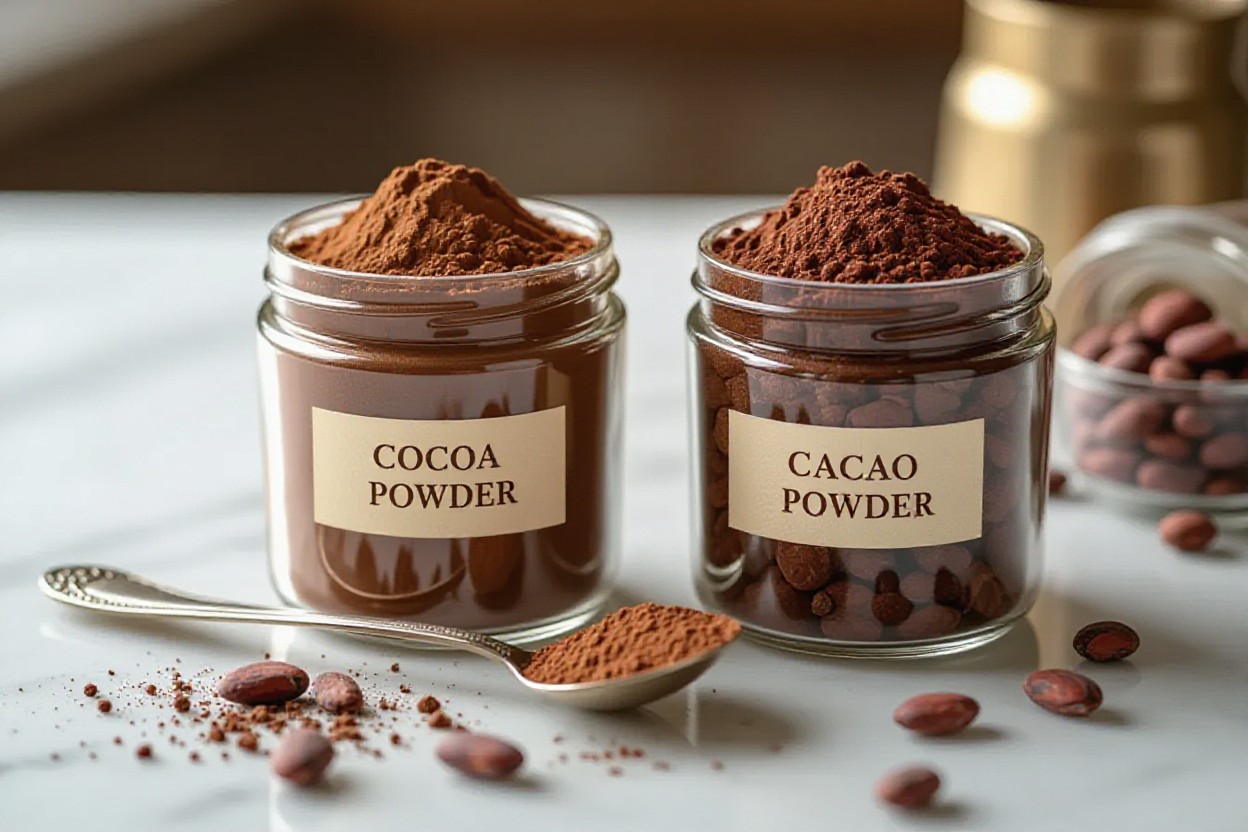
When you compare cocoa powder vs cacao powder differences, you’ll notice processing shifts both macro- and micronutrients: cacao tends to retain more intact polyphenols and slightly higher fat-soluble components, while many commercial cocoa powders (especially alkalized/Dutch-processed) show reduced flavanol counts and altered mineral bioavailability, so your choice affects antioxidant intake and the nutrient profile of recipes and supplements.
Antioxidant Levels
You’ll see the biggest divergence in antioxidant levels when looking at cocoa powder vs cacao powder differences: raw cacao often delivers several-fold higher flavanol content, whereas Dutch-processing can cut flavanols by up to ~60–90% in some batches, so a tablespoon of unprocessed cacao can provide markedly more epicatechin and catechin than the same amount of alkalized cocoa.
Mineral Content
Your mineral supply differs more subtly across cocoa powder vs cacao powder differences; both supply magnesium, iron, copper and manganese, with typical ranges around 100–500 mg magnesium and 4–12 mg iron per 100 g depending on origin and processing, meaning a 20–30 g serving can contribute a meaningful fraction of your daily needs.
Digging deeper, you should consider soil and fermentation: cacao from volcanic soils often shows higher copper and magnesium, and longer fermentation can redistribute mineral availability. You’ll also face bioavailability limits—non-heme iron in cacao is less absorbable without vitamin C, so combining your powder with fruit or citrus can improve iron uptake and maximize the mineral advantages in cocoa powder vs cacao powder differences.
Health Benefits and Claims
When evaluating health claims, you should note that studies showing cardiovascular or cognitive benefits usually use high-flavanol extracts or unprocessed cacao, so cocoa powder vs cacao powder differences matter: the evidence supports benefits tied to flavanol dose (often 200–500 mg/day in trials), not simply the label on your baking cocoa.
For more context, you can compare product labels and processing notes: manufacturers sometimes list “non-alkalized” or provide flavanol mg, which helps you match trial doses; otherwise, your homemade or single-origin cacao products are likelier to deliver clinically relevant compounds than many mass-market alkalized cocoa powders when assessing cocoa powder vs cacao powder differences.
Uses in Recipes
Interchangeability in Cooking
You can often swap powders 1:1, but expect differences: cacao will give a brighter, more bitter chocolate note while cocoa (especially Dutch-processed) yields a mellower, rounder flavor and darker color. In recipes like brownies, cookies, and hot chocolate the choice affects sweetness and acidity; for example, using natural cocoa with baking soda boosts lift, whereas Dutch-process cocoa pairs better with baking powder. The cocoa powder vs cacao powder differences show up most in flavor intensity, color, and reactions with leaveners.
Best Applications for Each Powder
You’ll prefer cacao powder for raw desserts, smoothies, energy balls, and uncooked ganaches where its floral, complex notes and higher antioxidant profile shine; try it in overnight oats or a no-bake cacao fudge. Conversely, use cocoa powder for cakes, classic brownies, sauces, and hot cocoa where its smoother, less acidic character and predictable color work best. These practical choices reflect common cocoa powder vs cacao powder differences in flavor and processing.
For more precision, use natural (non-Dutch) cocoa when a recipe calls for baking soda—it contributes acidity and lift—while Dutch-processed cocoa suits recipes relying on baking powder or neutral pH. In your tests, swap in cacao for cold preparations to preserve volatile aromatics; switch to cocoa for baked goods to maintain consistent crumb and color. The cocoa powder vs cacao powder differences influence both technique and final texture.
Adjustments for Substitution
When substituting, start 1:1 but tweak sweetness and fat: cacao tends to taste more bitter, so increase sugar by about 5–20% or add 1 tablespoon of oil or butter per cup if the batter seems dry. Also watch acidity—if a recipe depends on natural cocoa’s acidity, add 1/4 teaspoon cream of tartar or use baking powder if you swap in Dutch-process cocoa. Practical adjustments mitigate the common cocoa powder vs cacao powder differences.
Test on small batches first: if using cacao and the result is too tannic, reduce powder by 10–15% or fold in more dairy/fat; if using Dutch-process cocoa in a soda-based cake, swap baking soda for 1–1.25 teaspoons baking powder per 1/2 teaspoon soda. These targeted tweaks let you preserve rise, mouthfeel, and color while accounting for cocoa powder vs cacao powder differences.
Cost and Availability
Price Comparison
You’ll typically pay less for processed cocoa powder than for raw cacao powder, reflecting scale and processing choices. Natural and Dutch-processed cocoa often retail at $4–$8 per pound, while raw or single-origin cacao powders commonly range $10–$20 per pound; organic or fair-trade labels can add 20–50% to those prices. When weighing cocoa powder vs cacao powder differences, cost is one of the clearest immediate trade-offs affecting your pantry choices.
Price snapshot
| Product | Typical Retail Price / Availability |
|---|---|
| Natural/Dutch-processed cocoa powder | $4–$8 / Widely available in supermarkets and bulk retailers |
| Raw cacao powder (bulk or branded) | $10–$20 / Specialty stores, online retailers, health-food aisles |
| Organic / Fair-trade variants | +20–50% premium / Often labeled and sold through specialty channels |
Sourcing and Education
You should check origin labels and certifications to understand price drivers and quality signals; beans from Ecuador, Peru, or Dominican Republic often command higher prices versus bulk West African cocoa from Ghana or Ivory Coast. Knowing cocoa powder vs cacao powder differences helps you interpret terms like “unroasted,” “Dutch-processed,” or “single-origin” when deciding what to buy.
You can learn more by inspecting packaging: look for harvest year, processing notes (alkalized vs natural), and certifiers such as Fairtrade or Rainforest Alliance. Producers like small cooperatives in Peru often market traceability and lab tests for polyphenol retention; such transparency typically increases cost but gives you clearer insight into flavor and nutrition trade-offs tied to cocoa powder vs cacao powder differences.
Market Trends and Consumer Preferences
You’ll notice mainstream demand favors affordable cocoa blends for baking, while health-conscious and gourmet buyers seek raw cacao, single-origin beans, and sustainability claims. This bifurcation highlights how cocoa powder vs cacao powder differences influence purchasing patterns across price tiers and retailers.
Retail data and brand reports show growth in premium cacao lines and chocolate made from traceable beans; specialty brands often report double-digit year-over-year growth in online sales. Meanwhile, supermarket private labels keep entry-level cocoa prices competitive, so your choice between cocoa powder vs cacao powder differences will often depend on whether you prioritize cost, flavor nuance, or ethical sourcing.
Popular Brands and Quality
You’ll notice brands differ widely when you compare cocoa powder vs cacao powder differences; Valrhona (est. 1922) and Guittard emphasize single‑origin or small‑batch processing, while mainstream names like Ghirardelli and Hershey’s scale alkalized cocoa. For example, Taza (stone‑ground, est. 2005) preserves more fat and texture, and raw‑focused companies such as Navitas or Sunfood market minimally processed cacao. When you shop, check origin labels, processing terms (Dutch‑processed vs natural), and whether the brand discloses roasting temperature or bean source.
Leading Brands in Cocoa Products
You’ll find clear examples for cocoa powder vs cacao powder differences across brands: mainstream cocoa (Hershey’s, Ghirardelli) often targets baking consistency, artisan firms (Valrhona, Guittard) offer single‑origin or couvertures, and raw‑centric brands (Navitas, Sunfood) sell unroasted cacao powder. For instance, Taza’s stone‑ground approach yields a gritty, high‑fat profile unlike dutch‑processed powders used in classic American recipes, so you can choose based on texture, flavor intensity, and ingredient transparency.
Quality Indicators for Cacao and Cocoa
You should judge quality by origin, roast profile, and processing: single‑origin labels and disclosed roast temperatures indicate traceability, while “Dutch‑processed” signifies alkalization that alters flavor and pH (often up to ~7–8). For cocoa powder vs cacao powder differences, higher flavanol counts and minimal heat exposure favor cacao, and bean size plus fermentation notes on packaging are quick proxies for quality.
You can dig deeper by checking lab or third‑party tests; some specialty brands publish HPLC flavanol numbers or mycotoxin screenings. For example, laboratory reports that show lower roast temperatures correlate with higher measured polyphenols, and listings of cooperative names or farm GPS coordinates offer stronger provenance than generic “blend” claims—use those details to assess real cocoa powder vs cacao powder differences for nutrition and flavor.
Certification and Ethical Sourcing
You’ll want to weigh certifications when assessing cocoa powder vs cacao powder differences: USDA Organic addresses pesticides, Fairtrade targets farmer premiums, and Rainforest Alliance focuses on biodiversity and farm management. Many brands combine certifications—organic plus Fairtrade or Rainforest Alliance—to signal multiple commitments, and you can verify labels through certifier databases online before buying.
You should also look for transparency beyond logos: Direct‑trade statements, origin charts, and published price premiums indicate deeper sourcing ethics. For example, brands that publish the price paid to cooperatives or share impact reports provide more verifiable evidence of ethical sourcing than a lone certification badge, helping you align purchases with your priorities on sustainability and farmer income.
Storage and Shelf Life
You should store powders in airtight, opaque containers away from heat, light, and strong odors; fluctuations in temperature or humidity accelerate flavor loss and fat oxidation. For cocoa powder vs cacao powder differences, processing (alkalization, roasting) and fat level change how quickly aroma and antioxidants degrade, so aim for consistent storage below 20°C and relative humidity under 65% to keep both powders performing in recipes.
Best Practices for Storing Powders
Use resealable, vacuum-capable bags or glass jars with tight lids and label them with opened dates, and you should keep containers on cool pantry shelves rather than above stoves. You may refrigerate high-fat raw cacao if sealed against moisture; otherwise refrigeration can cause condensation. Following these steps helps maintain flavor and texture when assessing cocoa powder vs cacao powder differences in baking and beverages.
Impact of Storage Conditions on Quality
Exposure to moisture leads to clumps and potential mold risk, while oxygen and light promote fat rancidity and color dulling; you will notice stale, cardboard, or sour off-notes before structural failures. For cocoa powder vs cacao powder differences, raw cacao’s higher fat typically shows rancidity sooner than defatted or Dutch-processed cocoa, so perform quick smell-and-taste checks on older containers.
You can quantify the effect: at 25°C and 60% RH, unsealed cacao loses roughly 15–25% of volatile aroma compounds within three months, whereas lower-fat cocoa loses closer to 8–12% under identical conditions. Industry trials show nitrogen-flushed packaging and storage at 10–12°C can extend optimal sensory life from about 9 months to 16–20 months for natural cacao. Given these numbers, monitoring aroma, color, and mouthfeel is the most practical quality check when weighing cocoa powder vs cacao powder differences for longer storage.
Shelf Life Comparison between Cocoa and Cacao
Unopened, low-fat cocoa typically stays best for 24–36 months, while raw cacao with higher fat content is best within 12–24 months; once opened, expect about 6–12 months for cocoa and 4–8 months for cacao under ideal storage. For cocoa powder vs cacao powder differences, fat content and processing (alkalization, roasting) are the main drivers of these shelf-life ranges.
Shelf Life at a Glance
| Attribute | Cocoa vs Cacao Comparison |
|---|---|
| Unopened shelf life | Cocoa: 24–36 months; Cacao: 12–24 months |
| Opened shelf life | Cocoa: 6–12 months; Cacao: 4–8 months (if sealed) |
| Primary risk | Cocoa: flavor flattening; Cacao: rancidity from fats |
| Best storage | Airtight, cool (≤20°C), dry, dark; nitrogen-flush extends life |
| Signs of spoilage | Off-odors, stale taste, color change, clumping |
You can extend usable life by buying smaller quantities, choosing low-fat cocoa for long-term pantry storage, or refrigerated sealed storage for raw cacao; controlled-case studies show keeping powders at ≤12°C with low humidity roughly doubles sensory shelf life. Apply sensory checks before use, since cocoa powder vs cacao powder differences determine whether you’ll notice muted chocolate notes (cocoa) or fatty rancidity (cacao) first.
Health Perceptions in the Wellness Community
Cacao as a Superfood
Packed with flavanols, raw cacao often contains 2–3 times more polyphenols than alkalized cocoa, which is why you’ll see it labeled a superfood; some trials link roughly 200 mg/day of cocoa flavanols to modest blood pressure and endothelial improvements. Because fermentation, roasting, and Dutch-processing lower those compounds, examining cocoa powder vs cacao powder differences helps you identify products that actually deliver antioxidant benefits.
Cocoa’s Role in Balanced Diets
When you want chocolate flavor without excess sugar, natural (non-alkalized) cocoa or a small portion of 70% dark chocolate fits well: aim for one to two tablespoons of powder or a 20–30 g square to balance antioxidants and calories. While you enjoy flavor, use the cocoa powder vs cacao powder differences to choose less-processed options and limit added sugars.
Similarly, dairy can blunt flavanol absorption in some studies, so you might prefer water or plant milks to maximize benefit; baking and high heat also degrade polyphenols, so stir cocoa in after cooking when possible. Look for label cues—’non-alkalized’ or ‘natural’—and prioritize servings that realistically deliver antioxidant intake, since those practical steps clarify cocoa powder vs cacao powder differences for everyday use.
Misconceptions and Marketing Claims
Marketing often promotes ‘raw cacao’ as transformative while many products are actually roasted or alkalized, creating hype that misleads you; assertions about dramatic mood, detox, or mineral benefits usually ignore serving size and processing. Inspecting labels and understanding cocoa powder vs cacao powder differences prevents you from overvaluing buzzwords.
Watch for unregulated terms like ‘cold-pressed’ or ‘raw’ that can be applied loosely; you can verify higher flavanol potential by choosing non-alkalized products, though brands rarely list flavanol mg. If cardiovascular effects are your aim, target products and servings that approximate the ~200 mg/day flavanol range shown in trials—this evidence-based threshold helps you separate true benefits from marketing in the cocoa powder vs cacao powder differences conversation.
Impact of Processing on Flavor and Health
Processing shifts both taste and phytonutrient profiles, so when you compare cocoa powder vs cacao powder differences you notice roasted beans yield deeper, toasted notes while raw cacao tastes brighter and more bitter; for a practical primer on these contrasts see Cocoa vs. Cacao vs. Dutch-Processed. You’ll find that processing choices trade off flavanol retention for smoother flavor, directly affecting how you use each powder in recipes and wellness routines.
Effects of Roasting on Nutritional Value
Roasting reduces moisture and transforms flavor but also alters flavanol levels: typical bean roasting can lower catechins and epicatechins by roughly 10–40% depending on temperature and duration. If you’re aiming for higher polyphenol intake, you’ll prefer less intense roasting or minimally processed cacao; meanwhile, stronger roast profiles give you richer chocolate notes and more consistent baking behavior, which explains many cocoa powder vs cacao powder differences you taste and measure.
Dutch Processing and Its Implications
Dutch processing (alkalization) neutralizes acidity, darkens color, and smooths bitterness, yet it can decrease measurable polyphenols by about 20–60% and raise pH into the 6–8 range, so you’ll notice both milder flavor and diminished antioxidant assays. These chemical changes account for many cocoa powder vs cacao powder differences in both culinary performance and reported health markers.
Because alkalization modifies particle surface and solubility, you’ll see Dutch-processed powders dissolve more uniformly in milk-based drinks and produce milder ganaches, but the trade-off is lower flavanol bioactivity in assays; if you track intake for health, compare lab-tested flavanol content on specialty labels rather than relying solely on the “Dutch” or “natural” term.
Consumer Awareness of Processing Methods
You should read labels closely: terms like “raw cacao,” “natural cocoa,” and “Dutch-processed” signal different treatments but don’t quantify flavanols or roasting degree. Retail packaging rarely lists processing temperatures or flavanol counts, so you’ll need to rely on brands that publish lab data or third-party testing to assess the real cocoa powder vs cacao powder differences that matter for your health goals.
When shopping, prioritize transparency—look for COA (Certificate of Analysis) links, single-origin notes, or processing descriptions; if a brand cites specific flavanol mg/g or post-processing pH you’ll be able to compare options objectively and align your purchases with whether you value flavor intensity, baking properties, or antioxidant content in cocoa powder vs cacao powder differences.
Environmental Considerations
When you weigh cocoa powder vs cacao powder differences, consider that roughly 60% of global cocoa comes from Ivory Coast and Ghana, and the sector involves approximately 5 million smallholder farmers; production choices therefore drive large-scale land use and supply-chain pressures that affect climate, livelihoods, and biodiversity across West Africa and beyond.
Sustainable Sourcing Practices
You should look for traceability, agroforestry adoption, and third‑party certifications—Rainforest Alliance, Fairtrade, and direct‑trade programs—as concrete signals; buyers running traceability pilots since 2019 have started mapping farms to reduce deforestation risk, and sourcing policies that favor shade-grown systems often improve soil health and long‑term yields when comparing cocoa powder vs cacao powder differences.
Impact of Production on Ecosystems
You see deforestation, habitat fragmentation, and soil degradation where cocoa expands into forested areas; satellite analyses repeatedly flag Ghana and Ivory Coast as hotspots for cocoa‑linked forest loss, and monoculture plantings reduce native species, altering water cycles and raising erosion risk—factors you must factor into how you evaluate cocoa powder vs cacao powder differences.
You can mitigate those impacts with agroforestry: shade trees boost canopy cover, support pollinators and birds, and increase carbon storage relative to full-sun plantations; pilot projects in West Africa show mixed shade systems improve biodiversity metrics and farmer resilience, making the environmental side of cocoa powder vs cacao powder differences more favorable when producers adopt these systems.
The Role of Fair Trade
You benefit by choosing Fairtrade and similar labels because they set a minimum price and add a community premium that funds schools, clinics, and farmer training; those mechanisms aim to stabilize incomes and incentivize sustainable practices, which directly influences the environmental outcomes tied to cocoa powder vs cacao powder differences in supply chains.
You should also note limits: certifications cover only a portion of volume and can vary in enforcement, while policy moves like the 2019 Living Income Differential of $400/tonne for Ghana and Ivory Coast aim to raise farm gate prices across the board; combining premiums, LID, and landscape-level conservation offers a more robust path to addressing the social and ecological issues behind cocoa powder vs cacao powder differences.
Cultural Significance
Historical Uses of Cacao and Cocoa
You encounter cacao first in Mesoamerican rites: the Maya and Aztecs drank bitter, spiced cacao and even used beans as currency, while by 1828 Coenraad van Houten‘s press and alkalizing method transformed consumption. As you trace cocoa powder vs cacao powder differences, note that fermentation, roasting and Dutch processing shifted flavor, shelf life and social use from ceremonial beverage to global commodity.
Variations in Cocoa Consumption Around the World
In Europe you’ll see the highest per‑capita chocolate use—Switzerland at about 8–9 kg/year and the U.S. near 4–5 kg/year—while West Africa supplies roughly 70% of beans; Mexico still favors traditional beverages like champurrado. When you compare cocoa powder vs cacao powder differences, regional processing and taste preferences explain why some markets prefer alkalized cocoa for baking and others prize raw cacao for craft drinks.
You’ll notice industrial bakers often choose Dutch‑processed cocoa for consistent color and lower acidity, whereas artisan chocolatiers and health‑food shoppers buy raw cacao or minimally processed powder. In practice, cocoa powder vs cacao powder differences determine labeling, price and export flows from Ghana and Ivory Coast to specialty markets, influencing what you find on store shelves.
Cocoa in Culinary Traditions
You encounter cocoa across cuisines: mole poblano uses unsweetened chocolate to deepen savory sauces, Italian bicerin layers espresso, hot chocolate and cream, and French patisserie relies on specific cocoa types for ganache. The choice between cocoa powder vs cacao powder differences changes bitterness, acidity and sweetness balance, so you adjust recipes accordingly when cooking or baking.
For practical swaps you can often use a 1:1 substitution but must tweak leavening—use baking soda with natural cacao and consider acidity when using Dutch‑processed cocoa. As you experiment, cocoa powder vs cacao powder differences will become evident in texture, color and aroma, guiding whether a recipe ends up rustic and fruity or smooth and mellow.
Recipes Featuring Cocoa and Cacao
You can adapt classics and raw treats by considering cocoa powder vs cacao powder differences: baked goods favor Dutch-processed or natural cocoa for flavor and leavening, while raw recipes use unprocessed cacao to preserve flavanols. When you experiment with cocoa powder vs cacao powder differences in brownies, cookies or smoothies, you’ll adjust leavening, temperature, and sweetness to match each powder’s processing profile.
Classic Baking Recipes with Cocoa
Use cocoa in brownies, layer cakes, and cookies where roasting and alkalization create deep flavor; if you use Dutch-processed cocoa your batter is less acidic so swap baking soda for baking powder or add 1 tsp lemon juice per cup of cocoa to react with baking soda. Test recipes like a 9×13 brownie (1 cup sugar, 3/4 cup cocoa, 1/2 cup oil) to see how cocoa powder vs cacao powder differences change texture and rise.
Raw Recipes Incorporating Cacao
For raw brownies, smoothies, and truffles you’ll lean on cacao powder, nibs, and cacao butter; keep temperatures below 118°F to preserve enzymes and polyphenols. Typically 1–2 tbsp cacao per smoothie and 3 tbsp cacao in a 12-ball energy batch works well, and you’ll find cacao’s bitter, fruity notes pair exceptionally with dates, hazelnuts, and sea salt when considering cocoa powder vs cacao powder differences.
Try a basic raw brownie: blend 1 cup pitted dates, 1 cup walnuts, 3 tbsp cacao, 1 tbsp cacao butter, pinch of salt; press and chill for 1 hour. When you compare cocoa powder vs cacao powder differences in these recipes you’ll notice cacao’s coarse, crunchy nibs add texture and higher flavanol content, so you can swap in 20–30 g of nibs per batch for a nutrient-forward crunch without changing sweetness.
Health-Conscious Alternatives
To cut sugar and keep antioxidants, you’ll pick raw cacao powder, 70–85% dark chocolate, or unsweetened cocoa alongside alternate fats like avocado or applesauce. Use 1 tbsp cacao in oatmeal or yogurt for a 2–5 g flavor boost and reduce added sugar by half; this approach highlights cocoa powder vs cacao powder differences in flavanol retention and processing impact on nutrient profiles.
Look for labels stating “raw” or minimal processing and choose alkalized vs non-alkalized carefully: processing can reduce flavanols by up to 90% in heavily Dutch-processed products, so you’ll get more polyphenols from unalkalized cacao. When you prioritize cocoa powder vs cacao powder differences, experiment with 1–2 tbsp cacao daily, swap sweetened cocoa mixes for pure powders, and pair with vitamin C–rich fruit to enhance absorption.
Expert Opinions and Research Studies
The scientific and culinary community differ on cocoa powder vs cacao powder differences; you can follow meta-analyses showing modest cardiovascular effects and specific sensory trade-offs. A 2017 review found flavanol doses of roughly 200–900 mg/day linked to small systolic BP drops (~1–4 mmHg). For practical guidance on which to pick for beverages see Cacao or Cocoa powder? What to choose for hot chocolate.
Nutritional Studies on Cacao and Cocoa
You’ll see nutritional trials measure total polyphenols, flavanols, and methylxanthines to compare cocoa powder vs cacao powder differences; unprocessed cacao often retains higher flavanol content per gram, and randomized trials using 200–900 mg/day flavanols report short-term improvements in endothelial function and modest insulin-sensitivity gains in some cohorts.
Culinary Experts’ Insights
You’ll hear pastry chefs cite cocoa powder vs cacao powder differences when balancing acidity, color, and texture: Dutch-processed cocoa smooths batter pH and reduces bitterness, while raw cacao emphasizes floral aromatics and origin-driven notes, which matters in single-origin ganaches and chocolate-forward pastries.
To evaluate cocoa powder vs cacao powder differences, you should test both in 1:1 swaps: professional bakers report that replacing natural cocoa with cacao powder can alter rise and moisture, so adding about ½ tsp baking powder per cup may restore lift in some cake recipes; sensory panels (n=30) often score cacao as more floral and intense.
Health Professionals’ Views on Cocoa Products
You’ll find health professionals emphasize dose and processing when discussing cocoa powder vs cacao powder differences: they note that benefits in trials used specific flavanol doses and caution against equating commercial hot chocolate mixes with high-flavanol preparations, especially if you have metabolic conditions.
Clinicians point out that alkalization (Dutch processing) can lower measurable flavanols substantially — in some assays by 60–90% — so you might not receive trial-level benefits from highly processed powders; they also flag added sugars (a typical packet can contain 20–30 g sugar) and advise patients on anticoagulants or pregnant individuals to consult their provider before using concentrated flavanol supplements.
Conclusion
So you can choose wisely, your understanding of cocoa powder vs cacao powder differences informs both cooking and health choices; cocoa powder vs cacao powder differences reflect roasting, alkalization and processing; cocoa powder vs cacao powder differences affect flavor, texture and antioxidant levels; cocoa powder vs cacao powder differences mean you weigh taste, convenience and nutrient priorities when deciding for your diet based on cocoa powder vs cacao powder differences.