Table of Contents
- Understanding B2B Ingredient Marketing
- Content as an Authority Builder
- Trade Shows and Networking
- Digital Presence and SEO for B2B
- Technical Sales Support and Co-Creation
- Messaging and Differentiation
- Regulation and Compliance in Ingredient Marketing
- Leveraging Case Studies and Testimonials
- Nurturing Relationships Through Ongoing Support
- Trends in B2B Ingredient Marketing
- Challenges in B2B Ingredient Marketing
- Measuring Success in B2B Marketing
- Future of B2B Ingredient Marketing
- Final Words
Most B2B ingredient marketing focuses on supply chain insights, so you align product specs, traceability and technical support to manufacturers’ needs. B2B ingredient marketing uses samples, data sheets and co-development to build trust so your sales and R&D teams sync. B2B ingredient marketing requires targeted content, trade shows and digital catalogs to get your offerings into formulations via B2B ingredient marketing channels. B2B ingredient marketing metrics guide follow-up and pricing negotiations, helping you close deals.
Understanding B2B Ingredient Marketing
Definition and Scope
B2B ingredient marketing connects suppliers with food manufacturers through technical sales, specification management, and co-development. You’ll focus on product specs, regulatory documentation, certifications and traceability, often handling minimum order quantities (MOQs commonly 1,000 kg+) and lead times of 4–12 weeks. B2B ingredient marketing demands sample programs, pilot runs and commercial terms tailored to formulators and procurement teams rather than mass retail audiences.
Importance in the Food Industry
Ingredient choices drive cost, nutrition and shelf life, with raw materials often representing 40–70% of COGS, so your ingredient positioning directly affects product margins and launch speed. B2B ingredient marketing helps you influence formulation decisions, secure long-term contracts, and support scale-up, making your ingredients part of manufacturers’ core value chain rather than a commodity purchase.
In practice, you’ll see suppliers shorten time-to-market by providing technical dossiers, pilot-scale samples and stability data; pilot collaborations can cut reformulation cycles by 30–60% and procurement-led savings commonly range 5–15% in early contracts. B2B ingredient marketing also requires compliance data for audits and routine QA support, so your marketing must integrate sales, R&D and regulatory touchpoints.
Differences Between B2B and B2C Marketing
Unlike B2C, you’re selling to teams—R&D, quality and procurement—so messaging centers on specs, ROI, and risk mitigation rather than emotions or branding. B2B ingredient marketing involves longer sales cycles (typically 4–9 months), multiple stakeholders, customized samples and contractual terms; price is negotiated alongside technical validation, not set by shelf appeal or consumer trends.
To win deals you’ll deliver technical assets—TDS, COA, allergen statements, shelf-life studies—and support pilot runs and audits; typical purchase decisions involve 3–7 stakeholders and require documented ROI, such as yield improvements or cost-in-use analyses. B2B ingredient marketing therefore prioritizes measurable outcomes, case data and repeatable supply assurance over one-off promotional tactics.
Content as an Authority Builder
You accelerate buyer confidence by publishing white papers, formulation guides, and 3rd‑party validation reports that address specific pain points in B2B ingredient marketing; include case studies and a clear pilot pathway, and link your methodology to a broader B2B go-to-market strategy for novel protein ingredients to show how your offering fits into product roadmaps.
Providing Technical Content and Educational Resources
You create product data sheets, application notes, and stability matrices that let R&D teams do side‑by‑side comparisons; supplement with downloadable formulation templates, one‑page decision trees, and quarterly webinars so your B2B ingredient marketing materials become operational tools buyers use in procurement meetings.
Strategies for Engaging Content Marketing
You diversify formats—short demo videos, interactive calculators, printable spec sheets, and gated white papers—to meet procurement, R&D, and quality leads where they are; A/B test CTAs and use LinkedIn targeting and industry newsletters to lift engagement, making B2B ingredient marketing measurable and repeatable.
You can prototype a content funnel that converts: launch a 2‑minute demo plus an ROI calculator, then follow with a technical webinar and a downloadable application pack; one supplier reported converting 150 qualified contacts from a six‑month campaign that combined video, calculator, and targeted trade‑show follow-ups, illustrating ROI for B2B ingredient marketing.
Building Trust Through Knowledge Sharing
You publish third‑party lab validations, ingredient sourcing traceability, and joint formulations with customers so procurement sees reduced risk; providing ISO/GLP reports, shelf‑life studies, and HACCP notes makes your B2B ingredient marketing tangible during vendor shortlists and supplier audits.
You deepen trust by hosting closed technical workshops, offering 8–12 week pilot programs with KPIs, and co‑authoring application notes with early adopters; these actions cut evaluation cycles and create case studies that sales teams can cite in proposals, amplifying your B2B ingredient marketing impact.
Trade Shows and Networking
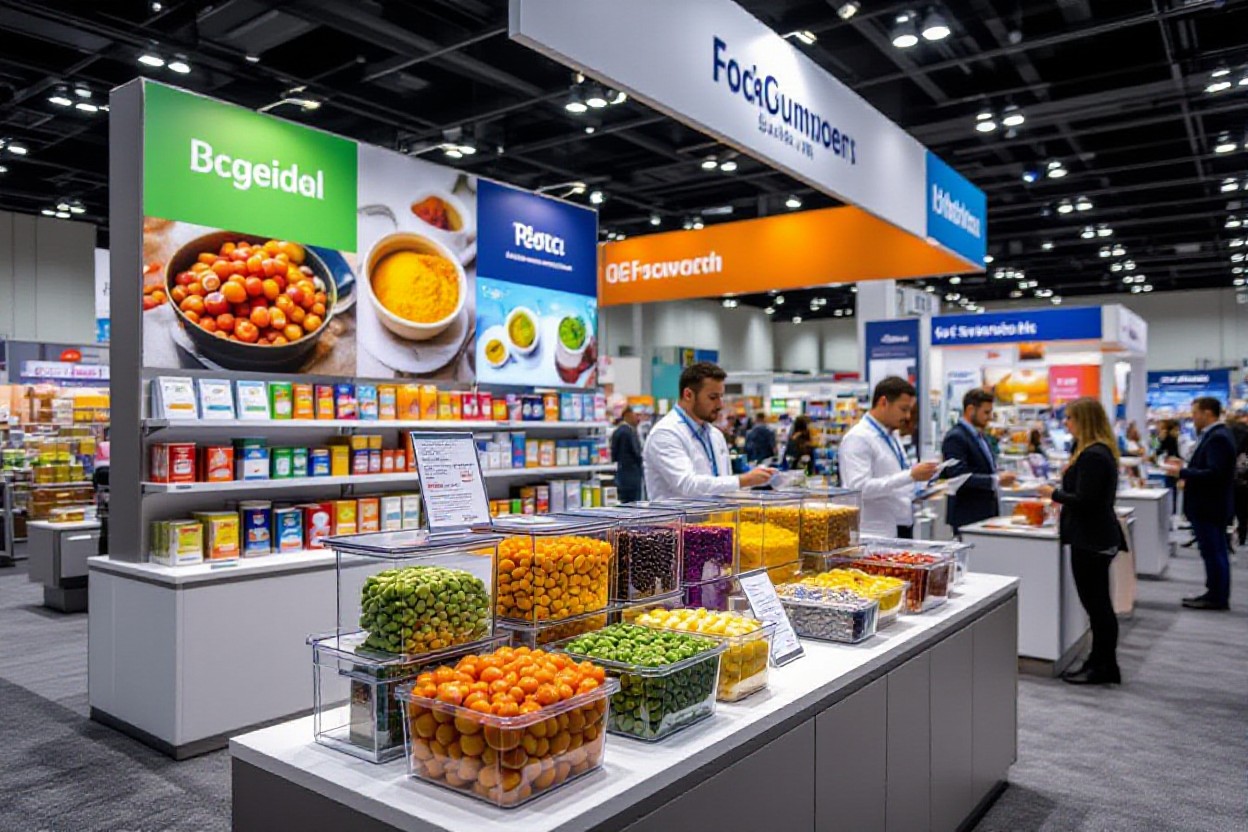
You should treat trade shows and targeted networking as active selling channels where you showcase formulation capabilities, sample performance, and supply reliability; in B2B ingredient marketing these events let you meet multiple decision-makers in a single week, validate claims with on‑site demos, and convert contacts into trials that feed your pipeline.
Role of Industry Events in B2B Marketing
Conferences like IFT, Food Ingredients Europe, and regional supplier summits draw formulation scientists, R&D managers, and procurement teams; using B2B ingredient marketing at these events, you can secure face time with 50–200 relevant prospects per show, capture technical requirements, and accelerate specification into pilots.
Effective Trade Show Strategies
You should combine technical demos, live sampling, and scheduled meetings to maximize ROI; in B2B ingredient marketing, a well‑executed booth with product demos and a booking system often yields 100–250 qualified leads and measurable pilot requests within 30 days.
You can boost conversions by doing pre‑show outreach, offering lab‑grade samples, and running on‑floor formulation sessions; integrate QR codes that link to SDS, application notes, and a direct trial request form, and track conversion rates in your CRM so B2B ingredient marketing delivers repeatable lead-to-pilot metrics.
Importance of Personal Relationships in Networking
You must invest in person-to-person trust because long‑term supply agreements and co‑development projects hinge on credibility; in B2B ingredient marketing, repeated face-to-face interactions and timely technical follow-up often shorten procurement cycles and increase specification likelihood.
You should follow up trade show meetings with tailored lab trials, on-site audits, and assigned technical contacts to sustain momentum; by logging interactions, proposing small co-funded trials, and delivering fast data, your B2B ingredient marketing converts initial interest into multi-year supply and formulation partnerships.
Digital Presence and SEO for B2B
You should treat your website as the primary sales tool for B2B ingredient marketing, focusing on product detail pages, downloadable specs, and clear contact CTAs; a food-ingredient supplier that added product sheets and technical sheets saw organic inquiries rise by 35% in six months, showing how content and UX improvements directly lift lead velocity for B2B ingredient marketing.
Optimizing Online Marketing for Lead Generation
You need landing pages tailored to buyer personas—R&D, procurement, and regulatory—with differentiated messaging, gated technical documents, and form fields matched to deal stage; using targeted PPC and programmatic display alongside organic content raised a specialty oil supplier’s MQLs by 42% in one quarter, a practical result for B2B ingredient marketing campaigns.
Importance of SEO in Ingredient Marketing
You must prioritize search visibility because most manufacturer sourcing begins with search; long-tail queries like “non-GMO pea protein functional properties” and structured data for product specs help you rank for purchase-intent terms, directly supporting B2B ingredient marketing goals.
You should implement technical SEO—fast page speed, canonicalization, HTTPS, and schema for product, FAQ, and datasheet—to capture niche searches; combine keyword clusters (e.g., functional benefits, certifications, use cases) with content that answers regulatory and formulation questions, and you’ll increase qualified organic traffic for B2B ingredient marketing while reducing paid acquisition costs.
Utilizing Social Media and Professional Platforms
You can use LinkedIn, ingredient marketplaces, and targeted forums to showcase formulation case studies, webinars, and certification updates; short video demos and SlideShare white papers generate direct supplier inquiries and amplify B2B ingredient marketing reach among R&D and procurement teams.
You should run account-based social campaigns on LinkedIn, sponsor posts in industry groups, and maintain profiles on ingredient directories (e.g., FoodNavigator listings or Ingredion-like marketplaces) to engage specific manufacturers; tracking engagement by company and role lets you route high-intent buyers into nurture streams, making social and professional platforms measurable channels for B2B ingredient marketing.
Technical Sales Support and Co-Creation
Your technical sales team should act as a development partner, running lab sessions, providing spec sheets, regulatory dossiers and trial protocols so you shorten NPD cycles. In B2B ingredient marketing you supply sensory data, shelf‑life matrices and troubleshooting support; in one example a supplier cut a manufacturer’s reformulation time from 12 to 8 weeks. By integrating sales and R&D you turn conversations into repeatable, measurable outcomes that drive purchase decisions and long‑term contracts in B2B ingredient marketing.
Collaborating with Clients for Product Development
Partner closely with formulators to co‑create prototypes using agreed KPIs—cost per kg, clean‑label thresholds, and functionality targets—so you hit specs faster. In B2B ingredient marketing you should run 2–4 iterative formulations per month, log sensory scores and GMP batch records, and offer design‑of‑experiments (DoE) data; this approach helped one supplier achieve a 25% reduction in ingredient cost while keeping texture and shelf life unchanged.
The Importance of Pilot Trials and Innovation Centers
Use pilot trials and innovation centers to validate scale‑up, testing 5–200 kg batches and tracking yield, viscosity and microbial results so you avoid surprises at production scale. In B2B ingredient marketing you document variation across three pilot runs and produce comparison reports for your client, typically shaving 2–6 weeks off validation timelines and improving process yields by measurable margins.
Operationally, you should equip centers with modular mixers, high‑shear homogenizers and accelerated shelf‑life chambers, logging real‑time data with LIMS so scale factors are reproducible. Many manufacturers accept pilot reports as part of supplier qualification; in B2B ingredient marketing this proof often converts pilots into 6–12 month supply agreements after a single successful run.
Success Stories as Marketing Tools
Package pilot data and client outcomes into one‑page case studies that highlight metrics—time‑to‑market, cost savings, sensory scores—and distribute them on your sales portal and LinkedIn. In B2B ingredient marketing you can cite a case where a co‑developed clean‑label emulsion reduced total fat by 15% and cut label claims risk, giving prospects concrete reasons to engage with your technical team.
For added credibility, include anonymized test results, batch spreadsheets and before/after formulations so prospects can audit your claims. When you use success stories in RFP responses and email nurture sequences, conversion rates often rise; in B2B ingredient marketing, documented wins frequently shorten procurement evaluation from months to weeks.
Messaging and Differentiation
To win formulation slots you must align messaging to procurement, R&D, and QA priorities: show yield uplift, cost-per-unit, regulatory support, and supply certainty. Use concise technical briefs and application data to convert conversations into trials, and weave B2B ingredient marketing into your content strategy so buyers immediately see how your ingredient reduces risk and accelerates product launch windows.
Key Components of Effective B2B Messaging
Focus on measurable benefits, technical specs, compliance evidence (e.g., HACCP, ISO), supply metrics, and real-world application notes. Provide a one-sheet with 3 KPIs—cost impact, yield change, shelf-life delta—plus a case study and sample protocol. This approach to B2B ingredient marketing lets you speak directly to the metrics procurement and R&D evaluate.
Emphasizing Value and Problem-Solving
Lead with ROI: quantify cost savings, reformulation speed, or waste reduction and back it with testing data. For example, cite a trial where an emulsifier reduced line downtime by 15% or where cost-per-unit fell $0.02—figures that make your B2B ingredient marketing pitch tangible and procurement-ready.
Show specific calculations so buyers can model impact: if a bulk run of 1,000,000 units saves $0.02 per unit, that’s $20,000 saved, or if a shelf-life extension from 60 to 90 days reduces returns by 40%. Include step-by-step application protocols from pilot to scale and third-party lab reports to make your B2B ingredient marketing claims auditable and actionable.
Building Brand Trust and Reliability
Demonstrate traceability, audit readiness, and consistent OTD performance; publish COAs, supply-chain maps, and long-term testing. Offer guaranteed lead times, MOQ flexibility, and documented corrective actions. Those elements of B2B ingredient marketing reassure manufacturers that your ingredient reduces supply risk and simplifies qualification.
Operationalize trust by providing batch-level QR access to COAs, scheduling third-party audits, and sharing a 12-month rolling on-time delivery dashboard with buyers. Run joint validation pilots with clear acceptance criteria and SLA-backed remedies to turn B2B ingredient marketing from promise into provable performance.
Regulation and Compliance in Ingredient Marketing
In B2B ingredient marketing you must align claims, specs and traceability with regional rules; see practical approaches in B2B Product Communication: How Brands Create Growth … to streamline COAs, map permitted additives, and coordinate notifications for changes that affect manufacturers’ formulations.
Understanding Industry Regulations
You need to map standards such as EU FIC, the US FSMA (2011) and national additive lists, and record legal limits, permitted claims and labeling differences; in B2B ingredient marketing this prevents reformulation costs, import holds and delays during supplier qualification.
Communicating Compliance to Clients
When you present ingredients, include Certificates of Analysis, allergen declarations and lot traceability summaries; in B2B ingredient marketing using GS1 identifiers and machine-readable spec sheets helps your buyers ingest compliance data directly into their quality systems.
Push proactive disclosure: provide lot-level COAs within 24–48 hours of shipment, link to third‑party lab reports for microbiology or heavy metals, and publish audit summaries; suppliers who supply digital COAs, GS1-128 barcodes and timely change-control notices often cut manufacturer approval times from weeks to days, making B2B ingredient marketing operational as well as promotional.
The Role of Certifications in Building Credibility
Certifications such as ISO 22000, HACCP, SQF, BRC and organic or non‑GMO seals play a decisive role in B2B ingredient marketing because major manufacturers frequently require GFSI-benchmarked standards or equivalent third‑party verification before onboarding suppliers.
Include certificate scope, audit dates and certificate IDs on product pages and in spec sheets; for example, suppliers that publish SQF Level II details and linked audit reports typically see faster onboarding with retailers and co-manufacturers—track lead-to-contract time and rejection rates to quantify certification ROI in your B2B ingredient marketing metrics.
Leveraging Case Studies and Testimonials
You should spotlight measurable wins in B2B ingredient marketing by publishing concise case studies and targeted testimonials; link methodology, specs and ROI in each story. In B2B ingredient marketing you must show yield uplifts, cost-per-unit drops and compliance records so procurement and R&D can act; use the checklist in How to Build a Winning B2B Food Marketing Plan to structure experiments and proofs.
- Case Study 1 — Plant-based emulsifier: 6-month pilot with a CPG partner; batch yield +8.5%, raw material spend −12%, annualized savings $120,000, trial-to-scale conversion 78%.
- Case Study 2 — Natural stabilizer: R&D co-development cut shelf-test failures from 9.0% to 1.2% in 4 months; cost per SKU −$0.045; QA sign-off time −30%.
- Case Study 3 — High-intensity sweetener: reformulation cut sugar by 40% across three beverage SKUs; time-to-market −4 months (9→5); launch sales +15%.
- Case Study 4 — Functional protein: 24-week scale-up from 2,000 kg trial to 50,000 kg quarterly orders; development-fee ROI 3.6x; procurement reorder rate 92%.
- Case Study 5 — B2B ingredient marketing digital program: targeted outreach produced 312 qualified leads, 42 sample requests, 9 contracts totaling $1.2M in 10 months; cost-per-lead $145.
Crafting Compelling Success Stories
You should structure success stories so engineers can replicate results: include test protocols, ingredient specs, analytical data and timelines. In B2B ingredient marketing present percent improvements, sample sizes, and sensory scores so R&D and procurement can validate outcomes quickly and move to trials.
Utilizing Client Testimonials for Credibility
You should source technical testimonials from formulators, QA and procurement and feature job titles, KPIs cited, and short video clips; in B2B ingredient marketing engineering voices convert internal stakeholders faster than marketing blurbs.
You should collect testimonials with targeted prompts—ask for baseline metrics, test conditions, and quantified benefits (e.g., “reduced batch loss from 3.4% to 0.8%”). Obtain written consent, include client logos and titles, and present short quotes alongside downloadable technical annexes so your buyers can validate claims without extra outreach.
Sharing Impactful Results to Attract New Clients
You should lead with headline metrics (yield %, cost per kg, time-to-market reduction) and offer one-page result summaries plus downloadable datasets; B2B ingredient marketing that foregrounds hard numbers shortens procurement review cycles.
You should visualize before/after charts, disclose sample sizes and test conditions, and provide ROI calculators showing dollar impact at customer volumes (e.g., 12% cost cut = $X/yr). Bundle raw test data, lot numbers and compliance records so QA can update specs and approve supplier selection faster.

Nurturing Relationships Through Ongoing Support
You extend value after the sale by standardizing post-delivery touchpoints—follow-up within 48–72 hours, a 30- to 90-day performance review, and quarterly technical check-ins—so your clients feel supported. In B2B ingredient marketing you convert those touchpoints into measurable outcomes: lower line downtime, faster troubleshooting, and higher reorder frequency by tying service metrics to purchasing behavior.
The Importance of Post-Sale Engagement
You should schedule structured post-sale engagement: initial onboarding calls, shared KPIs, and monthly performance reports for the first 90 days. In B2B ingredient marketing this cuts adoption friction and can reduce churn by up to double-digit percentages when combined with SLA-driven support. Use case notes and sample traceability to resolve issues in 24–72 hours and keep projects on track.
Providing Continuous Value to Clients
Offer recurring technical workshops, formulation clinics, and access to pilot runs so your customers get ongoing wins. B2B ingredient marketing thrives when you deliver tangible benefits—quarterly webinars, three pilot batches per year, and updated regulatory dossiers—helping your buyers shorten development cycles and justify premium sourcing decisions.
You deepen that value by tracking outcome metrics—time-to-market, percent yield improvement, and cost-per-batch—and reporting them back to the client monthly. In B2B ingredient marketing, sharing a dashboard that shows a 5–15% yield improvement or a two-week reduction in development time builds business cases for repeat orders and upsells.
Expanding Services to Foster Loyalty
Add logistics, consignment inventory, co-packing, and regulatory support to make buying seamless; offer tiered SLAs with 24-hour technical response and quarterly ROI reviews. B2B ingredient marketing that pairs product with service turns single purchases into strategic partnerships, increasing lifetime value and reducing procurement searches.
Structure packages—basic, advanced, and enterprise—with clear benefits: basic includes technical datasheets and hotline access, advanced adds pilot trials and inventory management, enterprise bundles custom formulation labs and dedicated account scientists. When you present these in B2B ingredient marketing materials with pricing and case studies, clients choose the package that matches their innovation cadence.
Trends in B2B Ingredient Marketing
You should track how supplier playbooks are shifting as demand for transparency, speed and sustainability rises; in B2B ingredient marketing you’ll see shorter sales cycles, more digital touchpoints and two-way data flows that let you validate claims and meet post-delivery KPIs (follow-up within 48–72 hours is now standard in many programs).
Emerging Trends and Innovations
You’ll note pilots in blockchain traceability, fermentation-derived proteins, and upcycled botanicals changing formulations; in B2B ingredient marketing suppliers are launching co-development labs and sample-in-a-box programs that cut concept-to-trial time by weeks, while sustainability scoring and supplier scorecards let you compare ingredients on carbon, water and social metrics.
Impact of Technology on Marketing Practices
You must adopt PIM systems, searchable e-catalogs and CRM integrations because two-thirds of technical buyers begin online; B2B ingredient marketing now uses virtual samples, spec APIs and interactive COAs so you can shorten approvals and make sourcing decisions faster.
When you integrate ERP, CPQ and PIM with API-driven spec sheets, B2B ingredient marketing moves from static PDFs to live data: shipment IoT feeds, GS1 identifiers and COA links let you automate lot-level traceability, while predictive analytics can cut stockouts and expedite reorder rhythms by up to 30%, improving on-time delivery and reducing emergency sourcing.
Adapting to Changing Consumer Preferences
You have to translate consumer trends—clean label, plant-based, lower sugar, reduced allergens—into technical dossiers and cost models; B2B ingredient marketing increasingly requires you to supply sensory data, regulatory claim matrices and sustainable sourcing proofs that manufacturers can drop into product briefs.
To act on that, you should provide quantified application data (shelf-life in days, % yield change, cost-per-serving), sensory lexicons and carbon or water footprints; in B2B ingredient marketing a supplier of pea protein, for example, will win more business by delivering emulsification curves, allergen matrices, pilot-run costings and a one-page sustainability score that manufacturers can include in R&D proposals.
Challenges in B2B Ingredient Marketing
You face tight margins, long sales cycles and heavy spec demands that make B2B ingredient marketing a complex selling environment; aligning traceability, COAs and lead times with a manufacturer’s ERP often decides whether you move from sample to contract within 30–90 days. Regulatory alignment across regions and consistent lot-to-lot quality add more pressure, so your commercial and technical teams must operate in lockstep to convert inquiries into multi-year agreements.
Navigating Competition and Market Saturation
When many suppliers offer similar commodity grades, you win by differentiating with measurable value—faster sample turnaround, niche certifications or documented shelf-life extensions. For example, offering a 7-day sample kit plus an eight-week accelerated stability report helped one oil supplier secure a private-label snack contract; in B2B ingredient marketing, small operational edges like that convert RFPs into exclusives.
Addressing Client Needs and Expectations
Manufacturers expect technical partnership: you must supply application notes, pilot-run support and change-notice SLAs alongside price quotes. In B2B ingredient marketing you’ll need to map each buyer’s formulation constraints (pH, water activity, allergen rules) and provide a clear path—samples, lab data, and co-development timelines—to meet those expectations quickly.
You can standardize this by creating technical kits (spec sheet, COA, HACCP summary, use-case recipes) and KPIs—first-sample within 7 days, COA within 48 hours, and pilot capacity booked within 30 days. Also, integrate your CRM with a ticketed technical-support queue so your R&D and sales teams share visibility; that operational choreography is how B2B ingredient marketing scales from single deals to national accounts.
Overcoming Resource Constraints
Limited R&D headcount and testing budgets force trade-offs; in B2B ingredient marketing you must prioritize high-probability accounts and leverage external labs or co-manufacturers to meet demand spikes. Offering tiered engagement—paid feasibility, shared pilot costs, or refundable sample fees—lets you preserve cash while proving technical fit to manufacturers.
Practical moves include forming alliances with contract labs to run routine analyses, using shared pilot facilities for one-off trials, and pricing development work so it’s recoverable if projects stall. You should also automate sample logistics and spec delivery—suppliers who digitize sample requests and COA distribution cut processing time and cost, enabling you to compete on responsiveness without expanding fixed overhead. B2B ingredient marketing benefits directly when you shift cost from fixed to scalable partnerships.
Measuring Success in B2B Marketing
You track outcomes with specific targets: improve qualified lead volume by 50% in six months, lower CAC by 20%, and hit a marketing-sourced revenue share of at least 30%. In B2B ingredient marketing you focus on pipeline velocity and margin impact, using conversion-to-order and LTV:CAC ratios (aim for 3:1) to assess whether campaigns are driving profitable, repeat business rather than one-off sampling wins.
Key Performance Indicators (KPIs)
Prioritize measurable KPIs: MQLs, SQLs, conversion rate (industry B2B averages 2–6%), lead-to-order time, average order value, repeat-purchase rate, CAC, LTV, and marketing-attributed revenue. For B2B ingredient marketing you also track sampler-to-spec adoption and formulation wins — for example, a flavor supplier that converts 12% of technical samples into specs is outperforming peers and can scale that channel.
Tools for Monitoring and Analyzing Results
Combine CRM (Salesforce, HubSpot), GA4, LinkedIn Campaign Manager, marketing automation (Marketo/Pardot), Hotjar, and BI tools (Tableau, Power BI) to monitor funnel movement and content performance. In B2B ingredient marketing you map UTM-tagged campaigns to downstream ERP orders so you see which white papers, webinars, or trade shows actually generate revenue rather than just leads.
Build a single source of truth by feeding HubSpot contact stages and campaign UTMs into Power BI alongside NetSuite or SAP order data; then create dashboards showing MQL→SQL→Order conversion and gross margin per campaign. A mid-size spice supplier integrated HubSpot + NetSuite and cut lead-to-order time 30% while increasing close rate 15% by prioritizing high-margin formulation requests. Use automated alerts for sudden drops in lead velocity and weekly cohort reports to spot churn in targeted accounts — this setup turns B2B ingredient marketing activity into actionable revenue signals.
Adapting Strategies Based on Data Insights
You iterate based on what the data proves: shift budget to channels with higher SQL quality, refine content that shortens specification cycles, and reallocate field samples to formulations with the highest conversion. For B2B ingredient marketing a supplier that moved 40% of budget from broad trade shows to targeted LinkedIn ABM saw MQL quality rise and shortened RFP turnaround by six weeks.
Run controlled experiments: define hypothesis, choose primary KPI, ensure minimum sample size and test for statistical significance (common threshold p<0.05), and run for 4–8 weeks depending on sales cycle. Then perform cohort and multi-touch attribution analyses to confirm downstream impact on orders and margin. In practice, B2B ingredient marketing teams that adopt this cadence typically reduce wasted spend by 25% and increase marketing-sourced revenue by double digits within a year.
Future of B2B Ingredient Marketing
As supply chains shift, you must shift too: B2B ingredient marketing will center on traceability, ingredient provenance, and value-for-formulation. Expect procurement teams to require batch-level data and digital spec sheets; early adopters who provide API-fed certificates and modular pricing often win 30–50% faster approval cycles. Use your product data to tell yield, cost-per-unit, and shelf-life stories that procurement, R&D, and QA can act on immediately.
Predicting Market Trends and Changes
To stay ahead in B2B ingredient marketing you should combine sales telemetry, label-claim scans, and supplier KPI trends to spot demand shifts—sugar-reduction and plant-based formulations, for example, grew double digits in several segments last year. Feed that intelligence into your roadmaps so your samples, spec sheets, and case studies match what formulators will ask for in the next 6–12 months.
The Evolving Role of Digital Marketing
Digital channels now drive sourcing decisions in B2B ingredient marketing: you must offer searchable e-catalogs, interactive spec PDFs, and virtual sample requests. Linked content that ties technical sheets to clean-label claims and cost-per-kilo calculators lets R&D and procurement evaluate options without lengthy meetings, shortening conversion time by measurable margins.
In practice, you should integrate PIM systems, product APIs, and CRM-driven ABM campaigns to scale outreach in B2B ingredient marketing. For example, map your top 50 prospects, feed them tailored spec-sheet sequences and webinar invites, and track engagement to prioritize field samples; many teams report conversion lifts of 15–30% from coordinated digital workflows. Tie analytics to SKU-level margins so every campaign has a clear ROI.
Preparing for Future Challenges
When supply shocks or regulatory shifts hit, B2B ingredient marketing that you run must pivot quickly: build modular formulations, secondary sourcing profiles, and digital traceability to reduce disruption. Scenario planning that models lead-time, cost, and substitution impact keeps your sales and technical teams aligned under pressure.
Operationally, you should invest in supplier-scorecard automation, ISO/FSMA readiness, and a rapid-sample lab to cut formulation cycles. Use risk-monitoring dashboards that flag >10% cost swings or supplier downgrades, and train your technical sales to present validated substitutions with clear impact on yield and label claims—this approach lowers churn and preserves formulation slots when markets change.
Final Words
Summing up, you must make B2B ingredient marketing a strategy that aligns product data, regulatory support, and technical service; B2B ingredient marketing requires targeted content, sample programs, and partnership-building; with B2B ingredient marketing you prioritize transparent specifications and formulation support to help manufacturers; effective B2B ingredient marketing uses case studies, analytics, and sales integration so you win long-term accounts; invest in B2B ingredient marketing to differentiate your supply offer and grow your manufacturing customers.