Table of Contents
- The Resurgence of Artisanal Chocolate
- Case Study – A European Artisan Brand
- Focus on Quality and Uniqueness
- The Role of Handcrafting in Artisanal Chocolates
- Brand Story and Heritage
- Sustainability in Sourcing and Production
- Marketing Strategies for Artisanal Chocolatiers
- Community Building and Customer Engagement
- The Influence of Food Trends on Artisanal Chocolate
- Challenges Faced by Artisanal Chocolatiers
- Scaling Sustainably
- The Future of Artisanal Chocolate
- Case Studies of Emerging Artisanal Brands
- Summing up
Many artisanal chocolatier success stories show how you can harness quality, storytelling and niche marketing to win customers; artisanal chocolatier success depends on product excellence, artisanal chocolatier success grows from direct customer relationships, artisanal chocolatier success requires efficient small-batch operations, and artisanal chocolatier success is reinforced by clear branding and premium pricing, giving you a roadmap to scale without losing craft.
The Resurgence of Artisanal Chocolate
Historical Context of Chocolate Making
When you follow cacao from Olmec, Maya and Aztec use—where beans served as currency—to European sweetening and industrialization, you see why artisanal chocolatier success hinges on heritage. Colonial plantations shifted production; today Côte d’Ivoire and Ghana still supply about 60% of global cocoa, and you leverage that lineage by emphasizing provenance, small-batch processing and stories that distinguish your brand from commodity chocolate.
The Art and Science of Chocolate Crafting
You refine flavor through precise fermentation, roast profiles and conching times: single-origin beans reveal floral or fruity notes at specific roast curves, and bean-to-bar makers like Dandelion Chocolate show how technique drives artisanal chocolatier success. By adjusting bean selection, grind and tempering, you control texture and flavor intensity that mass producers can’t replicate.
You dial particle size to roughly 20–30 microns for a smooth mouthfeel, and you temper to achieve stable Form V crystals—heat to ~45°C, cool to ~27°C, then reheat to 31–32°C for dark chocolate—details that underpin artisanal chocolatier success. You also monitor moisture, pH during fermentation and roast development to highlight origin-specific acids, tannins and volatile compounds.
The Global Trend Towards Artisanal Products
As consumers seek authenticity, you benefit from a market shift: bean-to-bar shops expanded from a few pioneers in the 2000s to dozens and hundreds in major markets by the 2010s, illustrating pathways to artisanal chocolatier success via storytelling, workshops and tasting events that build loyal local followings and media attention.
You capitalize on direct-trade claims, single-origin labeling and premium pricing—50g single-origin bars often retail between $6–$12—so your margins and brand equity grow when you demonstrate traceability, pay farmer premiums and run limited releases; these tactics consistently support artisanal chocolatier success across mature and emerging markets.

Case Study – A European Artisan Brand
You examine two complementary models—Pierre Marcolini (founded 1995) and Valrhona (founded 1922)—to pin down how artisanal chocolatier success is practically engineered: vertical bean-to-bar control, selective distribution, and brand-led education. By comparing founding dates, sourcing practices, and revenue channels, you get concrete benchmarks and tactics to adapt for your own margins and growth targets.
Profile of Belgium’s Pierre Marcolini
You study Pierre Marcolini’s bean-to-bar approach: launched in 1995, he sources single-origin cacao (notably Madagascar and Ecuador), roasts and conches in-house, and emphasizes limited-edition collections and bespoke hotel/restaurateur partnerships. That focus on provenance, tight quality control, and premium pricing shows one clear path to artisanal chocolatier success for your boutique operation.
The Journey of France’s Valrhona
You track Valrhona from its 1922 founding in Tain-l’Hermitage to its role as a global supplier of couverture and training; the École du Grand Chocolat (opened in 1988) illustrates how education and B2B channels amplify brand authority. Their emphasis on single-origin Grands Crus and chef-focused R&D provides a model of scaled artisanal chocolatier success through professional alliances.
You research deeper into Valrhona’s playbook: prioritizing R&D, long-term farm partnerships, and chef training built a durable wholesale backbone that supports retail prestige. For your business, adopting selective distribution, publishing technical dossiers on each origin, and running regular professional workshops can replicate Valrhona’s mix of product excellence and industry influence.
Lessons from Successful Artisans
You distill repeatable lessons: limit SKUs to focus quality, invest in traceable sourcing, price for craft while controlling COGS, and use education to convert professional and retail demand. These tactics form a roadmap so that artisanal chocolatier success becomes a measurable strategy rather than an aesthetic aspiration.
You expand on implementation: set KPI targets (gross margin, SKU velocity, wholesale share), pilot farmer-direct contracts covering 3–5 origins, and run quarterly masterclasses to drive higher AOV and brand loyalty. Applying these operational levers helps you scale artisanal chocolatier success without diluting craft or provenance.
Focus on Quality and Uniqueness
The Importance of High Cocoa Content
You lean into boldness when you prioritize 70–85% cocoa content: richer flavor, less sugar masking, and clearer origin notes from Criollo or Trinitario beans. Consumers increasingly seek bars above 70% for health and taste, and you can use lab-tested cocoa solids percentages on labels to justify premium pricing. Prioritizing high cocoa content directly supports artisanal chocolatier success by differentiating your product from mass-market 40–50% blends and attracting discerning shoppers willing to pay a 20–50% markup.
Sourcing Single-Origin Cocoa
You tap specific terroirs—Madagascar’s Sambirano, Ecuador’s Arriba, Ghana’s Eastern Region—to deliver distinct floral, fruity, or nutty cupping notes; single-origin sourcing often requires 3–7 days of on-farm fermentation and dry processing to preserve those profiles. Building direct trade relationships and traceable supply chains improves quality control and transparency, and using origin names on packaging strengthens artisanal chocolatier success by telling a story that commands higher shelf prices.
You can expect to pay a premium of roughly 10–30% above commodity rates for traceable, single-estate beans, but that investment converts into measurable sensory gains: clearer acidity, defined fruit top notes, and more predictable roast schedules. Use small seasonal batches (50–500 kg) to test consumer response, document fermentation days and post-harvest handling on your product page, and leverage cupping scores to market provenance—practices that directly reinforce artisanal chocolatier success.
Innovative Flavor Combinations
You experiment with pairings like 64% Madagascar with yuzu, 72% Ecuador with toasted sesame and miso, or dark chocolate ganaches infused with smoked sea salt and single-origin coffee, balancing additions at 1–5% to avoid overpowering the cacao. Limited-edition runs and collaborations with local producers let you iterate quickly, collect feedback, and use exclusivity to drive demand—tactics that amplify artisanal chocolatier success through novelty and storytelling.
You should A/B test inclusions in batches as small as 100 bars, measuring sell-through rates and margins; note that acid balance, water content in ganache, and inclusion particle size all affect shelf life and mouthfeel. Track metrics like repeat-buyer rate and social engagement for each flavor drop, and adjust formulations based on data—practical steps that scale your innovation while safeguarding artisanal chocolatier success.
The Role of Handcrafting in Artisanal Chocolates
You accentuate provenance and technique: hand-sorting beans, small-batch roasting, and manual tempering create traceability and texture that retailers and consumers pay premiums for. Studies like Craftsmanship in Craft Chocolate show how tactile skills link to higher margins, and those operational choices drive artisanal chocolatier success through product differentiation and storytelling.
Small-Batch Production Techniques
You scale deliberately: many artisans work in 5–20 kg batches, roast beans in 1–5 kg drum roasters, and conch from 12–48 hours to refine mouthfeel. By controlling batch size you can test single-origin runs, adjust grind to 15–20 µm for silkiness, and iterate flavors quickly—practices that anchor artisanal chocolatier success in quality and agility.
Equipment and Tools Used by Artisans
You rely on a compact toolkit: 5–30 L melters, tabletop temperers, stone or ball mills, microthermometers, pipettes, and polycarbonate molds. Choosing a 10–20 µm stone grinder versus a basic melanger changes texture; these equipment choices determine yield, consistency, and the economics that underpin artisanal chocolatier success.
You fine-tune performance by pairing tools: use a granite stone mill to achieve 12–18 µm particle size for creamier chocolate, then finish in a 10–20 L tempering machine for stable crystal form. Tempering ranges—dark 31–32°C, milk 30–31°C, white 28–29°C—are measurable levers; track yield, temper curve, and cooling rate to reduce bloom and increase shelf life, improving artisanal chocolatier success through repeatable standards.
The Sensory Experience of Handcrafted Chocolates
You engineer sensory moments: aroma intensity, snap measured by a 2–3 mm fracture, and melt time (8–12 seconds on the tongue) all vary with cocoa percentage and conching. Presenting 70–85% bars or flavored ganaches gives consumers distinct tasting journeys, reinforcing artisanal chocolatier success via elevated sensory profiles and consumer loyalty.
You systematize sensory evaluation with a flavor wheel, 10–12 person tasting panels, and CATA (check-all-that-apply) scoring to quantify floral, fruity, nutty, and roasted notes. For example, Madagascan beans often rate higher on citrus and red-fruit descriptors versus Dominican earthy tones; correlating these profiles with sales data helps you optimize assortments and pricing to boost artisanal chocolatier success.
Brand Story and Heritage
You weave provenance, technique, and founder lore into an asset that drives artisanal chocolatier success; highlight bean origin, single-origin tasting notes, and awards to justify premium pricing. For example, referencing a bean-to-bar collaboration with a named Venezuelan cooperative or limited runs of 250–1,000 bars gives your story concrete touchpoints that retail buyers and direct customers can latch onto, reinforcing why your product stands apart in a mass-market landscape.
Crafting a Compelling Brand Narrative
You center your narrative on specific moments—how you sourced that rare Trinitario lot, a 72‑hour conching experiment, or a 10‑year family recipe—so buyers see process, not platitudes. Case studies like Dandelion and small houses that price limited editions 20–40% above standard bars show that telling where and how you work directly fuels artisanal chocolatier success by converting provenance into measurable margin.
The Significance of Heritage in Branding
You lean on heritage to signal mastery: archival recipes, multi‑generation techniques, or a pastry school pedigree make quality credible. When you present photographed family records, workshop rituals, or a named master chocolatier, retailers and consumers perceive authenticity, which can shift buying decisions and underpin sustained artisanal chocolatier success.
You can quantify heritage by documenting processes—stone‑grinding, bean varieties, or traditional tempering—and linking them to awards, press, or historic menus. For instance, showcasing a decade of awards or a preserved recipe with provenance details helps you charge premium retail fees and anchors artisanal chocolatier success in verifiable continuity rather than marketing rhetoric.
Transparency and Consumer Trust
You build trust by exposing supply chains: list farm names, harvest months, cacao percentages (e.g., 70% single‑origin), and processing notes on pack or via a QR code. Retailers respond to traceability; brands that disclose origin stories and test results reduce buyer hesitation and accelerate artisanal chocolatier success by turning skepticism into loyalty.
You implement tools like QR‑linked farm profiles, third‑party lab certificates, and clear allergen plus sugar counts to make claims verifiable at point of sale. Pilots using blockchain traceability and farm photographs have shown higher conversion in specialty shops, and when you pair transparency with tasting notes, artisanal chocolatier success becomes a measurable output of trust rather than a promise.
Sustainability in Sourcing and Production
You balance flavor and ethics by tracking origin—Ivory Coast and Ghana still produce roughly 60% of global cocoa—so your sourcing choices ripple through supply chains. You can lock quality with multi-year contracts and premiums, which feed artisanal chocolatier success by stabilizing volumes and flavor. Explore real-world partnership thinking via Why do so many people in the craft chocolate industry prioritize farm partnerships? Adopting traceability and direct trade remains central to artisanal chocolatier success.
Ethical Sourcing Practices
You implement direct trade, pay farmer premiums, and fund on-farm fermentation training to lift incomes often below $2/day; these moves reduce volatility and raise bean quality. You also audit supply chains, prefer smallholder cooperatives, and offer price bonuses for properly fermented lots—measures that translate directly into artisanal chocolatier success by ensuring consistent, high-grade beans for your batches.
Environmental Considerations in Chocolate Production
You shift toward agroforestry, water-efficient processing, and low-carbon energy to shrink your footprint while protecting yield stability; agroforestry plots improve biodiversity and buffer climate shocks. You benchmark peers like Dandelion and Taza for single-origin sourcing and local processing to cut transport impacts, all actions that support artisanal chocolatier success.
To deepen gains, you install solar dryers, heat-recovery roasters, and on-site composting to reduce energy and waste—small-scale operations report up to 30–50% energy savings with those upgrades. You also run simple lifecycle analyses (Scope 1–3) and redesign packaging toward 100% recycled paper or compostable wraps to lower emissions and strengthen artisanal chocolatier success.
Community Impact and Fair Trade
You channel Fair Trade premiums and direct-contract funds into schools, clinics, and cooperative infrastructure, tracking outcomes like enrollment and household income. You structure multi-year buying commitments and farmer training so benefits stay local, a social approach that consistently bolsters artisanal chocolatier success.
Further, you pilot fermentation and pruning workshops and offer microloans for drying equipment—interventions that commonly raise yields and bean value by double digits. You can also design revenue-share or equity models so communities gain durable ownership, which reduces supply risks and amplifies artisanal chocolatier success across seasons.
Marketing Strategies for Artisanal Chocolatiers
You should map channels to customer moments: tasting events and direct retail for discovery, subscriptions for retention, and targeted ads for acquisition; brands like Dandelion Chocolate grew awareness through factory tours and clear sourcing narratives, and data on Sizing the craft chocolate market helps you prioritize SKUs and price tiers to drive artisanal chocolatier success.
Leveraging Social Media Platforms
You must use platform-specific content: Instagram (over 1 billion monthly users) for polished imagery and shoppable posts, TikTok for short-form taste reactions and process clips, and Facebook for event promotion and groups; combine paid lookalike audiences with organic reels to scale reach and convert interest into artisanal chocolatier success.
Visual Storytelling through Photography and Videography
You should prioritize macro shots of texture, process sequences from bean to bar, and consistent color grading; use natural light, a 50mm or macro lens, and 4:5 aspect ratio for feed posts so visuals drive perceived quality and support artisanal chocolatier success.
You can increase conversion by sequencing content: start with origin and farmer portraits, follow with fermentation/roasting clips, then end with plated pairings or unboxing; adopt 9:16 vertical cuts for reels, optimize thumbnails, and A/B test hero shots—this pipeline boosts trust, lift engagement, and anchors artisanal chocolatier success in shoppers’ minds.
Building an Engaged Online Community
You should cultivate loyalty via monthly virtual tastings, a branded hashtag for user-generated content, and timely responses to comments and DMs (aim within 24 hours); incentivize reviews and early access drops to turn followers into repeat buyers and deepen artisanal chocolatier success.
You can formalize engagement with a subscription club, ambassador program, and farmer-spotlight series that rewards referrals and highlights provenance; measure retention, CLV, and campaign CAC, then iterate on offers and community events to scale word-of-mouth and cement artisanal chocolatier success.
Community Building and Customer Engagement
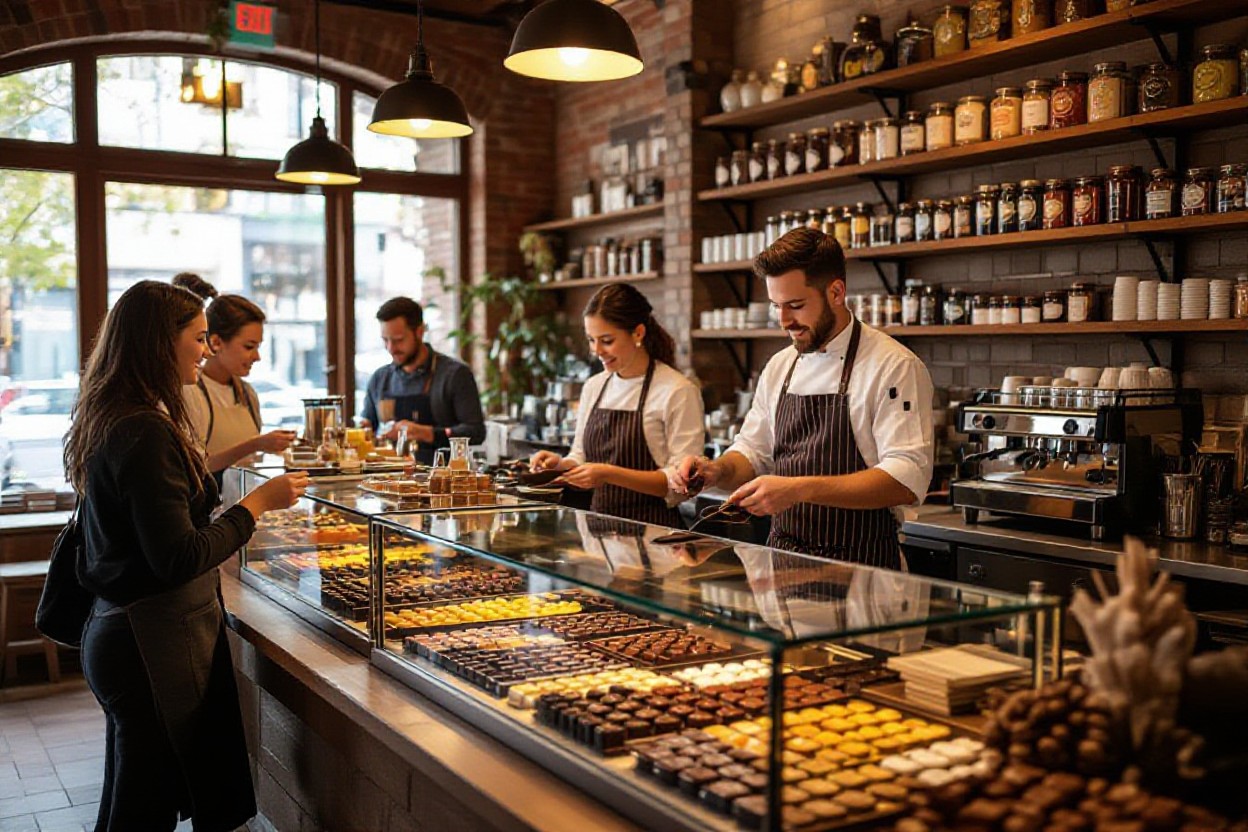
Build a loyal base by turning buyers into advocates: you run tasting clubs, loyalty stamps, and a private WhatsApp group previewing seasonal truffles. Segmenting 300 customers into chocolate lovers, corporate buyers, and gift shoppers improves retention and targeting. These community tactics directly feed artisanal chocolatier success by increasing repeat purchases and word-of-mouth; consistent engagement anchors artisanal chocolatier success.
Hosting Tastings and Events
You host monthly tastings with 8–12 seats, $25–40 tickets, and a six-piece flight paired with local coffee or port to tell origin stories. Offer corporate tastings for 10–30 employees and weekend pop-ups that can generate $1,000–$5,000 in weekend sales. Track onsite conversion rates (typical 10–20%) to optimize formats and support artisanal chocolatier success.
Collaborations with Local Producers
You partner with a coffee roaster, cidery, or creamery for limited runs—single-origin espresso ganache or butter from a nearby creamery often sells out quickly. Co-branded pop-ups and shared email blasts to combined lists of 5,000 amplify reach, create new shelf space, and directly support artisanal chocolatier success.
You agree on practical terms: limited runs of 300–500 units, a clear 60/40 or fixed-margin split, and a three-week campaign window to create scarcity. Use joint PR, Instagram takeovers, and QR-coded tasting notes; log SKU performance in your POS and set reorder triggers to scale winning collabs, reinforcing artisanal chocolatier success.
Feedback Loops with Customers
You implement a structured feedback loop: three-question post-purchase surveys, QR codes on packaging collecting ~200 responses monthly, and in-person tasting notes. Use those insights to tweak ganache sweetness, add vegan options, or adjust price tiers. Rapid iteration from customer data sharpens your product-market fit and strengthens repeat business.
You segment feedback by channel—in-store, online, event—and run A/B tests on small samples: test packaging copy with 2,000 visitors or two ganache ratios on 100-unit batches. Then translate results into production calendar changes, set monthly KPIs for flavor satisfaction, and train staff on updated tasting notes so the loop closes between customers and operations.
The Influence of Food Trends on Artisanal Chocolate
Health and Wellness Trends
You can leverage the health wave by reformulating: dark chocolate (70%+ cocoa) saw premium-category growth of roughly 12% in recent years, and customers now look for lower-sugar, high-antioxidant options. By using monk fruit, erythritol, or added adaptogens like ashwagandha and 10–15g plant protein inclusions, your bars meet demand while maintaining flavor. Case studies show brands that highlight functional benefits increase repeat purchase rates, directly supporting artisanal chocolatier success when you prioritize transparent ingredient sourcing and clear labeling.
The Rise of Vegan and Dietary-Specific Chocolates
You should treat vegan lines as innovation drivers: plant-based chocolate sales expanded rapidly as mainstream shoppers sought dairy-free options, and brands such as Hu and Montezuma proved premium positioning works. By swapping milk powder for oat or almond milk concentrates and listing allergen-free claims prominently, you capture niche channels and subscription shoppers, strengthening artisanal chocolatier success through expanded distribution and story-driven marketing.
You will face production and shelf-life tradeoffs when scaling vegan offerings: alternative fats like coconut oil change snap and bloom behavior, so you must adjust tempering curves and emulsifier ratios (e.g., lecithin at 0.2–0.5%). Sourcing certified vegan and organic ingredients, documenting cross-contact controls, and testing stability for 6–12 months help you satisfy retail buyers; these operational steps underpin artisanal chocolatier success by protecting product quality and retailer relationships.
Popular Flavor Trends and Global Influences
You can tap global flavors—yuzu, matcha, black sesame, tajín, and Peruvian single-origin notes—since consumers reward novelty: ethnic-inspired bars drove a noticeable share of specialty launches last year. By experimenting with 1–3% citrus oil inclusions, toasted spice blends, or fermented cacao profiles, you create distinct SKUs that perform well in tasting events and online drops, directly contributing to artisanal chocolatier success through higher margins and social buzz.
You should prioritize authentic sourcing and storytelling when using global influences: partner with smallholder cooperatives for single-origin beans from Madagascar or Peru, document harvest and fermentation details, and run limited-run “chef collab” series that highlight provenance. Those tactics increase average order value by 10–25% in many small brands and cement artisanal chocolatier success by converting curious buyers into loyal patrons through provenance-driven premiums.
Challenges Faced by Artisanal Chocolatiers
Competition from Mass-Market Brands
You face a steep gap when mass-market brands undercut price points—$1–3 bars versus your $7–12 single-origin bars—and dominate shelf space, distribution and advertising; major confectionery firms spend hundreds of millions annually on campaigns. To sustain artisanal chocolatier success you must leverage provenance, tasting events, and direct-to-consumer channels, while documenting cost-per-acquisition so you can compete on story and experience rather than trying to match commodity margins.
Managing Production Costs
Your raw materials, labor and small-batch inefficiencies often push product costs 30–50% higher than mass-produced equivalents, which directly squeezes margins. For artisanal chocolatier success you need disciplined batch planning, waste tracking, and pricing that reflects true cost-to-produce, otherwise promotional pressure from larger players will erode profitability even when demand grows.
Digging deeper, you can cut unit costs by investing in the right equipment—temperers or small enrobers range from a few thousand to ~$30,000 depending on capacity—and by tightening yields: a 5–10% reduction in trimming and rejects materially improves gross margin. Alternatively, explore co-packing for high-volume SKUs, negotiate fixed-price contracts with bean suppliers, and use weekly production runs to reduce changeover loss; these tactics accelerate artisanal chocolatier success without diluting your craft.
Navigating Economic Impacts on the Industry
Macro shifts—volatile cocoa prices, energy and shipping spikes, and 5–10% inflation in food inputs—mean your cost base can swing year-to-year; that volatility tests cash flow and forces SKU rationalization. To protect artisanal chocolatier success you must model multiple pricing scenarios, preserve a working-capital buffer, and adapt packaging sizes or seasonal offerings to maintain margin when inputs climb.
Operationally, you can hedge risk by locking forward contracts for cocoa or partnering with cooperatives to secure fixed volumes, and by building subscription or wholesale agreements that guarantee steady revenue; one small maker that shifted 40% of sales to a subscription model reduced monthly revenue variance by half. Combining those revenue strategies with real-time cost tracking and shorter supplier lead times helps you absorb shocks and keep artisanal chocolatier success on track.
Scaling Sustainably
You focus on controlled expansion, prioritizing systems that let you meet demand without diluting craft; for artisanal chocolatier success that often means phased equipment upgrades, tighter inventory turns, and a small CRM for preorders. For example, moving from 50 kg/week to 200 kg/week by adding a single automated tempering line can boost throughput 2–3x while keeping bean-origin traceability and limiting waste to under 5%.
The Dilemma of Growth vs. Quality
You face trade-offs when volume rises: batch oversight drops if staff ratios and QC protocols lag. Scaling from test batches to full production can increase weight variance and defect rates unless you standardize recipes and train 1–2 senior chocolatiers to audit every shift. Managing those changes is a core lever for artisanal chocolatier success because your brand relies on consistent flavor and finish.
Strategies for Sustainable Expansion
You deploy layered tactics: keep signature ganaches in-house while outsourcing seasonal bark to vetted co-packers, cap external production at 30%, and adopt modular lines so you scale incrementally. Implementing batch traceability and a single QC dashboard lets you scale without losing provenance, a practical move that underpins artisanal chocolatier success and protects margins as volume rises.
You should itemize investments with ROI targets: tempering machines typically cost $5k–$25k and often pay back in 12–24 months through labor savings and lower scrap. Set KPIs—defect rate under 2%, weight variance ±2g—and use contract terms that lock cocoa prices for 6–12 months. These concrete measures let you expand capacity while preserving the sensory profile that defines artisanal chocolatier success.
International Markets and Online Sales
You tap adjacent markets first, pricing to cover 10–30% extra for shipping and duties, and use insulated packaging for 48–72 hour transit windows to prevent melt. Start with DTC sales via your site and test marketplaces regionally; small-scale export pilots help you learn customs, HS codes, and shelf-life limits without jeopardizing core production, accelerating artisanal chocolatier success abroad.
You then operationalize exports: choose Shopify or a similar platform with multi-currency checkout, partner with DHL/FedEx for timed shipments, and ship samples in insulated boxes with two phase-change gel packs for summer lanes. Work with a customs broker to classify products and offer DDP at checkout to reduce returns—practices that scale online demand while safeguarding artisanal chocolatier success.
The Future of Artisanal Chocolate
Predictions for Consumer Preferences
You’ll see provenance, health-forward formulations, and experiential purchases steer demand; surveys indicate over 60% of premium buyers weigh origin stories and ethical sourcing, and 45% increasingly seek lower-sugar or 70%+ dark bars. By leaning into single-origin narratives like Dandelion Chocolate or terroir-led campaigns, you can boost artisanal chocolatier success through clearer pricing premiums and stronger loyalty among younger, eco-aware shoppers.
Innovations in Chocolate Production
You’ll adopt technologies that shrink batch times and expand creativity: micro-refining and cold-conching improve texture without added lecithin, 3D printing enables intricate limited runs, and blockchain traceability reassures buyers about origin. Implementing digital tempering controls and small-scale roasting profiles can be central to artisanal chocolatier success as you scale quality while preserving craft.
You can push production forward by combining traditional craft with scalable tech: digital tempering units now hold temperature within ±0.5°C for repeatable snap, and programmable roasters let you map bean curves for distinct flavor notes. Barry Callebaut’s introduction of ruby chocolate in 2017 shows how ingredient innovation reshapes categories, while startups using fermentation and enzymatic refinement are expanding flavor palettes without masking origin. Integrating lab-grade QC—moisture meters, color spectrometers, and traceability platforms—helps you maintain consistency and proves artisanal chocolatier success to wholesale and retail partners.
The Evolving Role of Artisans in the Market
You’ll become educator, curator, and experience designer: tastings, factory tours, and workshops convert curious buyers into subscribers, and collaborations with local chefs extend reach into hospitality. Shifting from purely production to storytelling and service delivery is a practical route to artisanal chocolatier success as margins tighten in retail channels.
You can monetize experiences and services to diversify revenue: direct-to-consumer subscriptions, corporate gifting programs, and hands-on classes often account for 10–15% of revenue for growth-stage boutiques, while pop-up collaborations with cafés and luxury grocers open high-visibility channels at low fixed cost. Building B2B relationships—supplying boutique hotels or bespoke pastry teams—lets you scale batches without diluting brand cachet, cementing artisanal chocolatier success through strategic partnerships and repeat contracts.
Case Studies of Emerging Artisanal Brands
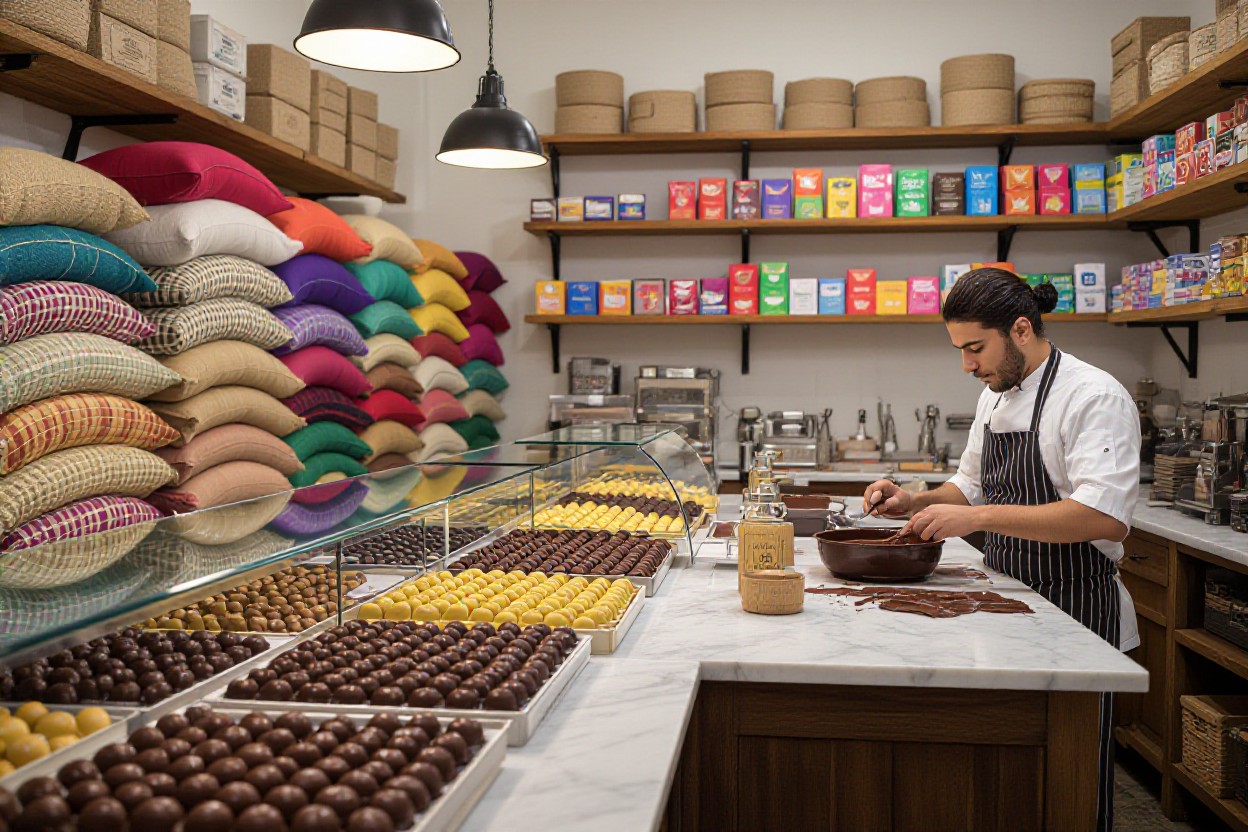
- Bean & Barrel (USA) — Founded 2018: 320% YOY revenue growth 2022–23, $1.2M seed round, 12 SKUs, DTC = 65% revenue, AOV $48, gross margin 62%, 72% single-origin sourcing; artisanal chocolatier success driven by vertical roasting and direct farmer contracts.
- Kwaku Cocoa (Ghana) — Cooperative model since 2016: €1.8M revenue 2024, exports to EU = 40% of sales, farmer income up 3x to ~$1,200/yr, 100% bean-to-bar, 85% heirloom cacao; artisanal chocolatier success tied to transparent premiums paid to growers.
- NordicCacao (Norway) — Specialty retail + e‑comm: €2.0M revenue 2023, 8 boutiques, 18% YoY growth, avg price €6/piece, margin 48%, 3 industry awards; artisanal chocolatier success from experience-driven stores and seasonal limited editions.
- Xocolatl MX (Mexico) — Regional scaling: Founded 2019, revenue $850K 2023, 30 SKUs, wholesale to 60 retailers, LTV/CAC ≈ 4:1, online sales grew 4x after marketplace partnerships, 85% local heirloom cacao sourcing.
- Terra Cacao (Brazil) — Subscription-led growth: Raised $850K in 2021, 3,200 subscribers, churn 3.5% monthly, avg order frequency 4/yr, 70% direct-sourced beans, retail margin ~40%, sustainability premiums on origin labeling.
Innovative Startups in the Chocolate Industry
You can look at startups that scale by data: Bean & Barrel’s 62% gross margin and $48 AOV came from curated bundles and a 65% DTC mix, while Terra Cacao turned 3,200 subscribers into predictable revenue with a 3.5% churn; these metrics illustrate how artisanal chocolatier success often hinges on subscription economics, high AOV, and direct sourcing transparency.
Success Stories from Diverse Geographies
You see diverse playbooks: Kwaku Cocoa increased farmer incomes threefold by exporting 40% of output to Europe, NordicCacao built experience-driven retail in cold markets, and Xocolatl MX unlocked a 4x online sales jump through marketplace partnerships—each demonstrating a regional route to artisanal chocolatier success.
You can unpack those geography-driven tactics further: Kwaku Cocoa’s model pairs a €1.8M revenue base with 100% bean‑to‑bar traceability and premium payments, showing you how origin premiums fund farmer uplift; NordicCacao proves physical retail + seasonal launches sustain higher price points; Xocolatl MX highlights distribution partnerships as a fast-growth lever for artisanal chocolatier success.
Key Takeaways from New Entrants
You should track the same KPIs these newcomers optimized: gross margin (40–62%), AOV ($40–$60), LTV/CAC (~4:1), subscription churn (<4%), and percent direct-sourced beans (70–100%); aligning those metrics with brand storytelling often defines artisanal chocolatier success.
You can act on those takeaways by prioritizing unit economics first: focus on raising gross margin through small-batch pricing, reduce CAC with community-driven content, test subscription offers to stabilize revenue, and document origin premiums to justify pricing—these operational moves map directly to repeatable artisanal chocolatier success.
Summing up
Upon reflecting, you recognize that artisanal chocolatier success comes from mastering product quality, customer experience and smart scaling. To achieve artisanal chocolatier success you cultivate craft-driven branding and transparent sourcing. To sustain artisanal chocolatier success you balance artisanal skills with efficient operations. To amplify artisanal chocolatier success you use direct channels and storytelling. To preserve artisanal chocolatier success you invest in your team and adaptable systems.