Table of Contents
- Growing Demand in Africa for Chocolate Products
- Local Production and Multinational Investment
- Affordability and Product Types
- Infrastructure and Climate Challenges
- Consumer Preferences and Taste Trends
- Retail and Distribution Channels
- Regulatory Environment
- Marketing Strategies for Compound Chocolate
- Competitor Landscape
- Nutritional Aspects
- Sustainability and Sourcing Issues
- Future Trends in Chocolate Consumption
- International Comparisons
- Summing up
It’s clear you should watch the emerging compound chocolate markets Africa as they reshape confectionery access and pricing. You can study supply chains, local manufacturing, and retail trends driving the emerging compound chocolate markets Africa to offer lower-cost sweets. Your buying choices and business plans will be affected by packaging, regulation, and ingredient sourcing in the emerging compound chocolate markets Africa, which expand in urban centers. Use market data to evaluate opportunities in the emerging compound chocolate markets Africa. Track emerging compound chocolate markets Africa data monthly.
Growing Demand in Africa for Chocolate Products
Urbanization and changing retail channels mean you now find more chocolate on African shelves than a decade ago. Supermarkets in Lagos, Nairobi and Accra stock a wider range of affordable treats, while street vendors push single-serve sizes. The emerging compound chocolate markets Africa are expanding because compound formulations lower costs, match local taste preferences, and travel better in tropical climates, driving higher purchase frequency among young, urban consumers and opening export opportunities within regional value chains.
Historical Consumption Patterns
You can trace consumption back to colonial-era introductions, yet domestic intake stayed low even in major cocoa producers; Ghana and Côte d’Ivoire long exported raw beans rather than finished products. Over the 1990s–2010s, snackification and packaged sweets began changing habits, and the emerging compound chocolate markets Africa started to fill the affordability gap by supplying coated candies and low-cost bars in sachets and small multipacks.
Rising Economic Factors
Higher disposable incomes, a growing youth cohort and expanding retail infrastructure mean you now make more impulse confectionery purchases; informal trade channels still dominate lower-tier sales. Exchange-rate volatility and import tariffs push manufacturers toward cost-efficient formulations. The emerging compound chocolate markets Africa benefit as you prioritize price and convenience over premium branding, especially in secondary cities.
- Urban incomes lifted demand for smaller-pack indulgences that fit daily budgets.
- Local processors invest in packaging lines and cold-chain-lite logistics to reach peri-urban consumers.
- Assume that producers will scale compound blends to manage foreign-exchange exposure and raw-cocoa price swings in your market.
In practice, you see Nigeria, Kenya and South Africa leading volume growth while West African hubs serve as processing centers; manufacturers cut costs by replacing cocoa butter with vegetable fats, reducing raw-material import bills by an estimated 15–30% per product line. Retail data from regional chains show double-digit unit growth for sub-$1 confections, and the emerging compound chocolate markets Africa are adapting with single-serve pouches, vending-machine formats and co-packing deals to reach neighbourhood stores.
- Smaller pack sizes increase purchase frequency among working adults and students.
- Contract manufacturing deals help brands avoid heavy CAPEX while expanding SKUs quickly.
- Assume that you will continue to see compound-based launches aimed at price-sensitive segments across urban and peri-urban outlets in the emerging compound chocolate markets Africa.
Role of Compound Chocolate
You should note that compound chocolate replaces cocoa butter with vegetable fats and emulsifiers, cutting costs and improving shelf stability in hot climates. Manufacturers use it for enrobing, moulded bars and inexpensive confections; the emerging compound chocolate markets Africa rely on these formulations to deliver familiar chocolate taste at accessible prices while avoiding refrigeration and strict cocoa-butter sourcing requirements.
Operationally, you benefit from simpler tempering and lower melting-point risk when using compound blends, which can reduce production downtime and energy consumption by roughly 20% compared with pure couverture. Several regional brands have launched compound-coated biscuits and seasonal impulse lines sold through kiosks and school canteens, demonstrating how the emerging compound chocolate markets Africa convert manufacturing flexibility into wider distribution and faster SKU turnover.
Local Production and Multinational Investment
You’re seeing a shift as local mills scale up while foreign groups fund new lines, reshaping emerging compound chocolate markets Africa; investments often range from modest $2–10m facility upgrades to larger $20–50m greenfield projects. You can track growth by the rising number of small-scale compound lines in Nigeria, Ghana and South Africa, where lower capex and faster time-to-market make compound chocolate an accessible sweet for urban consumers and informal retail channels.
Development of Local Manufacturing
You’ll notice local entrepreneurs adding compound lines to leverage simpler formulations and cheaper vegetable fats; many plants now run 2–8 tonnes per day, turning out coated bars and snack pieces for informal vendors. Case studies in Lagos and Accra show small manufacturers cutting unit costs by roughly 20–30% versus traditional couverture, helping you understand why emerging compound chocolate markets Africa are expanding through nimble, locally owned operations.
Multinational Companies Entering the Market
You can point to Mondelez, Nestlé and Barry Callebaut adapting portfolios for mass-market compound SKUs, targeting price-sensitive segments with region-specific packaging and flavoring. Their entry accelerates distribution scale and quality control, and proves that emerging compound chocolate markets Africa attract strategic plays from global confectionery players seeking volume growth and lower-cost formulations.
You’ll see multinationals use joint ventures, contract manufacturing and direct investment to reduce risk while building supply chains; typical initial commitments run $5–30m, focused on processing hubs and co-packers. Their strategies include financing equipment, running local R&D to match palettes, and leveraging existing cold-chain and retail networks so your preferred brands appear faster on shelves across urban and peri-urban areas.
Incorporating Local Ingredients
You’ll find manufacturers blending local inputs—shea, palm derivatives, roasted groundnuts and dried fruit purees—into compound recipes to lower costs and boost local appeal. This approach not only shortens supply chains but also differentiates products on flavor and provenance; across several pilot lines, using shea or roasted groundnut paste increased local sourcing by 15–40%, reinforcing why emerging compound chocolate markets Africa favor ingredient localization.
You can expect formulation teams to trial 10–25% local-ingredient inclusion to balance taste, melting profile and cost; shea often replaces part of the fat phase while dried fruit or spice blends add signature notes. Export-oriented firms also use local ingredients to secure community buy-in and stable supply, which helps your business manage input volatility and strengthen regional marketing stories.
Affordability and Product Types
You see budget lines dominate emerging compound chocolate markets Africa, with many 20–50g bars priced 30–70% below equivalent real-chocolate SKUs due to cheaper fats and local packaging; for market context check What’s Sweet in Africa? The Continent Behind … and note how local sourcing and scale improve margins while you shop urban kiosks and informal markets.
- You’ll find single-serve bars aimed at school snacking and larger family packs for low-cost gifting.
- You can spot event-targeted SKUs—festive molds or branded co-packs—priced to move quickly in township retailers.
- You often see private-label confectionery from regional mills that undercut imports in emerging compound chocolate markets Africa.
- After many brands use smaller gram weights and multipack bundling to hit price points preferred by value-seeking consumers.
| Typical unit price | $0.05–$0.70 per 10–50g |
| Primary cost drivers | Vegetable fats, sugar, packaging, local labor |
| Common SKU formats | Single-serve, share bags, baking chips, coated nuts |
| Distribution channels | Informal stalls, supermarkets, school vendors |
| Market focus | Value segments in emerging compound chocolate markets Africa |
Cost Dynamics of Compound vs. Real Chocolate
You notice compound bars cut costs by replacing cocoa butter with vegetable fats, lowering raw material spend by 25–60% versus couverture; manufacturers pass savings to you through smaller SKUs and aggressive trade promotions, and your purchasing behavior often favors price over origin when margins fall into single-digit percentages.
Common Product Offerings in the Market
You’ll encounter plain compound bars, flavored bars (vanilla, milk, peanut), compound baking chips, and coated snacks; these account for most shelf space because they balance taste familiarity with per-unit affordability in emerging compound chocolate markets Africa.
You also see innovation: 100g family bars with lower margins, single-serve hygienic wraps for schools, and localized flavors (roasted groundnut or spiced) that raise perceived value while you still pay wallet-friendly prices.
Packaging Strategies for Affordability
You observe thin-film wrappers, multi-packs, and bulk refill sachets used to reduce packaging cost per gram; these choices shave 10–30% off finished SKU prices and help brands hit target price tiers within emerging compound chocolate markets Africa.
You’ll find that coated products use minimal secondary boxes, while bakery-targeted chips are sold in 500g pouches to bakeries and small retailers—this mix of formats lets manufacturers optimize logistics and give you the lowest shelf prices.
Infrastructure and Climate Challenges
Power outages, poor roads and coastal humidity directly affect your margins in emerging compound chocolate markets Africa; estimates put cold-chain coverage in parts of sub‑Saharan Africa below 20%, raising last‑mile costs and spoilage risks. Ports like Lagos and Tema face congestion that adds days to transit, and you often absorb higher insurance and buffer inventory costs. Seasonal rains and interior transport delays amplify price volatility for packaging and ingredients, so your supply planning must factor in longer lead times and elevated working capital requirements.
Cold Chain Limitations in Africa
You face ambient warehouse and truck temperatures frequently above 30°C, yet many distributors lack refrigerated trailers, producing last‑mile delays of 3–7 days that stress temper-sensitive confectionery. Compound chocolate tolerates heat better than couverture, but temperature swings cause surface bloom and shorten shelf life. Practical fixes you can use include shaded storage, insulated bulk boxes, and targeted investments in refrigerated containers at key hubs to cut quality losses without full network refrigeration.
Stability of Compound Chocolate
Because compound chocolate replaces cocoa butter with vegetable fats (palm, coconut fractions), you gain a higher melt point and longer ambient stability—typical shelf life runs 12–18 months under dry storage—making it ideal for emerging compound chocolate markets Africa. Manufacturers you work with can ship bars and enrobed products with fewer cold-chain constraints, lowering logistics spend and expanding reach into hotter regions where couverture would fail.
More technically, you should note that vegetable fat blends used in compound chocolate often melt between about 36–42°C versus cocoa butter near 34°C, so product handling tolerates higher temperatures and repeated thermal cycling better. Still, moisture ingress can cause sugar bloom and hygroscopic sugar fillings remain vulnerable, so your packaging and relative‑humidity control are decisive for on‑shelf appearance in emerging compound chocolate markets Africa.
Domestic Cocoa Processing Initiatives
When you source from countries where Ghana and Côte d’Ivoire produce over 60% of world cocoa, local grinding and fat fractionation lower input costs and tariffs, aiding growth in emerging compound chocolate markets Africa. Several regional mills now supply cocoa powder and vegetable fat blends domestically, cutting lead times and foreign‑exchange exposure for your recipes, while government incentives and private‑sector refineries push more value‑added processing closer to origin.
On the ground, investments by major grinders and regional entrepreneurs have increased local milling to tens or hundreds of tonnes per day in key hubs, which you can tap to reformulate blends with locally sourced cocoa solids and palm fractions. This scale-up supports competitive pricing, traceability programs and quicker R&D cycles, directly benefiting your product launches and margin management within emerging compound chocolate markets Africa.
Consumer Preferences and Taste Trends
You notice in emerging compound chocolate markets Africa that affordability and familiar flavors drive purchases more than premium cacao origin stories; single-serve bars (10–20 g) priced under $0.50 dominate informal trade, and heat-stable compound recipes are preferred for shelf life in tropical supply chains, with many products formulated to last 9–12 months without refrigeration.
Sweetness Levels and Flavor Profiles
You find sweetness skewing higher in street-level snacks, where vanilla, caramel and sugar-forward profiles outperform bitter dark notes; in markets from Lagos to Nairobi manufacturers blend sugar, milk powder and modest cocoa solids so children and adults both accept 20–30% sugar by weight, a pattern visible across emerging compound chocolate markets Africa.
Adaptations for Local Markets
You see manufacturers tailor textures and inclusions to local palates: roasted groundnut, banana flakes and chili are common additions, while lower-cost vegetable fats keep product prices accessible in emerging compound chocolate markets Africa.
You should note packaging and format changes too: sachets and multi-packs for traders, portion control wrappers for school vendors, and bulk 1–2 kg blocks for small bakeries; these moves helped several regional brands expand distribution into open-air markets and supermarket value aisles across emerging compound chocolate markets Africa, increasing repeat purchases among price-sensitive shoppers.
Shift in Consumer Expectations
You observe buyers increasingly expect traceable sourcing, clearer ingredient lists and occasional premium options even within cheap ranges, pressing producers to offer “better-for-money” SKUs alongside commodity lines in emerging compound chocolate markets Africa.
You will notice this shift pushing some firms to launch mid-tier product lines with single-origin cocoa inclusions or reduced-sugar variants, often priced 20–50% above baseline bars; retailers report faster turnover for these SKUs among urban millennials and young parents seeking value and perceived quality.
Retail and Distribution Channels
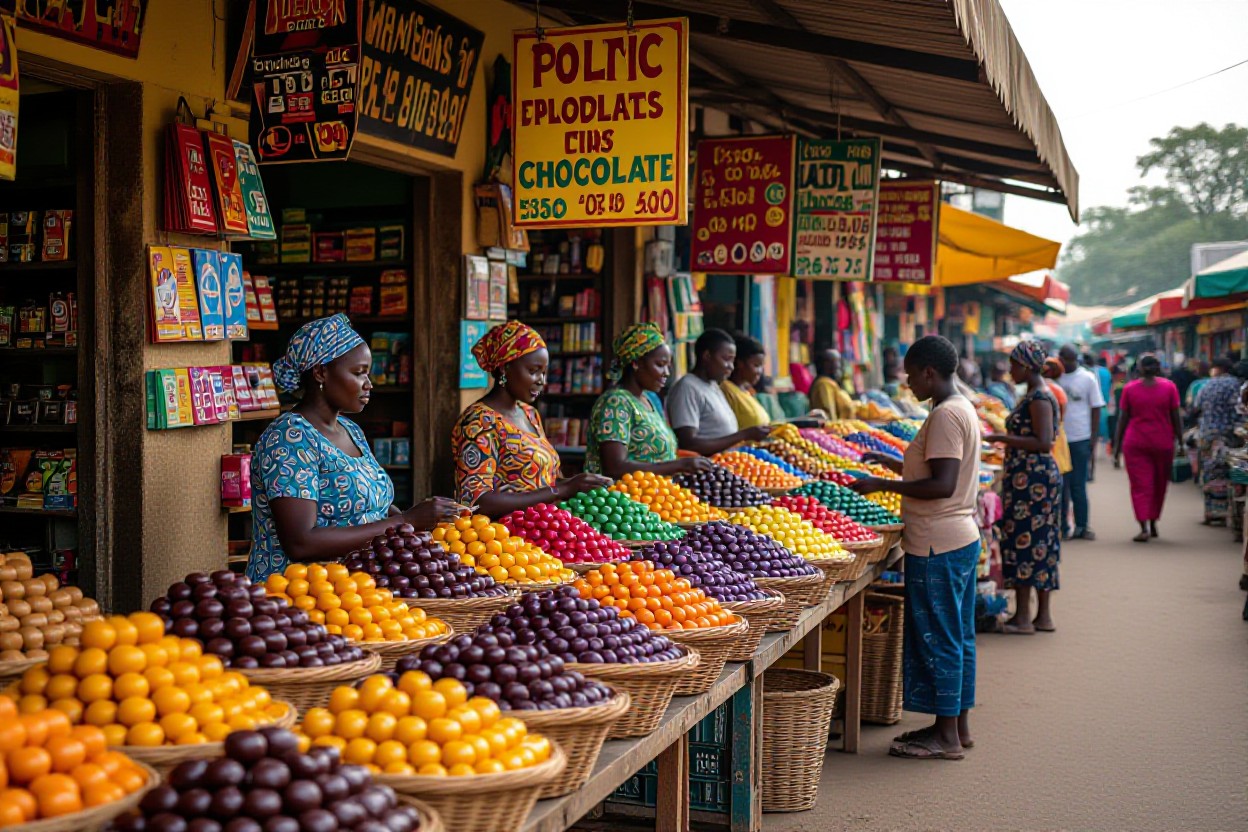
You navigate a split landscape: modern chains, informal shops and growing digital channels each demand different SKUs and margins. In emerging compound chocolate markets Africa you must balance shelf-facing trade spend against low-cost sachet volumes. In emerging compound chocolate markets Africa, supermarket placement can cost 15–25% of gross margin while informal stalls move high volumes of single-serve bars in dense footfall areas.
Rise of Supermarkets and Urban Retail
You gain scale when chains like Shoprite, Carrefour and Spar expand regional logistics and reduce spoilage; in emerging compound chocolate markets Africa supermarket penetration rises fastest in capitals such as Nairobi, Lagos and Johannesburg. Supermarkets often push private-label compound chocolates priced 15–30% below international brands, driving SKU rationalization and higher velocity for competitively packaged products.
Small-Scale Retailer Participation
You depend on kiosks, corner shops and market stalls to reach low-income consumers; in emerging compound chocolate markets Africa these outlets favor 5–20 gram single-serve packs and sachets. Informal retailers rotate stock weekly, accept small-credit terms, and prioritize low-cost, high-turn items, so your order minimums, pack sizes and trade terms must match their cash flow.
You can scale through micro-distributors, commission agents and motorbike delivery that service dense neighbourhoods and peri-urban areas. In emerging compound chocolate markets Africa manufacturers commonly offer 10–20% trade discounts and 7–14 day consignment terms to small retailers; you should design tamper-resistant sachets and theft-resistant pack formats to protect margins while keeping unit cost attractive.
Online Sales and E-Commerce Trends
You reach middle-class and diaspora customers via platforms like Jumia and local grocery apps; in emerging compound chocolate markets Africa online confectionery sales show double-digit growth in several markets. Mobile payments (M-Pesa, MTN Mobile Money) plus cash-on-delivery lower friction, and bundle deals or subscription boxes lift basket size for low-price compound chocolate SKUs.
You should blend marketplace listings, DTC channels and social commerce—WhatsApp and Instagram ordering often convert loyal buyers. In emerging compound chocolate markets Africa vendors rely on third-party logistics, dark stores and pop-up fulfilment to hit 24–48 hour delivery windows; you can use targeted SMS, promo codes and A/B pricing to optimize conversion for price-sensitive shoppers.
Regulatory Environment
You face a patchwork of rules that directly shape margins and formulations in emerging compound chocolate markets Africa, from tariff lines to labeling laws; local incentives, regional trade blocs and food safety expectations all interact, so your sourcing, pricing and shelf strategies must adapt to shifting regulatory timelines and enforcement patterns across markets like West, East and Southern Africa.
Government Policies Supporting Local Production
You can leverage incentives as several governments push value addition: Ghana and Côte d’Ivoire have promoted local processing through tax holidays and export permits for finished goods, while Nigeria and Kenya offer agricultural credit lines and duty relief for equipment, helping you scale factories, lower input costs and compete in emerging compound chocolate markets Africa.
Trade Regulations Affecting Ingredients
You encounter varied import duties and classification issues—vegetable fats, cocoa powder and emulsifiers often fall under different tariff codes—so your cost model must reflect duties, licensing and preferential tariffs under regional agreements when operating in emerging compound chocolate markets Africa.
You should monitor AfCFTA schedules and bilateral deals: some raw inputs gain reduced tariffs over 2–5 years, but non-preferential MFN rates still apply for third-country supplies; practical examples include stricter documentation for hydrogenated fats and certification requirements for lecithin, which directly affect lead times and landed costs in emerging compound chocolate markets Africa.
Food Safety Standards and Implications
You must meet both international and national standards—Codex, HACCP and ISO 22000 increasingly form baseline expectations—so investing in traceability, allergen control and lab testing reduces recalls, helps access supermarkets, and supports brand trust across emerging compound chocolate markets Africa.
You will find enforcement varies: South Africa’s SABS and Nigeria’s SON often require local registration and batch testing, while buyers like supermarket chains demand third-party audits; budgeting 1–3% of revenue for compliance activities and routine testing is a common industry practice in emerging compound chocolate markets Africa.
Marketing Strategies for Compound Chocolate
Brand Positioning and Messaging
You should position your product as affordable indulgence: emphasize familiar flavors (vanilla, caramel, peanuts), clear value per gram, and durable packaging for humid climates. In emerging compound chocolate markets Africa your messaging can highlight “single-serve value” and local taste variants, using 10–25 g pack examples and price brackets ($0.05–$0.50) to make comparisons immediate and actionable for retail buyers and distributors.
Targeting Emerging Middle Class Consumers
You need to focus on urban shoppers aged 18–40 who prioritize convenience and status-friendly treats; place 10–20 g bars in kiosks, petrol stations and supermarket checkouts. In emerging compound chocolate markets Africa this cohort drives volume growth, so tailor small bundles, weekday promotions and commuter-focused placement to increase repeat purchase frequency.
You can run sampling in high-footfall areas: target office districts and university campuses with 1,000–5,000 free samples per campaign, then track conversion via coupon codes or SMS opt-ins. For emerging compound chocolate markets Africa bundle trials with low introductory prices (e.g., two-for-$0.75) and measure lift—pilot data often shows 15–30% repeat-buy within 60 days when sampling is paired with a discount.
Utilizing Social Media and Digital Marketing
You should leverage WhatsApp groups, Facebook and TikTok for short-form storytelling and user-generated content; use 10–30 second videos demonstrating unboxing or pairing with local snacks. In emerging compound chocolate markets Africa run targeted ads by city and income bracket, and integrate mobile-money checkout links to reduce friction for impulse buys.
You can activate micro-influencers (1k–50k followers) for local credibility, paying modest fees or product-for-post arrangements; couple influencer posts with geo-targeted promo codes redeemable at nearby retailers. This approach in emerging compound chocolate markets Africa often lowers customer acquisition cost and drives measurable in-store uplift when codes are limited to specific outlets.
Competitor Landscape
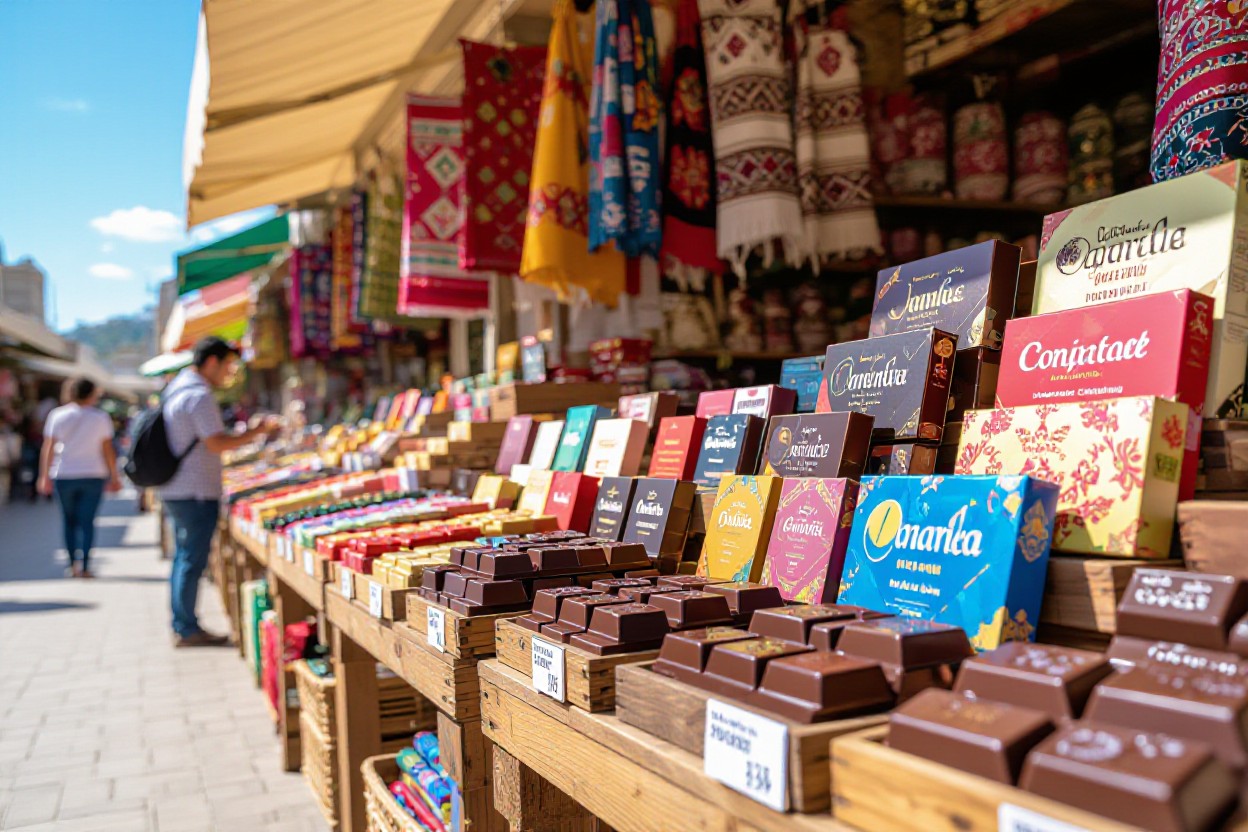
You face a mix of global multinationals, regional manufacturers and countless informal vendors in emerging compound chocolate markets Africa; industry estimates put the top five suppliers at roughly 60–70% share in key markets, while informal trade fills wide gaps in rural and peri‑urban demand, keeping price pressure high and margins thin for newcomers.
Key Players in the Compound Chocolate Market
Your competitive set includes multinationals such as Mondelez and Nestlé, regional groups like Promasidor and PZ Cussons, plus local co‑packers and artisanal producers; in emerging compound chocolate markets Africa these players compete on cost, distribution depth and sachet formats that target low‑income consumers, with urban sachet penetration often exceeding 40% in countries like Nigeria.
Competitive Strategies Adopted
You notice rivals pursue aggressive price segmentation, micro‑packaging (5–20g sachets priced at $0.03–$0.15), and supplier consolidation to lower input costs; in emerging compound chocolate markets Africa private‑label supply to retail chains and palm‑oil formulations are common tactics to protect margins and expand reach.
Digging deeper, companies scale via contract co‑packing, regional procurement hubs and promotional calendars tied to festivals and school terms; you’ll see sachet promotions offering up to 20% discounts, trade credit to kiosk owners, and localized flavors (peanut, chai, mango) used as rapid market tests in emerging compound chocolate markets Africa to lift trial rates by double digits.
Market Share and Analysis
Market share is fragmented: formal branded supply often holds 30–60% depending on country, while informal channels account for 30–50%; analysts estimate the compound chocolate segment in emerging compound chocolate markets Africa is growing at roughly 5–9% annually as affordability and urbanization expand low‑price impulse purchases.
Further analysis shows channel splits vary—supermarkets 20–30%, kiosks and informal retailers 35–50%—and price elasticity is high, so a 10% price cut can boost volumes by 8–12% in many urban cohorts; tracking sachet velocity and distributor turnover rates gives you the most actionable signal in emerging compound chocolate markets Africa.
Nutritional Aspects
Your focus shifts to nutrient density: compound chocolates typically contain more vegetable fats and added sugar and fewer cocoa solids than couverture, so per 100 g you often see ~500–600 kcal, 30–40 g fat and 40–60 g sugar; check ingredient order and claims. Market analysis such as Africa Confectionery Market Size and Forecast 2025–2033 highlights reformulation trends in emerging compound chocolate markets Africa.
Comparison of Nutritional Profiles
You directly compare labels: compound bars replace cocoa butter with cheaper vegetable oils and often drop cocoa solids from typical 30–70% to under 10–20%, raising sugar and energy per serving in emerging compound chocolate markets Africa.
Comparison — emerging compound chocolate markets Africa
| Calories (per 100 g) | Compound: ~500–600 kcal; Cocoa-rich: ~450–550 kcal |
| Fat type | Compound: vegetable fats (palm, soybean); Cocoa-rich: cocoa butter |
| Cocoa solids | Compound: often <10–20%; Cocoa-rich: 30–70%+ |
| Sugar | Compound: typically higher (40–60 g/100 g); Cocoa-rich: variable, often lower |
| Typical fortification | Compound: additives, emulsifiers; Cocoa-rich: higher flavanol content |
Health Perceptions of Chocolate Products
You observe shoppers split: many equate higher-cocoa bars with antioxidants and choose them for perceived health benefits, while price-sensitive buyers accept compound options as everyday treats; packaging claims and local campaigns strongly shape those views in emerging compound chocolate markets Africa.
You notice manufacturers addressing perception gaps by highlighting ingredients and percentages: phrases like “high cocoa” or “no hydrogenated oils” shift willingness to pay, and pilot studies in urban West and East African cities show clearer labeling increases consumer trust and premium purchases.
Innovations in Healthier Options
You find reformulation accelerating: reduced-sugar recipes, fiber additions, and partial replacement of sugar with fruit powders or nut flours are being tested to lift nutrient density while retaining price advantages in emerging compound chocolate markets Africa.
You can point to examples where baobab and moringa powders add micronutrients and fiber, microencapsulated sweeteners cut sugar by 20–40% without major texture loss, and portion-controlled packaging targets school snacks and maternal nutrition programs.
Sustainability and Sourcing Issues
Ethical Sourcing of Ingredients
You must weigh ethical sourcing as grocery buyers and manufacturers expand into emerging compound chocolate markets Africa; over 60% of the world’s cocoa comes from Côte d’Ivoire and Ghana, where cooperatives like Kuapa Kokoo and programs such as Mondelez’s Cocoa Life and Nestlé’s Cocoa Plan have improved farmer premiums and traceability for thousands of growers, yet gaps in certification and informal trading mean you still face inconsistent supply-chain transparency and occasional unpaid or underpriced deliveries.
Environmental Impacts of Production
You see environmental pressure from both cocoa clearing and vegetable fats: satellite analyses have flagged deforestation hotspots in West Africa tied to cocoa expansion, while demand for palm and shea fats raises concerns about habitat loss and soil degradation, making sustainability metrics increasingly important as you source ingredients for emerging compound chocolate markets Africa.
You can dig deeper into production impacts by examining energy and land footprints: processing refiners and tempering lines consume significant electricity per tonne, and converting forests to cocoa or oil-palm plantations has been linked to biodiversity declines in Ivorian and Ghanaian landscapes; major brands operating in emerging compound chocolate markets Africa now publish supplier maps and farmer-training outcomes to help you assess supplier environmental performance.
Consumer Demand for Sustainable Practices
You’re noticing growing consumer expectation for labeled sustainability even in cost-sensitive segments: urban shoppers in Lagos, Nairobi and Accra increasingly scan packs for Fairtrade, Rainforest Alliance or origin claims, driving retailers and local manufacturers to pilot certified lines as they expand into emerging compound chocolate markets Africa.
You should balance price and provenance: while most mass-market buyers still prioritize affordability, niche premium lines with certification or percent-of-profit-to-farmer commitments are gaining traction among younger buyers and expatriates, prompting some regional producers to offer dual portfolios—value compound bars plus a certified premium SKU—to capture both mainstream sales and the sustainability-minded segment of emerging compound chocolate markets Africa.
Future Trends in Chocolate Consumption
You should watch affordability and convenience as dominant forces in emerging compound chocolate markets Africa, where 10–50 g single-serve packs drive volume sales; the Africa Confectionery Market Analysis Trends 2025-2033 also highlights expansion in impulse channels, and you’ll see manufacturers optimize formulations and pack sizes to meet price-sensitive shoppers in urban and peri‑urban areas.
Potential Shift Towards Real Chocolate
You may notice pockets of growth for higher-cocoa products as urban consumers in South Africa, Nigeria and Kenya trade up for perceived quality; in emerging compound chocolate markets Africa premiumisation is concentrated in specialty stores and online, where shoppers seek 40–70% cocoa bars and provenance, creating a niche but growing premium segment.
Innovations in Compound Chocolate
You’ll find product innovation focused on texture and cost-efficiency: emulsifiers, reduced-sugar recipes, and shea- or coconut-based vegetable fats are being trialed by producers in Ghana and Côte d’Ivoire, and these technical tweaks are transforming offerings across emerging compound chocolate markets Africa.
You should expect process innovations too: continuous enrobing and temper-free coating lines lower capital and labor needs, while flavor microencapsulation and natural inclusions (roasted nuts, freeze-dried fruit) help brands broaden appeal without reverting to cocoa-heavy recipes; pilot runs show shortened production cycles and stable shelf life benefits.
Market Trends Influencing Growth
You’ll see distribution and pricing shape growth strongly—informal trade, small independent retailers and low-cost modern trade channels dominate impulse purchases; reports cited in the Africa Confectionery Market Analysis Trends 2025-2033 indicate these channels will account for most incremental volume gains in emerging compound chocolate markets Africa.
You should also track private-label growth and e‑commerce: retailers are introducing own-brand compound bars for margins, and digital platforms enable direct-to-consumer launches that test niche flavors quickly, giving manufacturers fast feedback loops that accelerate product iteration in emerging compound chocolate markets Africa.
International Comparisons
International Comparisons
| Region | Characteristic |
| Africa | Price sensitivity, informal trade, sachets and bulk blocks drive growth in emerging compound chocolate markets Africa |
| Europe/US | High per‑capita consumption, premium positioning and strict labeling favor couverture and branded confectionery |
| Asia/Latin America | Rapid urbanization and local flavor adaptation see compound chocolate used heavily in industrial and bakery segments |
Comparing African Markets with Global Trends
Comparing African Markets with Global Trends
| Trend | Africa vs Global |
| Per‑capita consumption | Often below 1 kg/year in many African markets versus ~6–8 kg in parts of Europe |
| Packaging | Sachets and micro‑packs outperform large bars; affordability beats premium finishes |
| Distribution | Informal kiosks and small grocers dominate compared with modern retail in developed markets |
You can see emerging compound chocolate markets Africa lag global per‑capita consumption but outpace peers in innovation on price and pack size; Nigeria (~200M) and Kenya (~54M) illustrate how sachets and 50–100g blocks pushed penetration, while Europe’s 6–8 kg norms show the upside for future premiumization in select urban cohorts of emerging compound chocolate markets Africa.
Lessons from Other Emerging Markets
Lessons from Other Emerging Markets
| Market | Lesson |
| India | Micro‑packaging and low‑price SKUs accelerated trial among price‑sensitive consumers |
| Brazil | Local flavor variants and co‑packing reduced costs and built loyalty |
You should apply micro‑pack strategies and flavor localization as seen in India and Brazil to scale emerging compound chocolate markets Africa; pilot sachets in peri‑urban chains, price tiers in urban supermarkets, and quick SKU rationalization to capture low‑income, high‑frequency buyers.
For operational detail, you can test 10g impulse sachets alongside 100g value blocks, partner with local co‑packers to cut freight and duties, and use trade promotions measured by sell‑through rates—approaches that helped other emerging markets grow category penetration and that translate directly to emerging compound chocolate markets Africa.
Global Brands Adapting Strategies for Africa
Global Brands Adapting Strategies for Africa
| Brand Action | How It Helps |
| Localized SKUs | Matches price points and taste profiles to local demand |
| Distribution partnerships | Expands reach into informal retail and e‑commerce |
You’ll notice major players tailor product portfolios when entering emerging compound chocolate markets Africa by launching lower‑margin, higher‑velocity SKUs and teaming with local distributors; that lets your teams leverage brand recognition while meeting affordability and last‑mile access needs.
Operationally, you can replicate this by negotiating tiered pricing, creating co‑brand promotions with regional distributors, and running in‑store trials—strategies global brands used to accelerate uptake and can scale across multiple countries in emerging compound chocolate markets Africa.
Summing up
On the whole, you should watch emerging compound chocolate markets Africa as they expand affordable sweets, emerging compound chocolate markets Africa, and your supply-chain and pricing strategies can benefit from emerging compound chocolate markets Africa; emerging compound chocolate markets Africa offer scale and innovation, so your brand can adapt to local tastes by leveraging emerging compound chocolate markets Africa, giving you clear growth opportunities across the continent.