Table of Contents
- The Cocoa Lifecycle
- Understanding Cocoa By-products
- Upcycling Cocoa Pod Husks
- Transforming Cocoa Bean Shells
- Capturing the Value of Cacao Fruit Pulp
- Energy Production from Cocoa Waste
- Cosmetics and Textiles: Creative Upcycles
- Sustainable Packaging Innovations
- Industry Initiatives and Collaborations
- Economic Impacts of Circular Practices
- Environmental Benefits of Cocoa Circular Economy
- Challenges and Limitations
- Future Trends in Cocoa Circular Economy
- Summing up
Sustainability in cocoa systems demands that you adopt circular economy in cocoa practices: circular economy cocoa turns pods into compost, feed and value-added products, circular economy cocoa reduces chocolate waste in processing and retail, circular economy cocoa protects farmer incomes and soil, and circular economy cocoa informs your sourcing and design choices to close material loops.
The Cocoa Lifecycle
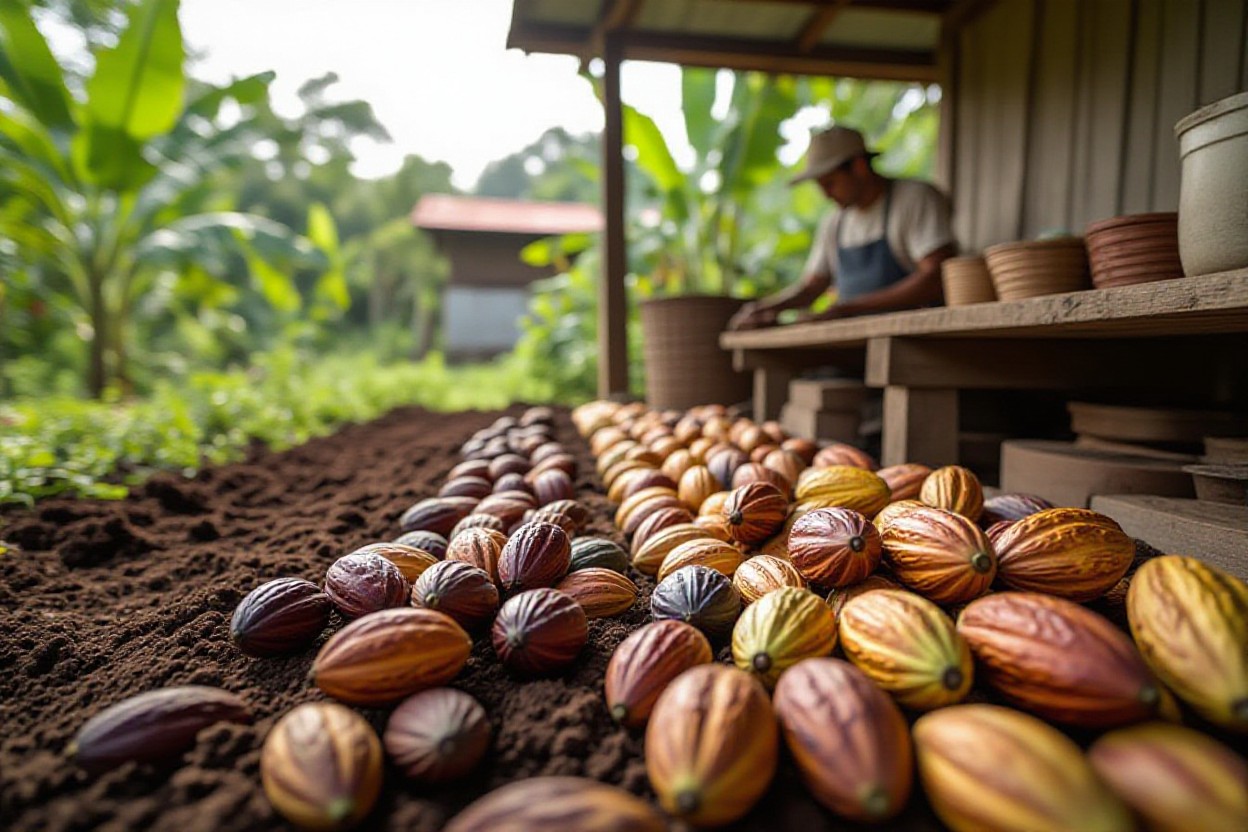
Across the farm-to-bar chain, the cocoa lifecycle offers multiple intervention points for circular economy cocoa, from pod to byproduct valorization. You see trees live 20–25 years with staggered yields; smallholders average 300–700 kg dry beans/ha while improved systems hit 1,000–1,500 kg/ha. Harvest timing, on-farm processing and waste reuse determine whether you close loops that turn husks, mucilage and shells into compost, animal feed or niche products that boost both resilience and income.
Cocoa Tree Cultivation
Shade management and agroforestry matter for circular economy cocoa because they influence soil health and pest pressure; planting densities commonly range 1,000–1,600 trees/ha. You should integrate pruning, nutrient cycling and disease control—Phytophthora causes black pod losses up to 30% if unmanaged. Applying composted pod husks and intercropping with nitrogen-fixers can cut fertilizer needs and improve yields while closing nutrient loops on your plot.
Harvesting Cocoa Pods
Pods mature about 5–6 months after flowering and are harvested every 3–6 weeks; selective cutting prevents branch damage and preserves productivity, key to circular economy cocoa. You usually harvest with a knife or hook, then split pods to extract wet beans and mucilage. Efficient collection reduces fermentation variability and limits post-harvest spoilage that otherwise wastes valuable biomass.
Post-harvest, you can upcycle pod husks into compost, animal feed or substrate for mushrooms—strategies already used by cooperatives in Ghana and Brazil to diversify income. For example, some farmer groups convert husks into compost that improves soil organic matter and reduces synthetic fertilizer needs; other producers dry and market cascara for specialty beverage buyers, turning a disposal cost into revenue within circular economy cocoa models.
Cocoa Processing Techniques
Fermentation (typically 5–7 days) and drying to ~7% moisture are necessary to develop flavor before roasting at 120–140°C; these steps determine bean grade and market value, central for circular economy in cocoa. You can reclaim shells and sieving dust for flavor extracts, animal feed or bioenergy. On-farm fermentation control and modular drying reduce losses and enable you to capture more value locally instead of exporting low-margin raw beans.
Innovations like covered solar dryers, small-scale continuous fermenters and shell-to-product lines let you retain more value on-farm: solar drying cuts drying time and molds, while shell upcycling (cascara tea, flavor concentrates, activated carbon) opens specialty markets. Take an example from coffee. Pilot programs in West Africa show processors achieving 5–15% revenue uplift by selling cascara and husk-derived products, illustrating practical circular economy in coffee approaches one can replicate in cocoa.
Understanding Cocoa By-products
You already see how much waste a harvest creates: with global cocoa bean production near 5 million tonnes annually, by-products become millions of tonnes of biomass. In circular economy cocoa strategies you turn that mass into resources—compost, biochar, animal feed, or ingredient streams—so farms, cooperatives, and processors can capture value and cut disposal costs. Practical pilots show that system-level reuse reduces on-farm waste volumes and creates new revenue lines for your operation.
Cocoa Pod Husks
When you crack open a pod you’re left with husks that often account for roughly 60–70% of the pod’s fresh weight, meaning several tons per hectare each season. In circular economy cocoa models you compost husks to rebuild soil carbon, convert them to biochar for longer-term sequestration, or process fibers for low-cost construction boards; on-farm trials report faster mulching and improved moisture retention when husks are applied as mulch.
Cocoa Bean Shells
Your processing yields bean shells that typically represent about 10–20% of dry bean mass and contain residual polyphenols, theobromine and low fat, making them attractive for extraction, pelletized fuel, or controlled animal feed use. Within circular economy cocoa approaches you can valorize shells by steam-treating and pelletizing for bedding, or extracting antioxidants for cosmetic and food applications, reducing landfill and adding product diversity.
Digging deeper, you’ll find shells suit multiple value chains: de-fatting yields a fibrous meal for pellet fuel or substrate, solvent or water extraction recovers flavonoids and methylxanthines for nutraceuticals, and pyrolysis produces activated carbon or biochar for filtration and soil amendment. Trials often limit animal-feed inclusion to around 10–15% because of methylxanthines, so you must balance processing steps (e.g., de-toxification, pelleting) with end-use to maximize returns in a circular economy cocoa framework.
Cacao Fruit Pulp
The sweet mucilage you wash off beans contains fermentable sugars and organic acids; in fresh weight terms pulp can be a substantial fraction of the fruit and provides both fermentation drive and a beverage ingredient. In circular economy cocoa systems you capture pulp for juices, vinegar, or alcohol, or ferment it separately to control bean fermentation, turning what was waste into a marketable product and improving flavor consistency in your chocolate supply chain.
On a technical level, pulp collection enables you to manage fermentation more predictably: controlled pulp fermentation reduces acetic spikes and can improve desirable flavor precursors. Producers have commercialized pulp as puree, juices and fermented drinks, and processors extract pectin or use pulp as a substrate for single-cell protein. Integrating pulp capture into post-harvest workflows is a high-impact step toward a resilient circular economy cocoa model.
Upcycling Cocoa Pod Husks
Pod husks represent roughly 70% of the cocoa fruit by weight and, with estimates of about 10 tonnes of husks per tonne of dried beans, you can see why circular economy cocoa depends on turning this stream into value. By integrating husk valorization into farm and mill operations you lower waste-handling costs, create feedstocks for soil amendments and materials, and close nutrient loops that directly support more sustainable cocoa production.
Animal Feed Production
After drying, ensiling or short fermentation to reduce anti-nutritional factors, pod husks can be incorporated into ruminant rations or used in mixed silages; pilot projects in Ghana and Côte d’Ivoire show village-scale systems feeding dairy and draft animals. If you design simple processing—chopping, inoculating with lactic acid bacteria, and blending with forage—you convert a disposal problem into protein-and-fiber feed while advancing circular economy cocoa on-farm.
Organic Fertilizers and Compost
You can compost pod husks alone or co-compost with manure and green residues to rebuild soil organic matter, returning phosphorus and potassium to cocoa plots and reducing dependence on synthetic fertilizers. Field trials and farmer groups report improved moisture retention and better root development when husk-based composts are applied under shade trees, demonstrating a practical pathway for circular economy cocoa at scale.
For effective composting, chop husks to increase surface area, target a C:N ratio near 30:1 by mixing with nitrogen-rich materials, maintain moisture at about 50–60%, and turn piles weekly; under these conditions compost matures in 8–12 weeks. You should monitor temperature—160–70°F (70–80°C) peak helps pathogen reduction—and consider vermicomposting or microbial inoculants to accelerate humification, making circular economy cocoa benefits measurable within a season.
Innovative Products from Cocoa Husk
Beyond feed and compost, husks can be processed into biochar, biodegradable packaging, natural dyes, and substrates for mushroom cultivation, expanding income streams for producers. Companies and research groups are converting husks via pyrolysis, fermentation and extrusion; by adopting these technologies you create higher-value products and strengthen circular economy cocoa linkages between agriculture, industry and local entrepreneurs.
In practice, converting husks to biochar through low‑oxygen pyrolysis yields a soil amendment that sequesters carbon and improves nutrient retention, while enzymatic hydrolysis and fermentation can produce platform chemicals for bioplastics. You can partner with local processors or cooperatives to pilot these value chains—research efforts in West Africa and Brazil already demonstrate technical feasibility and market interest for circular economy cocoa innovations.
Transforming Cocoa Bean Shells
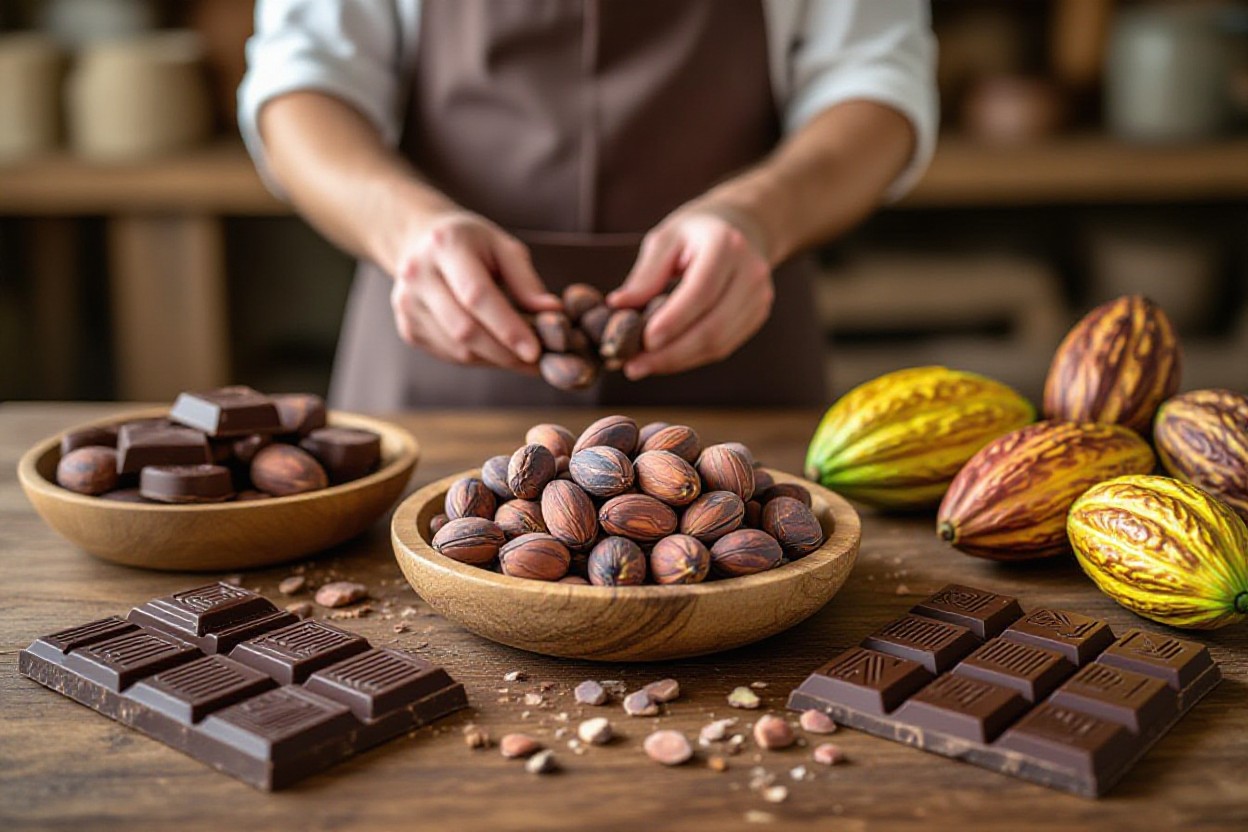
You can turn the 10–20% of bean mass that becomes shells into value rather than waste; with West Africa producing ~70% of global cocoa, circular economy cocoa approaches to shell reuse scale quickly. Practical pathways include drying, grinding, and pelletizing shells for food, agriculture, and materials, reducing landfill loads while creating new revenue streams.
Cascara Tea Production
You can make cascara-style tea from toasted cocoa shells, which are rich in polyphenols and contain far less caffeine than coffee; shells typically account for 10–20% of processed bean weight, so a 10-ton bean lot yields roughly 1–2 tons of dry shell for infusion. Small roasters and cooperatives in Ghana and Ecuador are commercializing cocoa shell teas under circular economy cocoa initiatives.
Natural Mulch for Gardens
You can spread crushed cocoa shells as a mulch to suppress weeds, retain moisture, and add organic matter; applied at about 3–5 cm depth they form a slow-decomposing layer that benefits soil structure. Home gardeners and smallholders adopting circular economy cocoa practices find shell mulch an inexpensive option that diverts processor waste back into productive land use.
You should avoid using large volumes of fresh shells directly on seedlings because theobromine and tannins can be phytotoxic; composting shells for 6–12 weeks with nitrogen-rich greens stabilizes them and reduces bitterness. After pre-composting, trials show shells integrate within a season, boosting microbial activity and helping you build soil carbon while keeping material flows within circular economy cocoa systems.
Other Uses in Food and Beverage
You can extract antioxidants, fiber, and roasted flavor compounds from shells for syrups, spice blends, and baked inclusions, though processing to reduce theobromine is usually required for direct food use. Several startups are producing cocoa-shell syrups and seasonings, demonstrating practical product paths that align innovation with circular economy cocoa goals.
You might pilot collaborations with craft brewers and chocolatiers who use 1–3% ground shell additions to impart tannic, roasted notes without overwhelming sweetness; gentle roasting preserves measurable polyphenols for marketing on antioxidant content. If you quantify these trials analytically, you can scale formulations that both enhance products and keep shells circulating in the circular economy cocoa value chain.
Capturing the Value of Cacao Fruit Pulp
You can turn the often-discarded pulp into multiple revenue streams—juice, sugar, and fermentation starters—by integrating post-harvest lines that extract roughly 25–40% of pod weight as usable pulp; this strengthens your circular economy cocoa strategy while lowering waste. Pilot processors pair hydraulic presses with low-temperature pasteurization to preserve aroma, and studies on pod husk valorization (Upcycled Cocoa Pod Husk: A Sustainable Source of …) show pathways that complement circular economy cocoa approaches across the supply chain.
Development of Cacao Fruit Juice
For beverage development you can use simple cold-pressing and microfiltration to produce a perishable juice with pH around 3.5–4.5 that ferments naturally; companies scale by blending 5–20% pulp juice into smoothies or kombucha bases to add tropical acidity. Processing at the farm level preserves livelihoods and embeds circular economy cocoa principles by converting pulp into a shelf-stable concentrate via vacuum evaporation for transport.
Cacao Fruit Sugar as a Natural Sweetener
You can concentrate pulp sugars—primarily glucose, fructose and some sucrose—into syrups or crystalline forms that replace part of refined sugar in bars and beverages, reinforcing circular economy cocoa by keeping added-value within origin communities. Producers often clarify with enzymatic treatment and concentrate under reduced pressure to retain flavor while meeting food-safety standards for commercial use.
Scaling sugar extraction involves enzymatic hydrolysis, membrane filtration and gentle evaporation; you should target Brix concentrations suited to your applications, then consider spray-drying or blending with maltodextrin for a powdered sweetener. Trials show bakeries can substitute 10–30% of sucrose with cacao fruit sugar to reduce refined-sugar input while adding fruity notes, supporting circular economy cocoa by turning pulp into a premium ingredient.
Whole-Fruit Utilization in Chocolate
You can adopt whole-fruit processing—co-fermenting beans with intact pulp or adding concentrated pulp during roasting—to create single-origin bars with intensified floral and fruity notes and reduce processing waste. Several bean-to-bar makers already market whole-fruit lines that exemplify circular economy cocoa, using on-farm pulp to modulate fermentation kinetics and capture more value per harvested pod.
Implementing whole-fruit methods requires adapting fermentation time and aeration; you should monitor temperature and moisture closely since intact pulp alters microbial succession and flavor precursors. Successful producers report more complex volatile profiles and higher consumer willingness-to-pay for whole-fruit chocolates, tying sensory premium directly to circular economy cocoa practices on-farm and in the chocolate maker’s facility.
Energy Production from Cocoa Waste
You can turn cocoa pod husks, shells and pulp into reliable energy streams that feed processing plants and local communities, advancing circular economy cocoa goals. Using combined combustion and digestion strategies, operators report replacing a sizable share of fossil-derived heat; for example, shell-fired boilers can supply up to 40% of factory steam needs when integrated with efficient drying systems. Scaling these pathways at cooperative level keeps value local, reduces transport emissions, and creates a continuous fuel pipeline that complements circular economy cocoa objectives.
Biomass Fuel Generation
You can burn dried shells and husks directly in fluidized-bed or grate boilers, where dry cocoa shells average about 16–18 MJ/kg calorific value and ash rates under 8%. Large manufacturers such as Barry Callebaut and regional mills in Ghana already co-fire shells with wood to cut fossil fuel use; in practice this can offset 20–40% of a small factory’s thermal demand. Integrating feedstock preprocessing and emission controls ensures you meet air-quality standards while strengthening circular economy cocoa supply chains.
Briquette Production for Cooking Fuel
You can compress shredded, dried pod husks into briquettes that reach 18–20 MJ/kg, offering a low-smoke alternative to charcoal for household cooking. Community enterprises in West Africa have piloted briquette sales that substitute up to 30% of local charcoal consumption, lowering household fuel costs and creating off-farm income for farmers. Packaging and certification for indoor-emission performance help you access urban markets and close material loops within circular economy cocoa initiatives.
You should aim for moisture below 10% before densification: mill husks to a uniform 2–5 mm, mix with a 8–12% binder such as cassava starch or molasses, then compress at 40–100 MPa to form 50–100 mm logs or pucks. Densification raises bulk energy density by roughly 2–3× versus loose husk, so one tonne of dry husk can yield 700–900 kg of sellable briquettes depending on binder and compaction. Quality control on calorific value and ash lets you position briquettes within circular economy cocoa markets and cooking-fuel value chains.
Biogas from Cocoa Residues
You can convert cocoa pulp, wastewater and finely milled husks into biogas via anaerobic digestion; typical systems deliver methane contents of 55–65% and observed biogas yields in pilot projects range from about 80–160 m³ per tonne of wet residue depending on solids content. Co-digesting cocoa residues with manure or food waste stabilizes pH and increases gas production by 15–40%, making small-scale CHP units or gas cookstoves viable options for farms and cooperatives pursuing circular economy cocoa outcomes.
Operationally, you should design digesters with 20–30 day hydraulic retention time at mesophilic temperatures to optimize conversion, and monitor C:N ratios to avoid inhibition from high sugars or tannins. Digestate is a nutrient-rich fertilizer (notably N, P, K) that returns organic matter to cocoa soils, often improving yields by measurable percentages in field trials. When you pair a 100–200 m³/day biogas plant with a 50–150 kWth CHP, it can power processing equipment and lighting for a cooperative, directly translating circular economy cocoa principles into energy and soil benefits.
Cosmetics and Textiles: Creative Upcycles
You can transform multiple cocoa side-streams into high-value cosmetics and textile inputs, strengthening circular economy cocoa by keeping materials on-farm and in local value chains. For example, pressed beans yield cocoa butter for balms, while shells and husks feed fiber and dye processes; integrating these streams can raise revenue by 10–30% for microprocessors and reduce landfill volumes, aligning your supply chain with circular economy cocoa principles.
Cocoa Butter in Skincare
You extract cocoa butter as a stable fat rich in POP, POS and SOS triglycerides that melts near skin temperature (about 34–36°C), making it ideal for creams, body butters and lip balms. Brands and cooperatives use fractionation to tailor melting profiles, and antioxidants like tocopherols give shelf stability; using local extraction keeps value local and reinforces circular economy cocoa when you source pressed butter from bean-processing residues.
Cocoa Husk Ash in Soap Production
You can convert dried cocoa husks to ash, then leach that ash to produce an alkaline solution capable of saponifying oils into soap, offering a low-cost lye source for artisanal makers. Small-scale producers in West Africa have piloted this route to substitute imported caustic soda, turning a disposal problem into a raw material and advancing circular economy cocoa at the village level.
Process-wise, you dry husks to low moisture, burn them under controlled conditions, sieve the ash, then percolate water to capture soluble potassium salts; after filtering and testing alkalinity you blend the leachate with vegetable fats, adjusting titration to reach proper saponification values. Safety precautions and simple titration kits let you scale this method while measuring yield and causticity for consistent soap quality within circular economy cocoa initiatives.
Natural Colorants from Cocoa Shells
You can extract warm browns and mahogany reds from cocoa shells using hot-water or ethanol baths, then mordant textiles with alum or iron to improve wash- and light-fastness. Artisans dye wool, silk and cellulose fibers and report repeatable shades when using 10–30 g dried shell per liter of dye bath, linking craft supply chains to circular economy cocoa by converting shell waste into design-grade pigments.
For deeper shades you concentrate extracts by simmering and reduce to target strength, and you test colorfastness across 5–10 wash cycles with different mordants to optimize recipes; by documenting bath concentrations and mordant ratios you standardize production, enabling designers and mills to adopt cocoa-derived dyes at scale while reinforcing circular economy cocoa practices.
Sustainable Packaging Innovations
You can cut packaging waste by designing liners, wraps and mailer inserts from pod husks and shell fibers; pilot plants in Ghana and Ecuador have turned husks into paperboard and compostable films that meet industrial compost standards (≈90 days). By sourcing material on-farm and processing locally you close loops and scale circular economy cocoa practices from field residue to retail packaging, reducing virgin plastic demand and freight emissions.
Cocoa Husk-Based Wrapping Materials
You can pulp pod husks, blend them with starch or PLA and cast thin films or molded trays; prototypes with 10–20% husk loading show comparable barrier performance for dry confections. Universities and startups have produced husk-based wraps that biodegrade in industrial compost in about 12 weeks, demonstrating a tangible route to apply circular economy cocoa principles to replace inner liners and secondary packaging.
Biodegradable Seedling Pots
You can press cocoa pulp and husk fibers into nursery pots that you plant directly in the field, eliminating plastic transplant shock and saving labor. Small-scale trials report pots breaking down in the topsoil within 3–6 months, enabling nurseries to convert waste streams into propagation media while reinforcing circular economy cocoa by returning biomass to agroforestry cycles.
Manufacturing these pots typically involves drying husks to <10% moisture, milling to a fine fiber, then blending with a starch or lignin-rich binder before compression molding at moderate heat (80–150°C). You can tune wall thickness and porosity for seedlings; cost in pilot operations runs only a few cents per pot, and on-farm composting tests show nutrient release that supports early growth—practical metrics when you scale circular economy cocoa solutions across nurseries.
Recycling Cocoa Waste in Manufacturing
You can incorporate shell and husk powders as 10–20% fillers in bioplastic compounds, particleboards or paper additives, improving stiffness and lowering polymer demand. Industry pilots converting shells into activated carbon, insulating boards, and molded consumer items illustrate direct value capture, making recycling pathways that demonstrate how circular economy cocoa turns residue into sellable manufacturing inputs.
Processing options include torrefaction or pyrolysis to make biochar and bio-oil, steam activation to produce filtration-grade carbon, and wet milling for composite fillers; pretreatments remove moisture and reduce tannins for safer handling. By partnering with local processors you can establish feedstock supply chains, quantify lifecycle gains (lowered embodied carbon and reduced landfill volumes), and create diversified revenue streams that anchor circular economy cocoa across manufacturing sectors.
Industry Initiatives and Collaborations
You can see large-scale moves toward circular economy cocoa across supply chains, with public‑private partnerships scaling innovations and policy pilots. For resources on land-use and efficiency models, consult Responsible Land Use and Resource Efficiency Through Circular Food Production. Major manufacturers are funding tech to turn pod husks, shells and pulp into inputs for energy, feed and ingredients, and you can leverage these pilots to adopt circular economy cocoa practices on your farm or in your facility.
Barry Callebaut’s WholeFruit Initiative
You can follow Barry Callebaut’s WholeFruit Initiative, which develops chocolate and ingredients from the entire cocoa fruit rather than just the bean, shrinking waste streams and creating new products from pulp and husk. The approach targets the ~70% of pod weight traditionally discarded, demonstrating how circular economy cocoa can add value without expanding land use and offering templates you can adapt for processing and product development.
Mars and Cocoa Bean Shell Extracts
You can track Mars’ research into extracting bioactive compounds from cocoa bean shells for use as natural antioxidants, flavorings and functional ingredients, turning a low‑value byproduct into commercial streams and supporting circular economy cocoa at scale.
Mars has partnered with academic labs and ingredient startups to pilot solvent‑free extraction methods that recover polyphenols and aroma precursors from shells; these extracts can substitute synthetic additives in beverages and cosmetics, and you can apply similar extraction workflows to monetize shell streams while reducing disposal costs under circular economy cocoa models.
Farmer Co-ops and Educational Programs
You can work with farmer co‑ops that provide training on composting pods, building biodigesters, and fermenting pulp for value‑added goods, enabling smallholders to capture more profit and integrate circular economy cocoa practices into local economies.
Co‑ops often aggregate pods and shells to justify investments in shared dryers, presses and biogas units, so you can pool resources to finance equipment; case studies show pooled processing reduces per‑unit waste handling costs and accelerates adoption of circular economy cocoa solutions across communities.
Economic Impacts of Circular Practices
You see direct economic benefits when circular economy cocoa practices scale: added product lines from pods and pulp increase farm-level income, while on-site biomass energy and compost lower processing and input costs. With Côte d’Ivoire and Ghana supplying about 60% of global cocoa, applying circular economy cocoa models across even 10% of those farms could shift national value chains, creating thousands of new jobs in processing, transport, and upcycling services.
Increased Revenue for Farmers
You can boost farm revenue by selling pulp, pod husks, and specialty products; pilot programs in West Africa reported up to a 20% rise in household income from diversified sales. By integrating circular economy cocoa strategies—such as pulp juice, fermented products, and animal feed—you capture value from parts of the fruit that were previously waste, opening new markets and higher-margin revenue streams for cooperatives and smallholders.
Cost Savings through Waste Reduction
You lower operating costs by turning waste into inputs: compost from pod husks cuts fertilizer needs and onsite biomass reduces fuel purchases. Farms and processors adopting circular economy cocoa practices report measurable savings in waste hauling, chemical inputs, and energy purchases, tightening margins and making operations more resilient to price swings.
For example, on-farm composting can reduce purchased fertilizer by 10–40% depending on soil and application rates, while using pod husk biomass for drying or boilers can offset 20–50% of thermal energy needs at small mills. When you audit material flows, circular economy cocoa shows predictable line-item savings—less disposal expense, lower input spend, and fewer transport miles—which together improve net margins within 12–18 months.
Financial Viability of Upcycling Initiatives
You can make upcycling profitable with modest upfront investment and supporting finance: many pilots reach payback in 1–3 years through combined revenue and cost savings. Blended finance, technical assistance, and offtake agreements with chocolate manufacturers de-risk projects and make circular economy cocoa ventures bankable for farmers’ groups and small enterprises.
Concrete business models include shared-processing hubs that serve 50–200 farms, where capital costs are pooled and revenue split from pulp sales, compost, and energy credits. When you secure long-term offtake or premium pricing for sustainably upcycled products, internal rates of return in pilot studies frequently exceed local borrowing costs, enabling scale-up of circular economy cocoa solutions with predictable cash flows.
Environmental Benefits of Cocoa Circular Economy
By embedding circular economy cocoa methods into farming and processing, you cut greenhouse gases, lock carbon into soils, and shrink waste streams across the value chain. Since West Africa supplies roughly 70% of cocoa, scaling circular economy cocoa solutions there—composting pod husks, converting shells to bioenergy, and producing biochar—can divert millions of tonnes of organic waste and deliver quantifiable greenhouse gas and soil-carbon benefits within 2–5 years.
Reducing Greenhouse Gas Emissions
You lower emissions when residues become resources: using pod husks for biomass energy or compost avoids fossil fuel use and methane from open dumping. Studies estimate that repurposing processing waste for on‑farm energy or soil amendments can cut processing-related CO2e by substantial margins, and examples from West African cooperatives show fuel-cost reductions and measurable drops in site-level emissions.
Enhancing Soil Health
You improve soil structure and fertility by returning pod husks and shells as compost or biochar, replenishing N, P and K while raising organic matter and water-holding capacity. Circular economy cocoa practices help smallholders increase resilience to drought and can lead to steadier yields by rebuilding degraded soils over multiple seasons.
To implement this, you can adopt aerobic composting (windrows) for pod husks to produce balanced nutrient inputs within 8–12 weeks, while thermochemical conversion of shells to biochar stabilizes carbon for decades. Trials combining compost plus 5–10% biochar by volume have shown improved cation exchange capacity and quicker recovery of compacted soils, making circular economy cocoa not just waste diversion but a targeted soil‑rehabilitation strategy.
Mitigating Waste Management Challenges
You reduce disposal burdens by creating value chains for husks and shells: feedstock for anaerobic digesters, raw material for fiberboards, animal feed supplements, and compost inputs. Circular economy cocoa systems convert seasonal surges of pod waste into steady feedstock streams, easing logistics and cutting costs associated with open burning or unmanaged dumping.
Operationally, you set up village collection hubs that aggregate pods for centralized processing—anaerobic digestion yields biogas for drying, while residual digestate returns to farms as fertilizer, closing the loop. Pilot hubs serving a few hundred farmers can divert thousands of tonnes annually, and partnerships with local processors create revenue streams that offset transport and processing expenses while institutionalizing circular economy cocoa practices.
Challenges and Limitations
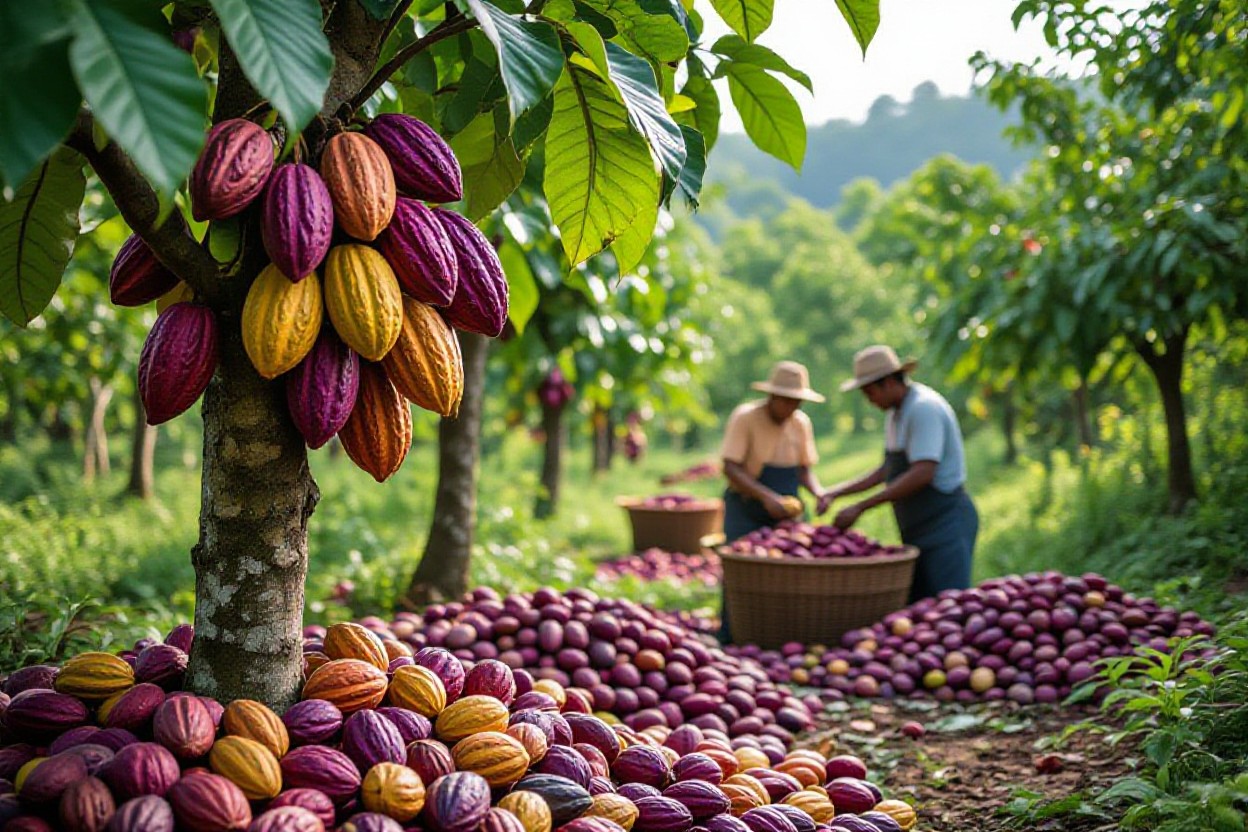
You face logistical, regulatory and market barriers when scaling circular economy cocoa solutions: pods are bulky and seasonally concentrated in Côte d’Ivoire and Ghana, which together supply over 60% of the world’s beans, making collection and transport costly; processing technologies remain fragmented; and policy frameworks lag behind innovation. For practical guidance on on-farm circular loops see Circular Economy For Cocoa Pods, which highlights how pilots link pod valorization to fertilizer and bioenergy streams to reduce waste while advancing circular economy cocoa practices.
Scaling Up Innovations
You must solve collection, drying and processing at scale: pods are generated on small, dispersed farms, so you need modular drying units, mobile grinders and local cooperatives to aggregate feedstock. Given the dominance of Côte d’Ivoire and Ghana, investing in decentralized hubs that serve clusters of 100–500 farmers lets you capture consistent volumes and integrate circular economy cocoa into existing supply chains without huge centralized plants.
Ensuring Food Safety and Quality
You confront contamination risks—mycotoxins, microbial loads and pesticide residues—when turning husks into food ingredients, so you need validated thermal or enzymatic treatments and laboratory testing to meet food-safety standards; without that, circular economy cocoa products cannot clear retail or export gates.
You must design a safety pipeline: implement HACCP-style controls, batch traceability and validated kill-steps (e.g., drying to <10% moisture plus pasteurization or mild heat treatment) and run routine assays for aflatoxins and microbial indicators. Aligning with EU Novel Foods assessments and national food authorities speeds approvals, while third-party lab certification and farmer training on pesticide use and hygienic handling close critical gaps for circular economy cocoa ingredients entering the market.
Consumer Acceptance of New Products
You encounter sensory and trust hurdles: upcycled cocoa-husk flours or extracts can alter color, fiber and bitterness, so labeling, clear use cases (snacks, fiber-enriched bars) and transparent messaging about sustainability are necessary for circular economy cocoa products to gain shelf space and customer buy-in.
You should run phased product trials—starting with 5–15% inclusion rates in familiar formats (cookies, granola bars) to preserve texture and flavor—then scale up based on blind sensory panels and willingness-to-pay studies. Certification badges (organic, upcycled), influencer tastings and partnerships with trusted brands help you overcome skepticism, while case studies showing reduced farm waste and co-benefits for soil health make circular economy cocoa a tangible value proposition for consumers.
Future Trends in Cocoa Circular Economy
You will see circular economy cocoa scale through policy, tech and market pull; pod husks (about 70% of fruit mass) are being converted to fiber, biochar and feed, while pilot programs aim to process tens of thousands of tonnes of husks annually by 2030. Greater farm-level valorization will raise farmer incomes and lower supply-chain waste as circular economy cocoa moves from niche pilots to mainstream practice.
Advancements in Processing Technologies
You’ll notice enzymatic hydrolysis, mild thermal pretreatment and screw-press extraction becoming standard for pod-husk valorization, cutting energy use and improving yields; lab trials report up to 20% higher polyphenol recovery and modular mobile units let you process on-farm to avoid costly transport, accelerating adoption of circular economy cocoa processing at the cooperative level.
Consumer Preferences for Sustainable Products
You can leverage growing demand: multiple studies show a majority (roughly 50–70%) of shoppers prefer sustainable options and are willing to trade up for traceability; brands using upcycled ingredients and clear claims have seen stronger shelf performance, reinforcing that circular economy cocoa can be a market differentiator for premium and mainstream bars alike.
You should use explicit labeling like “upcycled pod-husk fiber” and transparent sourcing stories, because pilot retail tests and A/B experiments often produce single- to double-digit increases in purchase intent; combining eco-claims with sensory quality lets you convert curious buyers into repeat customers for circular economy cocoa products.
Research and Development in Cocoa By-products
You’ll find R&D focusing on food-grade ingredients, high-value extracts and scalable anaerobic digestion: universities and industry consortia are optimizing fermentation regimes (48–96 hours) and enzymatic cocktails to boost yields, while projects funded by public-private partnerships aim to validate economic models for circular economy cocoa upcycling at village and processing-plant scales.
You can expect more pilot-to-commercial transitions as techno-economic studies demonstrate profitable value chains: examples include trials converting husks into dietary fiber supplements and activated carbon, and AD plants producing biogas to power dryers—these case studies show the pathway from lab innovation to viable circular economy cocoa businesses.
Summing up
Hence you can drive systemic change by adopting circular economy cocoa methods: upcycling pods, cutting chocolate waste, and redesigning supply chains to boost income and cut emissions. circular economy cocoa shifts practices toward local processing and valuable byproducts; circular economy cocoa lowers costs and landfill burden; circular economy cocoa stimulates packaging and ingredient innovation, and circular economy cocoa improves traceability, enabling you to meet consumer demand and secure long-term farm resilience.