In commercial bakery production, fruit fillings are more than flavor additions—they influence texture, bake stability, labeling claims, cost structure, and shelf life. Yet many manufacturers face a recurring dilemma: should they choose high-fruit formulations for authenticity and marketing appeal, or opt for 0% fruit systems designed for performance and efficiency? Understanding Fruit Fillings & Jellies for Bakery: 50% Fruit vs 0% Fruit Formulation Explained is essential for making strategic formulation decisions that align with both brand positioning and production realities.
Fruit-based fillings and jellies are widely used in donuts, pastries, layered cakes, cookies, and bread applications. However, not all fillings behave the same under heat, freezing, or long-term storage. A 50% fruit filling delivers real fruit content and visible inclusions, while a 0% fruit formulation relies on flavor systems, sugar matrices, and stabilizers to replicate fruit character without actual fruit solids.
Each approach has distinct advantages and limitations. This article explores how they differ in formulation, processing behavior, shelf stability, and market positioning.
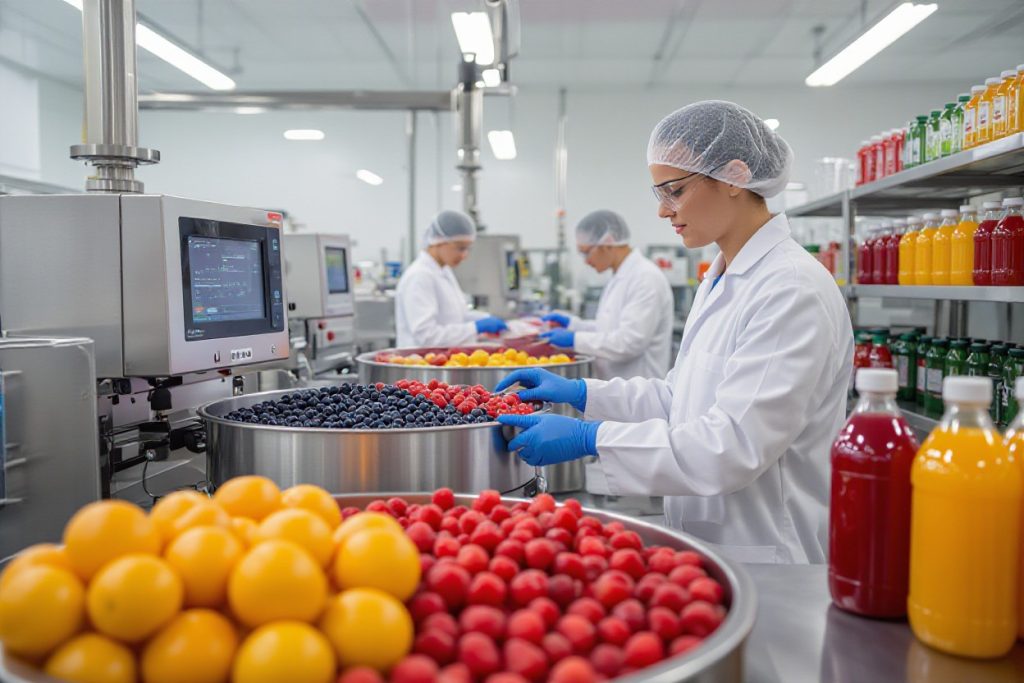
Understanding Fruit Fillings & Jellies for Bakery: 50% Fruit vs 0% Fruit Formulation Explained
To evaluate Fruit Fillings & Jellies for Bakery: 50% Fruit vs 0% Fruit Formulation Explained, we must first define what these percentages mean.
What Does “50% Fruit” Mean?
A 50% fruit filling typically contains at least half of its composition derived from real fruit—either in puree, pulp, or fruit pieces. These fillings:
Offer authentic fruit flavor
Contain natural fibers and fruit solids
Provide visible fruit identity
Support “real fruit” marketing claims
The remaining portion usually consists of sugar, pectin, stabilizers, and acidity regulators to ensure proper gel structure and preservation.
What Does “0% Fruit” Mean?
A 0% fruit filling contains no real fruit content. Instead, it uses:
Flavor compounds
Colorants
Sugar or glucose syrups
Gelling agents such as pectin or starch
These formulations are designed to mimic fruit taste and texture while optimizing processing stability and cost efficiency.
Both types are commonly used in industrial bakeries. The decision depends on target market, distribution model, and processing requirements.
Manufacturers sourcing industrial fruit fillings through specialized ingredient providers, such as those featured on CocoaNusa’s official platform (https://cocoanusa.com/), typically evaluate product specifications including fruit percentage, water activity, viscosity, and bake stability before integration into production lines.
Performance in Baking Applications: Heat Stability and Texture Behavior
One of the most critical aspects of Fruit Fillings & Jellies for Bakery: 50% Fruit vs 0% Fruit Formulation Explained lies in how each formulation performs under heat.
Bake Stability of 50% Fruit Fillings
High-fruit fillings contain natural fruit solids and fibers. During baking, these components can:
Release moisture
Change viscosity
Create slight texture variations
Advanced formulations use pectin systems specifically engineered for bake stability. These systems help maintain structure even under high oven temperatures.
However, real fruit pieces may soften or slightly break down during prolonged heat exposure. While this often enhances authenticity, it requires careful process calibration.
Bake Stability of 0% Fruit Fillings
0% fruit fillings are typically formulated with modified starches and stabilizers optimized for thermal resistance.
Advantages include:
Predictable viscosity under heat
Minimal moisture migration
Consistent texture across batches
Because there are no fruit solids, there is reduced risk of breakdown during baking.
This makes 0% fruit fillings particularly suitable for:
Filled cookies
Industrial pastry production
High-speed donut injection systems
Consistency often outweighs authenticity in large-scale automated operations.
Shelf Life and Water Activity Considerations
Shelf stability is another central factor in Fruit Fillings & Jellies for Bakery: 50% Fruit vs 0% Fruit Formulation Explained.
Moisture Migration and Water Activity
50% fruit fillings typically have higher natural moisture due to fruit pulp. Although sugar content helps reduce water activity, moisture exchange with surrounding bakery components may occur over time.
Potential issues include:
Soggy crust layers
Texture softening
Reduced crunch in layered products
In contrast, 0% fruit fillings can be engineered with tightly controlled water activity levels, minimizing moisture migration.
Oxidation and Color Stability
Real fruit content may be susceptible to oxidation, especially in products exposed to light or oxygen. Natural fruit pigments can fade over extended storage.
0% fruit fillings use stabilized color systems that are often more resistant to fading, ensuring long-term visual consistency.
For packaged products with extended shelf life, 0% fruit systems may provide operational advantages.
Cost Efficiency vs Premium Positioning
Beyond technical behavior, Fruit Fillings & Jellies for Bakery: 50% Fruit vs 0% Fruit Formulation Explained also influences business strategy.
Cost Structure of 50% Fruit Fillings
High-fruit formulations typically have:
Higher raw material costs
Greater exposure to fruit price volatility
Seasonal supply variations
However, they support premium labeling claims such as:
“Made with real fruit”
“High fruit content”
This can justify higher retail pricing and enhance brand differentiation.
Cost Structure of 0% Fruit Fillings
0% fruit systems provide:
Lower and more stable ingredient costs
Reduced dependency on fruit harvest cycles
Longer shelf life
These benefits are particularly relevant for mass-market bakery brands prioritizing cost control and consistent supply.
Choosing between authenticity and operational efficiency requires aligning product formulation with target customer expectations.
Sensory Profile and Consumer Perception
Taste and visual appeal strongly impact purchasing decisions. In evaluating Fruit Fillings & Jellies for Bakery: 50% Fruit vs 0% Fruit Formulation Explained, sensory outcomes must be considered.
Flavor Authenticity
50% fruit fillings deliver natural fruit notes and subtle flavor complexity. Texture variations from fruit pieces enhance perceived authenticity.
Consumers increasingly value ingredient transparency, especially in premium segments.
Flavor Consistency
0% fruit fillings provide uniform sweetness and consistent flavor intensity. Because they rely on controlled flavor systems, they maintain predictable sensory profiles across batches.
For large franchise operations, consistency across outlets is often a primary objective.
Balancing authenticity and reliability is a strategic choice influenced by brand positioning.
Regulatory and Labeling Considerations
Labeling claims associated with Fruit Fillings & Jellies for Bakery: 50% Fruit vs 0% Fruit Formulation Explained must comply with regional food regulations.
High-fruit formulations may qualify for specific labeling claims depending on local standards.
0% fruit fillings must be accurately labeled according to ingredient composition and flavor representation requirements.
Manufacturers should ensure compliance with relevant food safety and labeling frameworks before market distribution.
Definitions and compositional standards for fruit-based spreads and jellies are guided by international frameworks such as the Codex Alimentarius, which outline minimum fruit content and labeling requirements in many markets.
Choosing the Right Formulation for Your Bakery Strategy
There is no universal answer when comparing Fruit Fillings & Jellies for Bakery: 50% Fruit vs 0% Fruit Formulation Explained. The optimal choice depends on:
Product category
Target price point
Shelf life requirements
Distribution channel
Consumer expectations
Premium artisanal bakeries may prioritize 50% fruit fillings to reinforce authenticity.
Industrial producers distributing through wide retail networks may prefer 0% fruit formulations for stability and cost efficiency.
In many cases, manufacturers maintain dual product lines—using high-fruit fillings for premium collections and 0% fruit systems for value-oriented products.
Conclusion: Aligning Formulation with Market Goals
Understanding Fruit Fillings & Jellies for Bakery: 50% Fruit vs 0% Fruit Formulation Explained empowers bakery manufacturers to make informed decisions based on performance, cost, and brand positioning.
50% fruit fillings offer authenticity, visible fruit identity, and premium appeal—but require careful control of moisture and oxidation.
0% fruit fillings deliver consistency, extended shelf life, and operational efficiency—ideal for high-volume production and broad distribution.
By evaluating bake stability, water activity, sensory profile, and supply chain considerations, manufacturers can select formulations that support both technical performance and commercial strategy.
As consumer demand for fruit-based bakery products continues to grow, aligning ingredient choice with production capability and market positioning remains essential. Exploring technical specifications and formulation options through professional ingredient partners can help optimize product development while maintaining quality and efficiency.