
Texture defines quality in bakery and confectionery products. A cookie without crunch feels flat. A chocolate bar without nut contrast lacks character. A topping that turns rancid before the product’s expiry date creates costly returns. For manufacturers, selecting the right nut ingredient is not a minor formulation detail—it directly affects product performance, consumer perception, and shelf life. This is where Diced and Roasted Peanut for Bakery & Confectionery: Cut Size, Roasting Profile & Shelf Stability becomes a critical technical consideration.
Diced and roasted peanuts are widely used in cookies, chocolate bars, snack coatings, fillings, and ice cream inclusions. However, not all peanut ingredients behave the same. Cut size influences texture distribution, roasting profile affects flavor and oil stability, and post-processing conditions determine oxidation resistance.
Understanding these three pillars—cut size, roasting profile, and shelf stability—allows manufacturers to optimize product quality while minimizing operational risk.
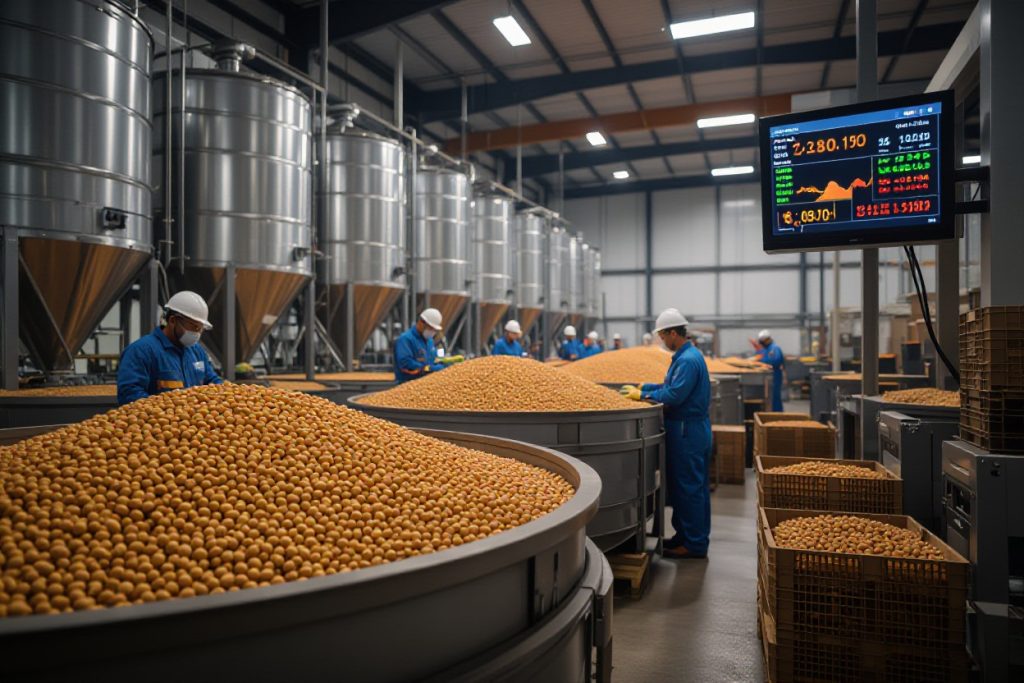
Understanding Diced and Roasted Peanut for Bakery & Confectionery Applications
Before evaluating performance factors, it is important to define what Diced and Roasted Peanut for Bakery & Confectionery actually entails in industrial production.
Diced peanuts are shelled, skinned (where required), roasted, and mechanically cut into controlled particle sizes. Unlike whole peanuts or peanut flour, diced peanuts serve as inclusions or toppings that provide visible nut identity and distinct crunch.
Core Processing Stages
The industrial preparation of diced and roasted peanuts typically involves:
Cleaning and sorting raw peanuts
Dry roasting or oil roasting
Skin removal (blanching) if required
Controlled dicing
Sieving for size uniformity
Packaging under moisture-controlled conditions
Each stage influences final product behavior in bakery or confectionery systems.
Why Diced Peanuts Are Preferred in Industrial Settings
Manufacturers favor diced peanuts for several reasons:
Consistent particle size
Easier dosage control
Uniform distribution in dough or chocolate
Controlled roasting flavor
Reduced breakage compared to whole nuts
In bakery production, diced peanuts maintain structural integrity during mixing and baking. In chocolate manufacturing, they disperse evenly without disrupting tempering or enrobing processes.
When sourcing nut inclusions for industrial use, reviewing supplier specifications—such as moisture content, particle size distribution, and microbiological standards—is essential. Ingredient partners specializing in bakery and confectionery raw materials, such as those featured on CocoaNusa’s official platform at https://cocoanusa.com/, typically provide technical data to support formulation decisions.
Cut Size: Why Particle Dimension Matters in Industrial Formulation
One of the most overlooked aspects of Diced and Roasted Peanut for Bakery & Confectionery is cut size specification. Particle dimension directly impacts texture, processing flow, and product appearance.
Common Cut Size Categories
Diced peanuts are typically categorized into:
Fine granules (for fillings or coatings)
Medium dice (for cookies and brownies)
Large dice (for chocolate bars and premium inclusions)
Each cut size produces a different sensory experience.
Impact on Texture and Mouthfeel
Fine particles distribute evenly and integrate smoothly into batters and creams. They are ideal for peanut-flavored biscuits where uniform taste is desired without large crunch pieces.
Medium and large cuts create distinct bite contrast. In chocolate bars, visible nut chunks signal premium quality and provide structural interest.
However, excessively large particles may:
Sink in batter during baking
Cause uneven slicing in bars
Interfere with enrobing thickness
Precise sieving ensures uniformity and reduces production inconsistencies.
Influence on Processing Efficiency
Cut size also affects:
Mixing behavior
Deposit accuracy
Conveyor flow
Coating adhesion
Smaller particles may absorb more fat in chocolate systems, while larger pieces can create voids if not properly distributed.
Industrial buyers should specify acceptable tolerance ranges for particle size distribution. Even minor variations can influence final product consistency at scale.
Roasting Profile: Flavor Development and Functional Performance
The roasting process plays a decisive role in Diced and Roasted Peanut for Bakery & Confectionery performance.
Roasting not only enhances flavor but also reduces moisture content, improves crunch, and influences oil stability.
Light vs Medium vs Dark Roast
Different roasting profiles produce distinct outcomes:
Light roast: Milder flavor, lighter color, slightly softer crunch
Medium roast: Balanced aroma, enhanced nuttiness, stable texture
Dark roast: Intense flavor, darker appearance, stronger roasted notes
For confectionery applications, medium roast is commonly preferred due to its balanced taste and compatibility with chocolate.
Moisture Control and Water Activity
Proper roasting reduces moisture and lowers water activity, which helps prevent microbial growth and texture degradation.
In bakery systems, peanuts with excessive moisture may:
Affect dough hydration
Create uneven baking
Reduce shelf stability
Maintaining controlled moisture levels is essential for long-term product integrity.
Oil Release and Oxidation Risk
Peanuts contain natural oils that can oxidize over time. Over-roasting may increase surface oil exposure, potentially accelerating rancidity if not properly packaged.
Industrial roasting must strike a balance between flavor development and oxidative stability. Precision temperature control and uniform airflow are key to achieving consistent roasting profiles across batches.
Shelf Stability: Managing Oxidation and Storage Conditions
Shelf life is a major concern in Diced and Roasted Peanut for Bakery & Confectionery production.
Peanuts are susceptible to lipid oxidation, which can lead to off-flavors and reduced product quality.
Factors Influencing Shelf Life
Key variables include:
Oxygen exposure
Light exposure
Storage temperature
Residual moisture
Packaging material
Proper packaging—often using moisture-barrier and oxygen-resistant materials—helps extend shelf stability.
Interaction with Finished Products
When incorporated into chocolate or bakery products, peanuts may influence overall shelf life. For example:
In chocolate bars, oil migration can affect texture over time.
In cookies, moisture exchange between peanut pieces and baked matrix may soften crunch.
Formulators must evaluate compatibility between nut inclusions and base product structure.
Best Practices for Industrial Buyers
To ensure stability:
Request peroxide value testing
Confirm maximum moisture specification
Verify roasting date and batch traceability
Store in cool, dry environments
These measures reduce the risk of rancidity and maintain product integrity throughout distribution.
Application Insights Across Bakery and Confectionery Segments
The versatility of Diced and Roasted Peanut for Bakery & Confectionery makes it valuable across multiple product categories.
Bakery Applications
In cookies, muffins, and brownies, diced peanuts provide texture contrast and visual appeal. They must withstand oven temperatures without excessive burning or oil leakage.
Controlled roasting ensures flavor remains stable even after baking exposure.
Chocolate and Confectionery
In molded chocolate bars, diced peanuts contribute crunch and structural diversity. Uniform particle size prevents cracking during demolding and packaging.
In enrobed snack bars, peanut inclusions must adhere well to chocolate coating without detaching during handling.
Ice Cream and Frozen Desserts
Roasted peanuts are used in frozen systems where moisture migration can impact crunch retention. Proper roasting and packaging help preserve texture under cold storage conditions.
Manufacturers should conduct product-specific trials to evaluate performance under actual processing conditions.
Quality Control and Safety Considerations
Beyond functionality, safety remains critical in Diced and Roasted Peanut for Bakery & Confectionery sourcing.
Allergen Management
Peanuts are recognized allergens in many markets. Strict allergen control protocols and clear labeling are mandatory.
Microbiological Testing
Roasting reduces microbial load, but post-roasting handling must maintain hygiene standards.
Traceability
Industrial buyers should prioritize suppliers capable of:
Batch traceability
Quality certification
Consistent roasting documentation
Reliable supply chains protect both brand reputation and consumer safety.
Given that peanuts are classified as major allergens in many markets, manufacturers must comply with strict labeling and allergen control standards as outlined by regulatory authorities such as the U.S. Food and Drug Administration (FDA).
Why Diced and Roasted Peanut Selection Impacts Long-Term Product Success
In industrial food production, minor ingredient details often produce major consequences. Diced and Roasted Peanut for Bakery & Confectionery: Cut Size, Roasting Profile & Shelf Stability represents more than a sourcing decision—it shapes texture, flavor integrity, and product lifespan.
Selecting the appropriate cut size ensures consistent distribution and bite experience. Optimizing roasting profile balances flavor development with oil stability. Managing shelf stability safeguards against rancidity and quality degradation.
For manufacturers operating in competitive bakery and confectionery markets, investing time in technical evaluation of nut inclusions leads to stronger product performance and greater consumer trust.
Careful specification, supplier collaboration, and pilot testing remain essential steps before scaling production. By aligning ingredient quality with processing demands, manufacturers can deliver consistent texture and flavor across every batch.