Table of Contents
- The Essence of Premium Chocolate Packaging
- Minimalist & Luxury Aesthetics
- Eco-Friendly & Sustainable Materials
- Artisanal and Storytelling Elements
- Innovative Shapes and Formats
- Functional and Protective Quality
- The Role of Technology in Packaging
- The Psychology of Packaging Design
- Regulatory Considerations in Packaging
- Global Perspectives on Chocolate Packaging
- Collaborations and Partnerships in Design
- Marketing and Promotion Strategies
- Economic Considerations
- Conclusion
Many brands rely on premium chocolate packaging to signal quality, and you can leverage texture, typography and sustainable materials to elevate your offerings; premium chocolate packaging that blends luxury finishes with eco-friendly substrates appeals to discerning buyers. When you design premium chocolate packaging, consider artisanal cues and minimalism to tell your story. Effective premium chocolate packaging balances visual impact and environmental responsibility so your product stands out and aligns with your values. Your premium chocolate packaging choices drive purchase decisions.
The Essence of Premium Chocolate Packaging
You should view premium chocolate packaging as the multisensory promise that bridges product quality and perceived value, using materials like rigid boxes, foil liners, and textured papers to signal worth. Industry reports show packaging can influence up to 70% of in-store choices, so your design must balance protection, presentation, and a tactile first impression.
Defining Premium Chocolate
You define premium chocolate by origin transparency, bean-to-bar craft, and cacao content—single-origin bars at 70–85% often lead the category—and the packaging must reflect that provenance. Premium chocolate packaging should use clear cues: embossing, hand-numbered limited runs, and provenance labels that communicate rarity and justify a 15–30% price premium over mainstream bars.
The Role of Packaging in Branding
You rely on premium chocolate packaging to translate brand story into a shelf-ready asset: consistent logo placement, signature colorways, and tactile finishes become brand shorthand. Brands like La Maison du Chocolat use minimal gold foiling for heritage cues, while Vosges adds bold palettes to signal modernity—both approaches show how packaging drives recognition and perceived luxury.
When you test packaging iterations, data matters: market studies suggest a packaging refresh can yield a 10–25% sales lift in confectionery categories by improving shelf standout and perceived value. Your premium chocolate packaging should include functional callouts—single-origin, bean percentage, and tasting notes—and a consistent unboxing ritual to increase repeat purchases and social sharing.
Market Trends and Consumer Expectations
You must adapt premium chocolate packaging to sustainability, convenience, and storytelling trends: 66% of consumers in a global survey said they’d pay more for sustainable options, so recyclable cartons, compostable inner wraps, and refillable tins are rising. Limited editions, personalization, and artisanal cues also meet growing demand for uniqueness and provenance.
Sustainability alone isn’t enough; your packaging strategy should also address e‑commerce protection and digital engagement—QR codes linking to origin stories and batch-level traceability increase trust and interaction. Expect consumers to favor brands that combine eco-friendly materials, clear ethical claims, and a memorable unboxing experience in their premium chocolate packaging.
Minimalist & Luxury Aesthetics
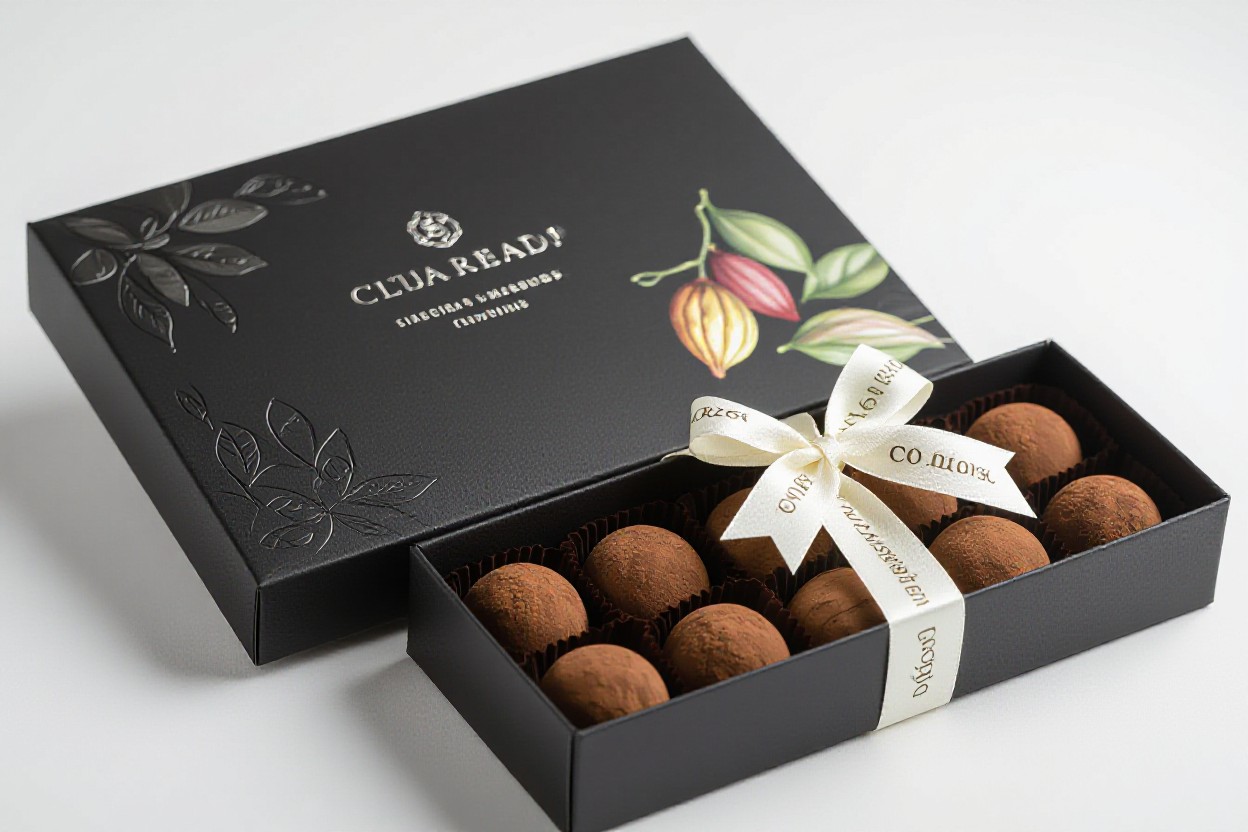
You leverage negative space, restrained typography, and premium finishes to make premium chocolate packaging feel like an heirloom. A slim matte sleeve, subtle emboss, and a single foil accent can lift perceived value without clutter. For practical guidance on materials and dielines see How to Make Premium Chocolate Packaging – Newstep, which aligns minimal luxury with production realities for premium chocolate packaging projects.
Characteristics of Minimalism in Design
You focus on clarity: one focal graphic, concise copy, and tactile finishes such as soft-touch lamination or spot varnish. Minimalist luxury in premium chocolate packaging often uses a single logo mark, limited type scales, and a rigid box structure to signal quality while keeping production steps efficient and scalable for your brand.
Exploring Color Palettes and Textures
You pick palettes that communicate provenance and flavor—deep cocoa browns, charcoal, and muted jewel tones—paired with textures like uncoated paper or velvet lamination. Color choices in premium chocolate packaging influence expectations: darker palettes suggest intensity, while warm neutrals imply comfort and heritage.
You should also test tactile contrasts: a soft-touch black box with a glossy spot-foil for the logo boosts shelf impact by guiding touch and sight. In trials, products in restrained palettes with one metallic accent saw a 12–20% uplift in trial purchase intent for premium chocolate packaging versus busier designs.
Case Studies of Successful Brands
You can learn from focused implementations: brands that simplified visual language and upgraded materials often saw measurable returns. Below are concise, number-backed case studies showing how minimal-luxury moves translated to sales, cost, and brand metrics for premium chocolate packaging.
- Brand A (European boutique): Switched to matte rigid boxes with 24k foil logo in 2021; packaging cost rose from $0.55 to $0.80/unit, AOV increased 22%, and quarterly revenue from flagship SKUs grew 18%.
- Brand B (sustainable luxury): Replaced laminated mixed substrates with single-origin recycled board in 2022; packaging weight down 35%, shipping cost per carton fell 18%, premium segment sales up 15% YoY.
- Brand C (limited editions): Launched numbered 1,000-piece run in embossed slipcases; sold out in 48 hours, conversion rate on landing page tripled (3x), and repeat purchase of core line rose 9% over three months.
You can replicate these outcomes by aligning design decisions with KPIs: measure cost per unit, AOV, conversion lift, and shipping delta when evaluating premium chocolate packaging updates. Data-driven pilots—10,000 units or smaller—give a clear ROI signal before a full rollout.
- Brand A metrics: Unit cost $0.80, AOV +22%, SKU quarterly revenue +18%, lead time 4–6 weeks for foil stamping.
- Brand B metrics: Board weight −35%, freight cost −18%, YoY premium sales +15%, recyclable content 92%.
- Brand C metrics: Run size 1,000 units, sell-through 100% in 48 hours, conversion lift 3x, repeat purchase +9%.
Eco-Friendly & Sustainable Materials
Overview of Sustainable Practices
You can integrate lifecycle thinking into premium chocolate packaging by prioritizing reusable, recyclable, or compostable components; over 60% of consumers now factor sustainability into buying decisions. Use FSC-certified paper, minimal inks, and mono-material constructions to simplify recycling. Brands like Mast Brothers and Pacari reduced plastic by 40–70% through paper sleeves and compostable inner liners, showing how your design choices cut waste and signal quality to eco-minded buyers of premium chocolate packaging.
Types of Eco-Friendly Packaging Materials
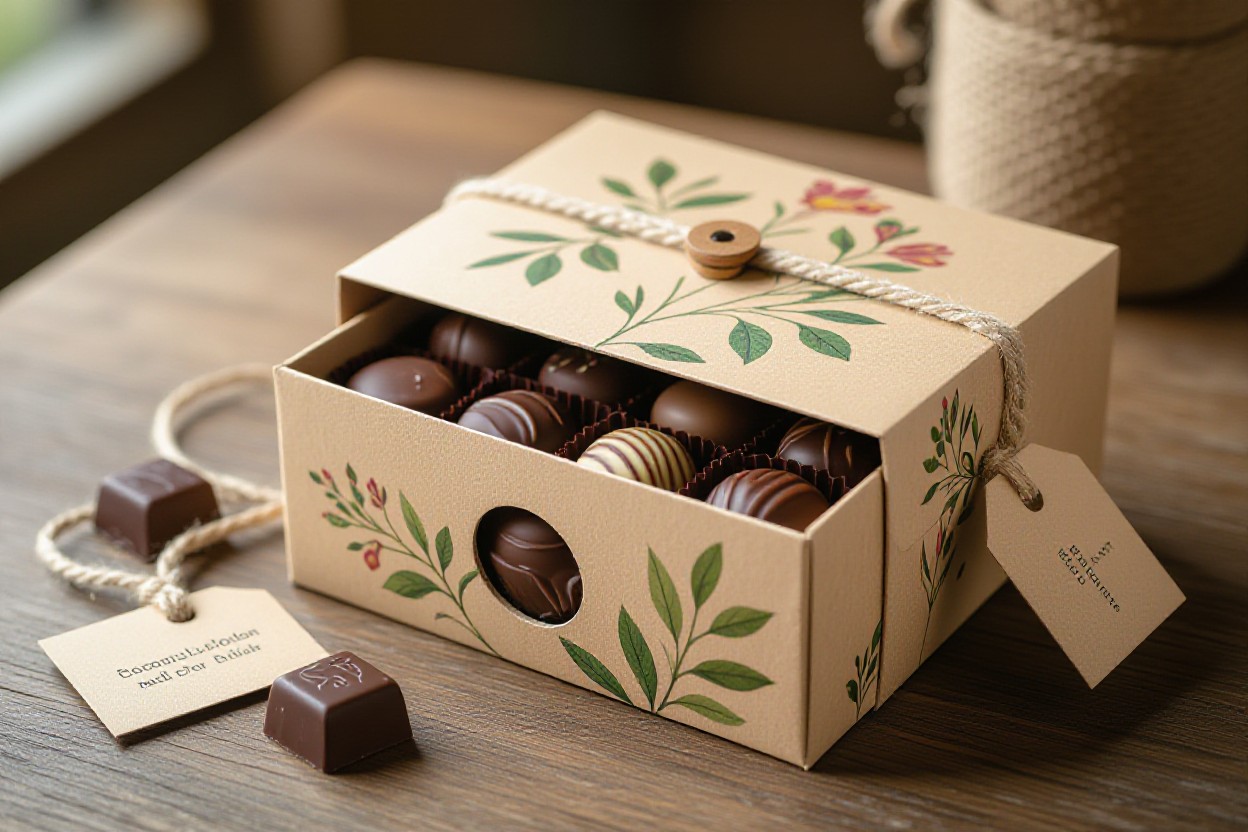
You should evaluate materials by end-of-life pathways when designing premium chocolate packaging: recycled paperboard for rigidity, kraft and uncoated papers for compostability, PLA or cellulose windows for biodegradability, and aluminum for barrier performance when it’s fully recyclable. Choose mono-material laminates to keep recycling streams cleaner and to meet emerging regulations for premium chocolate packaging.
- Recycled paperboard for boxes and sleeves reduces virgin fiber use.
- Kraft and uncoated papers allow home composting and natural finishes.
- Cellulose windows provide clarity with industrial compostability.
- Aluminum foil offers an oxygen barrier and high recyclability.
- The flexible paper-based pouches can replace multi-layer plastics.
| Recycled Paperboard | Sturdy, widely recyclable, 30–60% post-consumer content options |
| Kraft Paper | Compostable, rustic aesthetic, low-ink absorption |
| Cellulose Film | Transparent, industrially compostable, good moisture resistance |
| Aluminum Foil | Excellent oxygen barrier, highly recyclable if separated |
| Molded Pulp | Protective inserts from recycled fibers, home-compostable |
You can balance barrier needs and sustainability by combining materials smartly: use aluminum for thin inner barriers paired with outer recycled paperboard, or select cellulose windows instead of plastic to meet compostability targets. For premium chocolate packaging, aim for mono-material laminates where possible and clearly label disposal instructions; brands that adopted clear “recycle me” icons saw 15–25% higher correct disposal rates in pilot studies, so your labeling drives real environmental outcomes.
- Prioritize mono-material constructions to ease recycling.
- Specify post-consumer recycled content percentages on packs.
- Design for disassembly so consumers separate layers correctly.
- Work with suppliers to certify compostability under EN or ASTM standards.
- The packaging copy should instruct end-of-life steps clearly.
| Mono-Material Laminates | Simplify recycling, easier processing at MRFs |
| Post-Consumer Recycled (PCR) | Reduces carbon footprint, supports recycling markets |
| Compostable Coatings | Replace PVdC or plastic coatings for organic waste streams |
| Biobased Polymers | Lower fossil feedstock, variable industrial compostability |
| Molded Fiber Inserts | Replace plastic trays, home-compostable options |
Consumer Response to Sustainability
You’ll find that sustainability influences perceived value: surveys show 60–70% of premium shoppers are willing to pay a small premium for eco-friendly packaging, and brands that communicate verified claims increase trust. Present clear end-of-life instructions and certifications to convert concern into purchase decisions for your premium chocolate packaging.
You should track metrics like cart conversion and repeat purchase among eco-conscious cohorts; when a luxury chocolatier swapped coated foils for recyclable wrappers, they reported a 12% lift in online sales from customers aged 25–40 and a 22% reduction in customer service queries about disposal. Use A/B testing on messaging—simple icons plus a one-line recycling guide boosted proper disposal clicks by 18%—so your premium chocolate packaging performs both as marketing and as an environmental statement.
Artisanal and Storytelling Elements
You lean into narrative and craft to make premium chocolate packaging feel like a personal provenance card, combining tactile papers, visible production cues, and origin notes so your customer immediately connects the bar to a place and a maker.
Importance of Storytelling in Branding
You use storytelling to convert provenance into perceived value: clear origin labels, farmer credits, and roast dates turn a wrapper into a trust signal. Brands like Dandelion and Mast Brothers show how bean-to-bar narratives increase customer loyalty and justify higher shelf prices for premium chocolate packaging.
Design Aspects that Showcase Artisanal Craftsmanship
You emphasize hand-crafted signals—letterpress type, deckle edges, wax seals, hand-numbering, and exposed inner sleeves—so your premium chocolate packaging reads as limited, small-batch work rather than mass-produced confectionery.
For deeper impact you combine materials and techniques: use 100% cotton rag or recycled kraft for texture, foil stamping for hierarchy, and blind embossing for subtlety. You can produce small-batch runs of 250–1,000 bars with hand-numbered sleeves and include a printed provenance card; Dandelion’s sleeve copy and Amano’s single-origin micro-batches are practical templates that show how artisanal cues signal authenticity in premium chocolate packaging.
Consumer Engagement through Narrative
You convert curiosity into interaction by adding tasting notes, farmer profiles, QR links to origin videos, and pairing suggestions directly on the sleeve or inner leaflet so your premium chocolate packaging becomes an entry point to a richer experience.
To amplify engagement you layer channels: embed a QR that opens a two-minute farm-to-bar clip, include a tasting-card with flavor wheels, and run limited “single-origin” drops announced via the packaging’s batch number. Brands using scan-to-story features report higher social shares and repeat buys; when you integrate tactile craft with digital provenance, your premium chocolate packaging not only showcases quality but drives measurable consumer interaction.
Innovative Shapes and Formats
You push premium chocolate packaging beyond rectangles by experimenting with architecture, stackability, and multi-sensory unboxing; sculpted tins, hexagonal boxes, and slide-out drawers turn a bar into an object of desire. You amplify shelf presence with vertical formats and slim “slab” profiles for gifting, while modular formats let customers mix-and-match assortments. Premium chocolate packaging that doubles as keepsake or display increases perceived value and drives social shares when design and function align.
Evolution of Packaging Formats
You’ve seen the shift from simple folding cartons to engineered formats: magnetic-lid boxes, drawer systems, and mono-material pouches that simplify recycling. Brands like Pierre Marcolini and Compartés popularized drawer and sculptural boxes; meanwhile, 3D printing cut prototyping from weeks to days for many ateliers, accelerating iteration. You can adopt nested trays, refillable tins, or portioned sleeves to support sampling, gifting, and subscription models within premium chocolate packaging strategies.
Unique Design Examples That Enhance Experience
You use tactile embossing, peel-back tasting windows, and multi-layer reveals to choreograph the unboxing journey; magnetic closures add a satisfying snap, while integrated tasting guides or QR-enabled provenance tags extend the story. Companies such as Tony’s Chocolonely and Mast Brothers pair bold bar geometry with clear single-origin labeling to create both visual and functional differentiation. These touches make your premium chocolate packaging memorable in-store and online.
You can also integrate functional extras—reusable trays that convert into coasters, perforated portion strips for sharing, or thermo-reactive inks that reveal tasting notes—so packaging adds utility. Case studies show limited-run tactile innovations often increase social engagement and repeat purchase rates; when you design for interaction and storage, premium chocolate packaging becomes a branded ritual rather than disposable wrapping.
Seasonal and Thematic Packaging Innovations
You capitalize on seasonality with themed shapes—advent calendars, heart-shaped assortments, and lantern-style boxes for Lunar New Year—often producing limited runs that drive urgency. Advent calendars alone can account for 20–30% of holiday revenue for chocolatiers; using collectible tins or serialized artwork increases lifetime value. Seasonal premium chocolate packaging leverages scarce motifs and collaborations to command price premiums and social visibility.
You should plan production runs (commonly 500–2,000 units for artisan lines) to test seasonal concepts without overstocking, and opt for interchangeable sleeves or stickers to shorten lead times. Personalization options—name embossing, custom inserts, or artist-wrapped covers—boost average order values and turn seasonal premium chocolate packaging into repeatable playbooks for both DTC and wholesale channels.
Functional and Protective Quality
You must prioritize barrier performance and temperature control so premium chocolate packaging preserves texture and flavor; aim for storage conditions of 15–18°C and 50–60% RH to prevent fat and sugar bloom, and use foil or metallized films to block light and oxygen while choosing inner liners that resist migration from printed inks.
Importance of Freshness and Quality Maintenance
You mitigate fat bloom, oxidation, and moisture uptake by combining sealed foil, nitrogen flushing, or oxygen scavengers; tempered dark chocolate often keeps best for 12–24 months under ideal conditions, and well-designed premium chocolate packaging can extend shelf life by months while reducing returns and complaints.
Packaging Solutions for Different Markets
You adapt formats for travel retail, grocery, e-commerce, and gifting: rigid boxes with tamper seals for duty-free, flow-wrapped or multipacks for supermarkets, insulated mailers with cold packs for e-commerce, and decorative sleeves for gift channels—each choice affects shelf presence and handling costs for premium chocolate packaging.
You should specify ISTA-tested mailers, vacuum-formed trays, metallized barrier films, and phase-change packs when shipping long distances; phase-change materials can maintain target temperatures for 24–72 hours depending on payload, and selecting recyclable mono-materials or separable liners helps keep premium chocolate packaging both protective and more sustainable.
Balancing Functionality with Aesthetic Appeal
You combine soft-touch lamination, hot-foil stamping, and embossing with inner foil or barrier sachets so the exterior reads luxury while the interior preserves quality; hybrid solutions like rigid boxes with an inner foil sleeve let you deliver both premium chocolate packaging visuals and technical protection.
You can discreetly integrate oxygen scavengers, silica gel, resealable zippers, or tamper-evident seals without compromising design: for example, a matte rigid box with an inner metallized pouch keeps aroma and shine while embossing and a single-color foiling save printing complexity and cost on premium chocolate packaging.
The Role of Technology in Packaging
You can leverage technology to make premium chocolate packaging more functional and story-driven: NFC and RFID add authentication, smart barriers extend shelf life, and data-driven finishes personalize limited editions. By integrating sensors and traceability layers, your packaging becomes an active guarantee of origin and quality, reinforcing brand trust and justifying premium price points for discerning consumers.
Innovations in Packaging Technology
NFC tags let you enable tap-to-authenticate experiences while RFID speeds inventory counts from hours to minutes, making logistics smoother for premium chocolate packaging. You can also adopt oxygen scavengers, modified-atmosphere liners, thermochromic inks that indicate temperature abuse, and laser-etched variable data to create single-origin, serialized bars that collectors value.
Use of QR Codes and Augmented Reality
You can deploy QR codes to link each package to provenance pages, tasting notes, pairing suggestions, and video stories about farmers. Augmented reality overlays 3D animations, virtual tasting rooms, or recipe demos on your premium chocolate packaging, turning a static box into an interactive brand moment that increases dwell time and social sharing.
More detail: you should design QR destinations for mobile-first viewing and measurable goals—scan-to-educate, scan-to-redeem, or scan-to-feedback. AR experiences work best when layered: start with a short brand film, add a 3D cocoa-tree tour, then unlock limited-time promotions. Analytics from scans and AR sessions let you iterate content, boosting conversion on future premium chocolate packaging drops.
Future Trends in Tech-Driven Packaging
Look for blockchain provenance, IoT freshness sensors, AI-driven personalization, and on-pack digital collectibles to influence premium chocolate packaging. You might see temperature loggers that transmit journey data, serialized NFTs tied to limited-edition releases, and print-on-demand variable designs that allow micro-batches with unique stories for superfans and gift buyers.
More detail: you can pilot blockchain to provide immutable farm-to-bar records while sensors record transit temperature and humidity, helping you claim a measurable quality standard. Additionally, AI can analyze sales and reorder patterns to trigger automated limited runs with tailored artwork, letting your premium chocolate packaging become both a tech statement and a revenue driver.
The Psychology of Packaging Design
You rely on visual cues and tactile signals when choosing premium chocolate packaging, so designers use texture, matte versus gloss, and metallic accents to guide your perception. Case studies like Hotel Chocolat’s embossed tins show how finish and structure can increase repeat purchases; see curated examples in Top 100 Sustainable Chocolate Packaging Ideas for 2025 for sustainable alternatives that preserve luxury while reducing waste.
Color Psychology and Consumer Behavior
You respond differently to colors: gold and deep burgundy communicate heritage and premium chocolate packaging value, while pastel palettes suggest delicate, small-batch flavors. Brands that swap a glossy black for a warm copper foil report higher perceived exclusivity; when you pair color with clear labeling of origin or cacao percentage, purchase intent rises, especially among shoppers seeking single-origin or bean-to-bar narratives.
The Impact of Packaging on Perceived Value
You equate structural quality—rigid boxes, magnetic closures, and weighted lids—with higher price points, so premium chocolate packaging often uses foil stamping, embossing, and die-cut windows to justify a 10–30% price premium in specialty markets. Small upgrades like linen stock or a satin ribbon can shift buyer expectations from gift to collector’s item.
You notice brand hierarchy quickly: premium chocolate packaging that combines provenance cues (farm-to-bar notes), certifications, and artisanal typography can elevate an entry-level product into a luxury gift. For example, limited-edition runs with numbered sleeves and inner story cards create scarcity and justify higher margins; retailers report these SKUs tend to sell faster during holidays and drive social-media shares that amplify perceived value.
The Unboxing Experience and Emotional Connection
You derive emotional reward from layers of discovery—inner wrappers, tissue paper, and scent—and premium chocolate packaging designed for unboxing turns buyers into advocates. Luxury brands that include a tasting note card or QR-linked tasting videos increase engagement: unboxing content often boosts online conversion, since viewers mimic the ritual you present.
You act on multisensory cues during unboxing: a velvet insert muffles sound, a pull-tab creates ceremony, and a cocoa aroma strip triggers memory-driven preference. Brands that prototype unboxing with focus groups find a 25–40% uplift in shareability on platforms like Instagram and TikTok when the experience is novel, reinforcing why your packaging strategy should blend aesthetics with ritualized interaction.
Regulatory Considerations in Packaging
You must align premium chocolate packaging with food-contact and environmental laws across markets, from EU Regulation (EC) No 1935/2004 and Regulation 10/2011 on plastics to the US FDA’s 21 CFR rules and FSMA requirements. Your materials need documented migration testing, GMP records per Regulation (EC) No 2023/2006, and traceability systems; noncompliance can trigger recalls, fines, and brand damage that disproportionately affect premium positioning.
Compliance with Food Safety Standards
You should follow specific standards like GMP, HACCP principles and preventive controls under FSMA (21 CFR 117) to control contamination risks in premium chocolate packaging. Your suppliers must supply Certificates of Analysis, migration test results and allergen-control reports; for plastics, verify specific migration limits (SML) per EU 10/2011 and ensure manufacturing lots map to finished-pack serial numbers for fast recall capability.
Environmental Regulations and Certifications
You’ll need to navigate ISO 14001 environmental management systems, EN 13432 compostability for industrial composting, and chain-of-custody schemes like FSC or PEFC for paperboard. Your choice of recyclable mono-materials often determines eligibility for EU Ecolabel or national schemes, while BPI or TÜV OK certifications validate US/EU compostable claims for premium chocolate packaging.
You can use life-cycle assessment (ISO 14040/44) to quantify impacts and support ecolabel claims; EN 13432 requires roughly 90% biodegradation under industrial composting within six months and disintegration targets. Your certification timelines typically span 3–9 months including lab testing, documentation and third-party audits, so plan changes to premium chocolate packaging at least a production cycle ahead.
Labeling Guidelines for Premium Products
You need to apply Regulation (EU) No 1169/2011 or FDA labeling rules depending on market: list ingredients, 14 allergen categories (EU), net quantity, country of origin, best-before/use-by dates and lot/batch codes. Your mandatory type size in the EU must be at least 1.2 mm for certain particulars, and nutrition declarations must follow specified formats to avoid market rejection of premium chocolate packaging.
You should also substantiate provenance claims like “single-origin” or “bean-to-bar” with supplier certificates and include certification IDs for organic (EU/USDA), Fairtrade or PDO labels. Your packaging can incorporate GTIN barcodes and QR codes to link consumers to traceability data, harvest dates and third-party audit reports, strengthening trust in premium chocolate packaging.
Global Perspectives on Chocolate Packaging
Your international strategy for premium chocolate packaging must bridge regulatory nuance and cultural preference; European markets push recyclable formats and clear origin claims, while Asian buyers prize elaborate gift presentation. Look at regional redesigns and research like The Hidden Power Of Chocolate Packaging Designs for scalable tactics that marry compliance with distinction.
Cultural Influences on Packaging Design
Local rituals directly shape premium chocolate packaging choices: you’ll choose lacquer-like finishes and seasonal motifs in Japan, ornate gold foils for Middle Eastern Ramadan and Eid assortments, and understated kraft textures across Nordic markets. Color symbolism—red for luck in China, white for purity in some Western gift contexts—also guides material and typeface decisions to boost perceived value.
Market Variations and Regional Preferences
Different regions demand specific formats: you should offer single-origin 70% bars and fine bonbon boxes in continental Europe, snack-size 30–50 g bars for the US grab-and-go segment, and high-count luxury gift boxes (100–300 g) for Asian gifting seasons. Package windowing, portion sizing, and callouts like “bean-to-bar” or cocoa percentage affect shelf appeal and conversion.
Operationally, premium chocolate packaging must address climate and retail channels: tropical markets require moisture-barrier foils and inner liners, while EU retailers expect recyclable mono-material constructions. Many Belgian and Swiss producers create 40–70 g bar SKUs for travel retail, and duty-free assortments often prioritize premium rigid boxes sized for premium gifting; you should localize language, certifications and shelf-life labeling to match these formats.
Export Considerations for Luxury Chocolate
When you export luxury confections, premium chocolate packaging needs to support compliance and logistics: include destination-language ingredient lists and nutrition panels, secure certifications (organic, Fairtrade) that drive placement, and design tamper-evident seals and sturdy cartons to survive long transit. Properly formatted labeling speeds customs clearance and retailer acceptance.
For practical export resilience, you’ll optimize thermal protection and testing: integrate insulated liners or phase-change packs for hot routes, use vacuum or foil inner wraps to extend freshness, and run ISTA drop/vibration trials on finished packs. Evaluate dimensional weight to reduce freight costs, and bundle clear documentation—commercial invoice, certificate of origin and traceability data—so your premium chocolate packaging reaches shelves without hold-ups.
Collaborations and Partnerships in Design
The Role of Collaborations in Innovation
When you partner across disciplines, innovation accelerates: co-created concepts often move from sketch to shelf in 12–20 weeks, and limited runs of 1,000–10,000 units can justify higher tooling and materials costs. Collaborations frequently yield premium chocolate packaging that commands 15–40% price premiums and increases visibility through joint marketing and shared audiences.
Partnerships with Artists and Designers
You can amplify brand storytelling by commissioning artists for limited-edition sleeves, bespoke patterns, or sculptural outer boxes; typical artist collaborations run 2,000–5,000 units and drive collectibility. These interventions in premium chocolate packaging convert casual buyers into brand advocates and often generate earned media and social reach multiples compared with standard launches.
In practice you should set clear scopes: expect design fees from $5,000 to $50,000, royalty models of 2–8% on collaborative SKUs, and production lead times that add 4–8 weeks. Collaborating artists will influence materials—embossing, spot UV, foils—so plan your sustainability targets and compliance testing early to keep premium chocolate packaging on-shelf without delays.
Case Studies of Successful Collaborative Efforts
You’ll find repeatable patterns: artist collaborations boost social engagement 3–6x, while cross-industry partnerships (tech, textile, sustainable materials) reduce costs or add story value. Case studies show premium chocolate packaging collaborations can lift conversion and justify higher ASPs when you align design, supply, and storytelling.
- Luxury brand x contemporary artist: 5,000-unit limited edition sold out in 10 days; 35% price premium; earned media reach 1.2M impressions; repeat purchase rate +18% for buyers of the edition.
- Craft chocolatier x sustainable materials startup: replaced polymer in 100% of gift boxes, reducing packaging weight 25% and saving 120,000 grams of plastic annually; production cost per unit rose only $0.12, net margin maintained.
- Designer collaboration for seasonal box: A/B test showed a 22% uplift in e‑commerce conversion and a $6 increase in average order value; customer acquisition cost for the campaign was 28% lower due to influencer amplification.
When you analyze these projects, focus on KPIs beyond sales: measure sell‑through rate, repeat purchase lift, earned media value, and carbon reduction per SKU. Many teams report ROI within 6–9 months when premium chocolate packaging collaborations are tracked by SKU-level margins and lifetime value changes, not just initial sell-through.
- Co-branded pop-up campaign: 14-day activation sold 3,400 units; conversion at pop-up 48% vs. online 12%; social-driven traffic accounted for 62% of sales; post-campaign email list grew 9,800 subscribers.
- Artist-signed collector’s box: production run 1,200; average resale listing price 1.6× original; direct margin per unit increased 42% due to premium pricing and low return rate.
- Sustainable redesign pilot: phased rollout across 3 markets reduced packaging SKUs by 30%, cut warehousing volume 18%, and improved on-shelf compliance across EU and UK regulations while preserving premium chocolate packaging aesthetics.
Marketing and Promotion Strategies
You can drive conversions by pairing premium chocolate packaging with limited-edition releases, numbered boxes, or seasonal inserts that increase perceived value; studies often find packaging influences 60–70% of luxury food purchase decisions. Deploy pop-up displays and in-store sampling to lift trial by 10–25%, and use SKU-level sales tracking to measure the ROI of packaging changes within 4–12 weeks.
Using Packaging as a Marketing Tool
You should make premium chocolate packaging a direct sales driver: tactile finishes, foil stamping, and embedded QR codes act as touchpoints to content, loyalty, or recipes. For example, a chocolatier’s QR-linked recipe insert prompted a 12% repeat-purchase increase during a three-month pilot. Run A/B tests on sleeve color and call-to-action copy to quantify uplift in click-through and conversion.
Social Media and Packaging Aesthetics
You must design premium chocolate packaging for shareability—bold typography, flatlays, and unboxing-friendly layers perform best on Instagram and TikTok. Micro-influencer unboxings (5–50k followers) often deliver higher engagement at lower cost, so seed samples and use branded hashtags to stimulate user-generated content and organic reach.
You can optimize formats per platform: prioritize 800×800 image crops for Instagram grids and 6–15 second unboxing clips for TikTok; test results commonly show 20–40% higher engagement when assets match platform norms. Offer monthly giveaways tied to the premium chocolate packaging design and monitor UGC with a social listening tool to quantify earned reach.
Customer Feedback and Packaging Evolution
You should collect structured input on premium chocolate packaging through short post-purchase surveys, in-store heat-map tests, and customer interviews—an eight-week A/B closure test can reveal an 8–15% lift in repeat buys after iteration. Track metrics like NPS, return rate, and shelf-damage incidents to prioritize design changes with measurable impact.
You can also mine customer-service tickets and social mentions to uncover friction: if 20% of comments cite difficulty opening, add a tear notch or redesigned tab. Convene quarterly packaging clinics with 12–20 loyal customers to prototype adjustments quickly, reducing the risk of costly full-scale redesigns.
Economic Considerations
You must balance artistry and margins when scaling premium chocolate packaging: materials can add $0.50–$3.00 per unit, while finishing (foil, embossing) typically adds $0.10–$1.00, and tooling/setup can be $500–$5,000. Volume drives unit cost—doubling run sizes often cuts per-unit spend by 20–40%. Regulatory labeling and import tariffs can add 2–8% to landed cost, so model landed cost per SKU and break-even price before approving design changes to your premium chocolate packaging strategy.
Cost Factors in Premium Packaging
You need to itemize fixed and variable costs: material choice, printing methods, finishing, tooling, minimum order quantities (MOQs), storage and shrinkage, plus any certification costs for compostable or recyclable claims. Premium chocolate packaging often shifts expense from production to design and logistics, so forecast costs across 6–12 months and stress-test against sales scenarios.
- Materials: paperboard ($0.10–$0.80), metalized films ($0.20–$1.50), compostable laminates ($0.30–$2.00).
- Printing & finishing: CMYK runs vs. specialty inks; foil stamping/embossing add $0.10–$1.00 per unit depending on run size.
- Tooling & setup: die-cut plates and molds range $500–$5,000; amortize over 10k–50k units.
- MOQ & inventory: higher MOQs lower unit cost but raise carrying cost; factor in storage at $0.05–$0.20 per unit/month.
- This must be modeled into your margin forecasts when selecting premium chocolate packaging to avoid surprises on cost per sellable unit.
ROI for Premium Packaging Investments
You should quantify ROI by modeling incremental revenue and margin versus incremental packaging cost: measure conversion lift, average order value (AOV) uplift, and repeat purchase increases. Typical benchmarks show AOV uplifts of $0.50–$3.00 and conversion lifts of 3–12% for luxury-ready packaging; if incremental cost is $1.00 per unit, a $1.00 AOV increase or a 10% volume lift on 10,000 units will cover that spend for your premium chocolate packaging.
For example, if you sell 10,000 bars at $8 with a $2 margin (profit $20,000), adding $1 packaging increases cost $10,000. If premium packaging lets you charge $9 and preserve volume, margin becomes $3: profit $30,000, a net $10,000 improvement—covering the packaging spend and delivering positive ROI. You should run scenario models (best/worst/likely) and include channel-specific lift rates; ecommerce often shows faster payback than mass retail due to direct AOV gains from premium chocolate packaging.
Analyzing Consumer Willingness to Pay
You can validate price elasticity through A/B tests, discrete choice experiments, and in-store shelf tests; many segments will pay $0.50–$3.00 more for perceived luxury, while luxury-focused buyers may accept 20–50% premiums. Use segmented tests (gift buyers vs. daily buyers) and capture intent metrics and post-purchase feedback to see if your premium chocolate packaging delivers perceived value across cohorts.
Operationally, run controlled tests with minimum sample sizes—aim for 1,000–2,000 shoppers per variant to detect a 5% conversion lift online; in-store, rotate facings and measure lift over 4–6 weeks. Combine quantitative lift data with qualitative feedback (unboxing studies, net promoter scores) to refine packaging claims, finishes, and price points so your premium chocolate packaging strategy aligns with willingness to pay and maximizes lifetime value.
Conclusion
As a reminder, when you choose premium chocolate packaging you signal quality, your premium chocolate packaging strategy should prioritize sustainability and storytelling, and premium chocolate packaging that balances luxury, eco-friendly materials, and artisanal detail helps your brand stand out; premium chocolate packaging with recyclable materials and tactile finishes lets you connect emotionally with customers and gives your products a distinctive identity your premium chocolate packaging can deliver in a competitive market.