Table of Contents
- The Rise of Iconic Asian Flavors
- Regional Favorites Going Mainstream
- East-Meets-West Flavor Fusion
- The Aesthetics of Asian Flavors
- Health and Wellness Influences
- Innovative Product Development
- Consumer Trends and Taste Exploration
- Cultural Exchanges and Culinary Influence
- The Role of Technology in Flavor Dissemination
- Feedback Loops and Global Recognition
- Case Studies: Successful Brands and Products
- Challenges and Considerations
- Future Trends in Asian Flavors in Confectionery
- Final Words
There’s a wave of Asian flavours in confectionery reshaping global sweets, and you can harness these trends to innovate products from matcha ganache to durian truffles. As a maker or buyer, you use Asian flavours in confectionery to refine balance, texture and cultural storytelling. Your R&D tracks Asian flavours in confectionery for ingredient and process innovation. Product development and marketing improve when you apply Asian flavours in confectionery thoughtfully, ensuring authenticity and broad appeal. Using Asian flavours in confectionery expands your market reach and creates seasonal, cross-category opportunities you can adopt.
The Rise of Iconic Asian Flavors
You’ve seen matcha, ube and pandan move from niche to mainstream, and Asian flavours in confectionery are now driving product innovation across markets. Manufacturers cite regional staples—Japanese matcha, Filipino ube, Southeast Asian pandan—as reliable drivers of trial, with limited-edition runs and collaborations delivering measurable retail uplifts for premium and mass segments alike.
Matcha: The Green Tea Revolution
You’ll spot matcha in everything from KitKat’s specialty editions (Japan has released over 300 regional KitKat flavors) to Starbucks matcha lattes and Häagen-Dazs matcha ice cream. Ceremonial-grade matcha is used for premium truffles and ganaches, while culinary-grade powder scales into mass-market bars and cookies, proving Asian flavours in confectionery can span both artisanal and high-volume production.
Ube: The Purple Yam Phenomenon
When you encounter ube, you’re seeing a Dioscorea alata tradition—ube halaya and halo-halo—that’s crossed into global pastries, with dozens of bakeries in major cities selling out of ube donuts and macarons. Its vivid color and natural sweetness make it an Instagram-ready ingredient that has helped Asian flavours in confectionery attract younger, social-media-driven consumers.
You should note that ube’s versatility extends beyond color: it’s a starchy yam that yields creamy textures ideal for ice cream, cheesecake and spreadable halaya. Food scientists and chefs leverage its mild flavor to pair with coconut, cream cheese and toasted nuts, while manufacturers value ube for reducing the need for artificial coloring in confections.
Pandan: The Fragrant Wonder
You’ll find pandan in chiffon cakes, kaya (coconut jam) and filled buns across Southeast Asia, and it’s now showing up in Western confections as a natural green, aromatic alternative. Because pandan’s aroma comes from 2-acetyl-1-pyrroline—the same compound that gives jasmine rice its popcorn-like scent—Asian flavours in confectionery gain a distinctive, nostalgic aroma that sells well in fusion desserts.
You can use pandan as fresh leaves, paste or concentrated extract: fresh leaf infusions give the most authentic aroma, while stabilized extracts provide consistency for packaged sweets. Producers often pair pandan with coconut milk, pandan syrup or pandan-infused creams to amplify its floral, grassy notes without overpowering other components.
Regional Favorites Going Mainstream
You now spot Asian flavours in confectionery across supermarket shelves and boutique counters, from yuzu curd tarts to masala chai caramels and mango sticky rice ice creams; these examples show how regional recipes adapt to global supply chains and retail formats, driving innovation in texture, shelf life and ingredient sourcing while giving you new ways to experience traditional tastes.
Yuzu: A Citrus Sensation
Yuzu’s floral, tart profile—often described as a mix of grapefruit and mandarin—has been folded into chocolates, sorbets and macarons, and you’ll find it used as a bright counterpoint in ganaches and glazes; producers leverage its aromatic zest and concentrated juice to bring Asian flavours in confectionery a distinctive, high-acid lift without adding sweetness.
Masala Chai: Spiced Elegance in Confectionery
Masala chai’s blend of cardamom, cinnamon, ginger, cloves and black pepper translates into complex spice pastes, infused creams and biscuit doughs, so you can taste chai in everything from truffles to layer cakes; the spice mix gives Asian flavours in confectionery warm, savory notes that pair exceptionally well with milk chocolate and caramel.
To capture authentic chai nuance you should toast whole spices, crack them and steep in warm milk or cream for 10–20 minutes before straining into ganache or custard; a reliable starting blend is 2 cardamom pods, 1 small cinnamon stick, 2 slices fresh ginger and 2 cloves per 250 ml milk, and balancing that infusion against 60–70% dark chocolate or brown butter enhances depth while keeping Asian flavours in confectionery both nuanced and approachable.
Mango Sticky Rice: A Southeast Asian Delight
Mango sticky rice—glutinous rice, rich coconut milk and ripe Nam Dok Mai mango—has inspired ice creams, cheesecakes and bao fillings, and you’ll see its textures and sweet-salty profile adapted into sauces and glazes; incorporating this signature pairing helps Asian flavours in confectionery tap into familiar comfort while introducing tropical complexity.
When you modernize mango sticky rice for confections, focus on textural contrast: use lightly toasted glutinous rice crisps, a coconut custard set with a touch of tapioca starch, and a mango purée stabilized with pectin to hold bright flavor in shelf-stable bars; these techniques let Asian flavours in confectionery preserve authenticity while meeting commercial expectations for texture and shelf life.
East-Meets-West Flavor Fusion
You encounter Asian flavours in confectionery morphing into hybrid classics: yuzu ganache, pandan panna cotta, and sesame brittle meet caramel and praline. Industry notes and supplier briefs — see Taste of Southeast Asia Collection What’s Brewing? — show ingredient sourcing driving product launches, and you can trace collaborations between patisseries and Asian ingredient houses that accelerate adoption across mainstream snacking and premium confectionery.
Miso-Caramel: The Sweet and Savory Blend
You use miso-caramel to add depth: blend shiro or hatcho miso in modest ratios (about 1:8–1:10 miso to sugar) to temper sweetness while boosting umami. In Asian flavours in confectionery this technique appears in filled bonbons, swirl gelatos, and layered bars; you’ll see it in limited-edition collections where chefs aim for a long, savory finish that differentiates seasonal SKUs.
Black Sesame: A Nutty Twist
You find black sesame woven into creams, pastes, and dustings; its toasted, slightly bitter profile lifts ganaches, buttercreams, and macarons. Within Asian flavours in confectionery it functions as both filling and garnish, giving familiar formats an earthy, mineral edge that appeals to consumers seeking nuanced alternatives to vanilla and chocolate.
You can intensify flavor by toasting seeds before grinding into a fine paste, or by pairing black sesame with white chocolate, yuzu, or soy caramel to balance oiliness. Asian flavours in confectionery leverage black sesame’s long use in wagashi and tangyuan to create textures from fluid custards to dense nougat, and you should test emulsion stability and particle size when scaling recipes.
Fusion Desserts: The Adventurous Palate
You witness mashups—mochi donuts, yuzu cheesecakes, durian-filled bonbons—move from niche cafes to supermarket seasonal shelves. Chefs and R&D teams harness Asian flavours in confectionery to target adventurous consumers, often launching 2–8 week limited runs that act as market tests and social drivers, converting viral interest into repeat SKUs when trial and repurchase metrics meet targets.
You should focus on technical balance: encapsulate volatile citrus, control water activity to protect mochi layers, and tune sugar-acid ratios so native aromatics persist. For reliable rollouts, Asian flavours in confectionery require structured sensory panels and 3–5 pilot batches to lock texture and flavor before full-scale production.

The Aesthetics of Asian Flavors
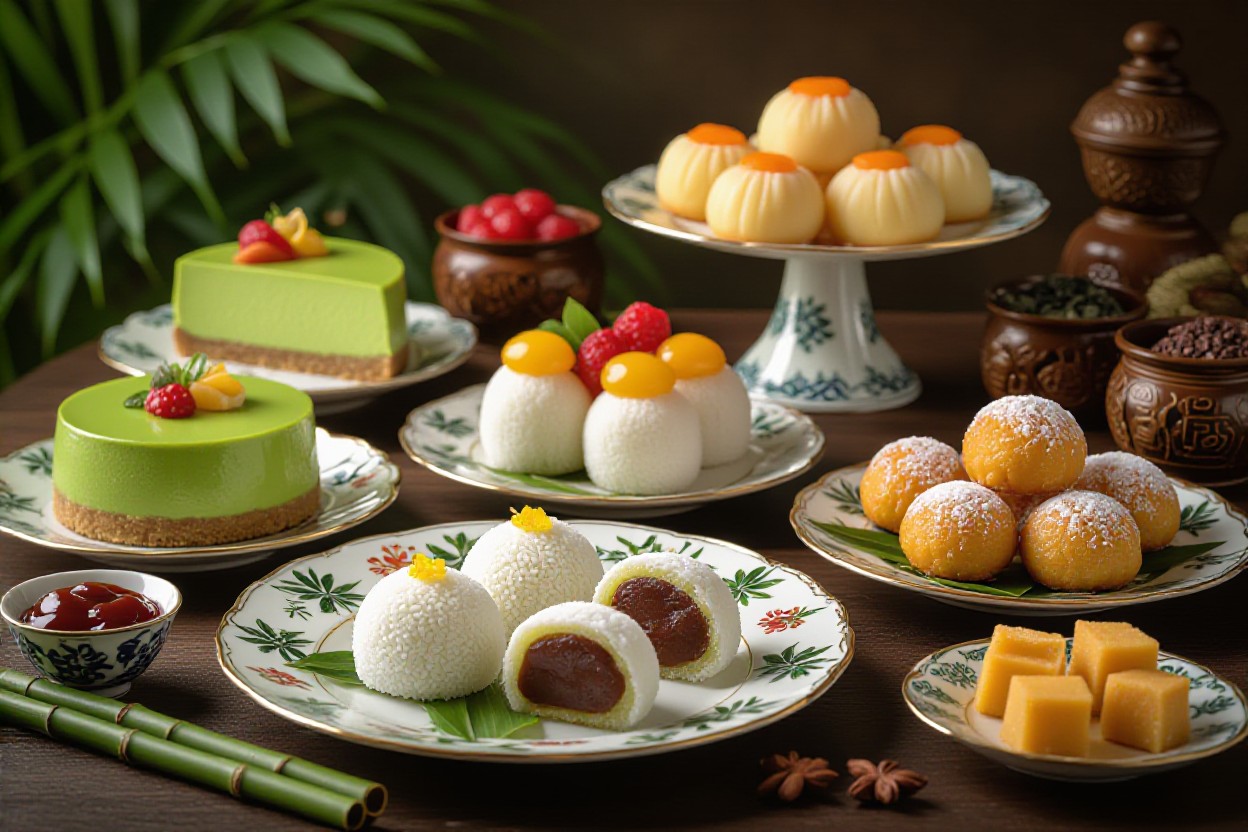
You’ll notice how Asian flavours in confectionery combine visual tradition and modern minimalism to create instant shelf appeal; matcha’s vivid chlorophyll-green, black sesame’s matte charcoal, and yuzu’s pale citrus tone offer a palette that brands exploit. Designers pair these hues with textures—glossy glazes, matte wrappers, translucent mochi—to make products pop in-store and online, and you’ll see premium launches (KitKat Japan’s 300+ limited flavors) leaning hard on color-driven storytelling.
Visual Appeal: Colorful and Intriguing
You’re drawn to contrasts: sakura-pink macarons next to jade matcha confections, or neon dragonfruit fillings against dark chocolate shells. Asian flavours in confectionery drive experimental pairings—think matcha-white chocolate ganache or black sesame praline—that create Instagram-ready cross-sections. Manufacturers increasingly use natural pigments (spirulina, beetroot, turmeric) to hit consistent shades while keeping labels clean and transparent for discerning buyers like you.
Cultural Storytelling in Packaging
You’ll find packaging that teaches as much as it decorates: kanji calligraphy, ukiyo-e prints, and regional maps signal provenance and technique. Asian flavours in confectionery are often sold with origin cues—tea estates, orchard names, temple symbols—so your purchase feels like a cultural encounter, not just a snack. Limited editions tie seasonal motifs to flavor, boosting perceived value and collectability among enthusiasts.
Brands increasingly add layers to that narrative through craft details you can touch: textured washi wraps, embossed seals, and inner liners printed with short origin stories or brewing instructions. Asian flavours in confectionery are promoted via small-batch runs—hundreds to low thousands—so you sense rarity; some premium makers even embed QR codes linking to farmer profiles or tasting notes, letting you trace a bite back to its source.
The Role of Instagram in Popularity
You see trends accelerate on social platforms where #matcha, #mochi, and #bubbletea together generate millions of posts, turning niche tastes into mainstream demand. Asian flavours in confectionery get amplified by visual formats: flatlays, stop-motion unboxings, and macro shots of fillings that cue texture and taste. Brands leverage this by crafting visually coherent feeds and seasonal hashtags to make discovery and sharing effortless for your followers.
Influencer partnerships and user-generated content are central: micro-influencers (10k–100k followers) often deliver higher engagement for niche Asian flavours in confectionery, while pop-up activations create UGC spikes that sustain buzz. You’ll notice brands track engagement closely, shifting production for viral items and releasing limited online-only drops to convert social interest into measurable sales and repeat customers.
Health and Wellness Influences
You see health narratives reshaping Asian flavours in confectionery, with marketers highlighting antioxidants, provenance, and functional benefits; industry coverage like Trend Watch: Asian Cuisine and Flavors Dominate Global … tracks that shift. KitKat Japan’s catalog of more than 300 regional flavors shows how novelty plus perceived wellness drives demand, and you’ll find matcha and turmeric positioned as premium, better-for-you options on supermarket shelves.
Health Benefits of Matcha and Turmeric
You benefit from matcha’s concentrated catechins (notably EGCG) because the whole leaf is consumed, and turmeric’s curcumin has been tested in dozens of trials for anti-inflammatory effects; when you select Asian flavours in confectionery, prioritize items listing real matcha powder or standardized curcumin so your treat delivers measurable functional ingredients per serving.
The Halos of Exotic Ingredients
You notice exotic Asian flavours in confectionery often carry a premium halo—single-origin matcha, artisanal durian caramels, and turmeric-infused bonbons are presented as both exotic and healthful, which shifts perceptions and allows brands to command higher price points and limited-edition storytelling.
You can see this in packaging and launch tactics: luxury chocolatier lines emphasize origin, harvest date, and brewing notes for matcha, while tropical-fruit confection launches use glossy, provenance-led imagery; those cues convince your buyers that the product is artisanal and wellness-minded even when ingredient lists remain short.
Marketing Wellness in Confectionery
You’ll find brands using front-of-pack cues—“antioxidant-rich,” “adaptogen-enhanced,” “reduced sugar”—to signal wellness in Asian flavours in confectionery, and retailers feature these items in health-forward aisles to target millennial and Gen Z shoppers seeking functional treats.
You should watch for specific tactics: QR codes linking to clinical studies, third‑party badges (organic, non‑GMO), and clear ingredient transparency. Legal limits on disease claims mean brands focus on structure/function language and measurable doses (e.g., milligrams of curcumin per serving) so your purchasing decision can be evidence-based rather than purely aspirational.
Innovative Product Development
R&D teams are applying rapid-prototyping to ganaches, caramels and coatings infused with matcha, yuzu, black sesame and durian to turn niche tastes into reliable SKUs. You can see this in Nestlé Japan’s KitKat program of more than 300 regional flavors, where pilot data drives shelf-stable formulas and packaging specs. Product briefs now mandate measurable targets—bitterness, sugar curve, and shelf life—so Asian flavours in confectionery move from pop-up novelty to repeatable production runs.
Global Brands Embracing Asian Flavors
Major players like Nestlé, Mondelez and Ferrero are launching seasonal and premium lines that feature green tea, black sesame and yuzu, often at 10–30% price premiums to test margin resilience. You’ll spot these as limited drops in Tokyo, London and New York, with some matcha KitKats reporting double-digit sell-through during initial windows. Such campaigns legitimize Asian flavours in confectionery within mainstream retail assortments and trade shows.
Local Editions: A Catalyst for Trend Adoption
Local editions—Sakura, yuzu, regional fruit and spice runs—act as low-risk market experiments that you can scale when demand proves durable. Retailers typically limit runs to 2–6 weeks, creating urgency while letting R&D refine sweetness and climate stability. Those pilots accelerate Asian flavours in confectionery from curiosity to items buyers expect to find beyond tourist shops.
Beyond surface testing, local editions give you concrete KPIs—sell-through, repeat purchase and social engagement—that shape global rollouts. For example, Nestlé’s Japan program with more than 300 KitKat variants supplies a continuous pipeline of proven concepts; when sustained interest appears, you adapt recipes for export by tweaking sugar, humidity tolerance and labeling, transforming one-off Asian flavours in confectionery trials into permanent SKUs backed by retail partnerships.
Collaboration Between Asian and Western Chocolatiers
Joint projects between Asian bean-to-bar makers and Western chocolatiers blend terroir-driven ingredients with industrial know-how, producing confections that are both authentic and scalable. You see co-branded collections using single-origin matcha or Okinawan purple sweet potato in pralines that perform well at premium boutiques and online drops. These alliances accelerate mainstream adoption of Asian flavours in confectionery by marrying craft provenance with broader distribution.
When you engage in such collaborations, expect shared R&D cycles—formula transfers, texture trials and co-marketing plans—that shorten time-to-market. Practical outcomes include adapted tempering protocols, shelf-life testing under export climates and co-branded limited editions that validate demand from diaspora and adventurous consumers, enabling you to scale niche Asian techniques into reproducible commercial lines.
Consumer Trends and Taste Exploration
You’re seeing product development pivot as Asian flavours in confectionery move from novelty to mainstream, with matcha, yuzu and durian variants earning shelf space and limited-edition runs. Fast-moving channels amplify this: TikTok surpassed 1 billion monthly users, and industry reports link double-digit sales lifts to viral launches. Consult the 2025 Top 5 Taste Trends in APMEA for regional breakdowns and sourcing insights about Asian flavours in confectionery.
The Adventurous Consumer: Seeking New Experiences
Younger shoppers, especially those aged 18–34, push you toward bolder launches; brands like Nestlé and regional players test durian KitKat and matcha chocolate in limited runs to measure trial. Urban pop-ups and sampling programs convert curiosity into repeat purchase, and you’ll notice product assortments expanding from five to 20+ SKUs to capture exploratory buying of Asian flavours in confectionery.
The Role of Social Media in Flavor Trends
You watch trends accelerate as short-form video and influencer collaborations turn niche flavors into mainstream demand; hashtags and unboxing clips have driven rapid awareness for yuzu and black sesame. With TikTok’s scale and Instagram Reels, social proof shortens your path from discovery to purchase, fueling interest in Asian flavours in confectionery.
Platforms drive action: creators post recipe hacks, ASMR taste tests and retail finds that generate measurable trial—brands report product sell-outs within 48–72 hours after viral posts. You can leverage micro-influencers (10k–100k followers) for targeted cultural credibility, while paid amplification and shoppable tags turn engagement into conversion for Asian flavours in confectionery.
Demographics Driving the Demand for Exotic Flavors
You’ll find that Gen Z and Millennials lead experimentation, while diaspora communities sustain authentic demand; markets like Singapore, Los Angeles and London act as trend incubators. Retail analytics often show higher repeat rates in multicultural neighborhoods, prompting national rollouts after localized success of Asian flavours in confectionery.
Buying patterns show you should segment by occasion: everyday snacks, gifting, and premium limited editions each attract different age and income cohorts. Case studies from specialty retailers reveal that stocking both authentic regional SKUs and hybrid flavors (matcha + salted caramel) increases basket size and broadens appeal for Asian flavours in confectionery.
Cultural Exchanges and Culinary Influence
Across continents you see how trade, migration and tourism accelerate the spread of Asian flavours in confectionery, from matcha ganaches in Paris to pandan fillings in Australian lamingtons. When chefs sample street food on trips or source ingredients from diasporic markets, they adapt techniques and proportions, creating hybrids that respect tradition while scaling for retail; your shelves now host a range of textures and aromatics once confined to local festivals.
How Travel Inspires Flavor Adoption
When you travel, tasting drives adoption: tourists bring back flavors and recipes that artisans replicate at home, spawning matcha pastries in boutique bakeries and yuzu curds in artisan jams. Flight menus and duty-free confection counters amplify exposure, while food festivals like Taste of London and Tokyo’s street markets let you compare sweets side-by-side. These encounters help Asian flavours in confectionery move from novelty to shelf staple in major cities.
The Impact of Asian Diasporas on Global Cuisine
You rely on diasporic communities to introduce ingredients, techniques and demand—Chinatowns, Koreatowns and Southeast Asian hubs stock pandan, adzuki bean and salted egg yolk so bakers can experiment. Local bakeries and supermarket private labels respond, turning regional snacks into nationwide offerings. This grassroots supply-and-demand loop accelerates how Asian flavours in confectionery enter mainstream product lines and seasonal menus.
For example, mochi ice cream emerged from Los Angeles’ Japanese-American community—Mikawaya commercialized it in the 1990s—then spread via specialty grocers and brands like Bubbies into supermarkets nationwide. You see similar arcs with ube and black sesame: vendors in immigrant neighborhoods validate concepts, then co-packers scale recipes for grocery chains. This pipeline—community testbed, boutique success, national distribution—fuels sustained growth of Asian flavours in confectionery.
Cross-Cultural Collaborations in the Confectionery Industry
Brands now partner internationally to fuse expertise: European chocolatiers work with Japanese tea houses to craft matcha ganaches, and Asian snack makers license Western molds for mooncake hybrids. You encounter limited-edition co-branded boxes and pop-ups that test market appetite, often resulting in shelf rollouts. Such collaborations accelerate R&D and legitimise Asian flavours in confectionery in premium and mass segments alike.
In practice, joint R&D labs and co-branding deals reduce risk—a patisserie contributes recipe finesse while a multinational handles distribution—so campaigns sell out quickly and generate social traction. You can quantify impact through metrics like sell-through rates and social impressions: many limited runs report 80–100% sell-outs in days, prompting permanent launches. These measurable wins make Asian flavours in confectionery a strategic priority for product teams.
The Role of Technology in Flavor Dissemination
Technology accelerates how Asian flavours in confectionery travel from regional kitchens to global shelves, and you see it in everything from lab-created aroma profiles to precision supply chains; processors now stabilize delicate notes like yuzu oil or matcha by combining microencapsulation with controlled-release coatings, letting your favorite regional tastes survive months in transit while still tasting fresh on arrival.
Innovations in Flavor Extraction and Application
You encounter advances such as supercritical CO2, ultrasound- and enzyme-assisted extraction that pull cleaner, more concentrated essences from ingredients like pandan, jasmine, and durian; manufacturers then use nanoemulsions and spray-drying to incorporate those extracts into chocolates, gummies, and coatings, so Asian flavours in confectionery retain volatile top-notes without adding moisture or off-notes.
E-commerce and Global Reach for Asian Confections
You can now buy niche Asian flavours in confectionery on platforms like Amazon, Tmall Global, Shopee and specialty D2C sites, and cross-border listings let small artisans reach diaspora and trend-seeking consumers; sophisticated logistics, localized storefronts and targeted social ads mean your product launch can scale from a local market to 10+ countries within months.
You’ll notice measurable examples: a boutique wagashi maker using Shopify plus a fulfillment partner cut time-to-market in half and sold into 12 countries within a year, while matcha brands such as Ippodo and Uji producers combine subscriptions, localized packaging and Amazon FBA to drive repeat purchases; marketplaces report category spikes around festivals, so you can time limited-edition yuzu or durian drops to capture surge demand and analyze buyer data to refine future SKUs—this direct feedback loop propels Asian flavours in confectionery into faster, data-driven product cycles.
Trends in Food Technology Influencing Consumer Choices
You witness trends like clean-label processing, sugar reduction via erythritol or monk fruit blends, and plant-based fat systems that reshape texture and sweetness, steering consumers toward confections that balance authenticity and health; sensory-mapping tools and AI-driven flavor pairing now help you predict which Asian flavours in confectionery will resonate with specific demographics.
Digging deeper, you see large R&D teams at firms such as Nestlé and Givaudan using machine learning to analyze millions of consumer reviews and reformulate products—resulting in monk-fruit-sweetened mochi or sea-salt matcha caramels targeted at low-GI shoppers. Meanwhile, rapid prototyping with 3D food printing and on-demand customization lets you offer limited-run flavor mashups, accelerating how quickly Asian flavours in confectionery move from concept to consumer testing and full retail rollout.
Feedback Loops and Global Recognition
Cultural Appropriation vs. Appreciation
You spot a fine line when Asian flavours in confectionery cross borders: appropriation often strips provenance, while appreciation credits origin and technique. Look for chefs who publish sourcing notes, like patisseries partnering with Japanese tea farms or Filipino bakers teaching ube techniques; that transparency helps your purchases support communities and preserves cultural context rather than commoditizing it.
How Western Trends Influence Asian Innovation
You see Western craft movements reshaping product development across Asia: bean-to-bar chocolate inspired Japanese makers such as Minimal, and the salted-caramel craze prompted chefs to blend miso or yuzu into Western-style caramels. Those hybrid creations push Asian flavours in confectionery into new textures and packaging aimed at global markets.
You can point to concrete examples: Nestlé’s KitKat Japan has released over 300 regional and seasonal variants, and Western demand for artisanal provenance led Tokyo chocolatiers to list bean origin and roast profiles on wrappers. Social media-driven trends in the U.S. also accelerated ube adoption in bakeries, showing how Western platforms and tastes fuel iterative Asian innovation in ingredients and presentation.
The Evolution of Global Confectionery Standards
You notice higher standards as Asian flavours in confectionery enter export channels: traceability, allergen labeling, and grade definitions (e.g., culinary vs. ceremonial matcha) become baseline requirements for shelf placement in Europe and North America. That regulatory pressure raises product quality and forces clearer communication about ingredients and processing.
You can see practical outcomes: brands increasingly use certifications like Fairtrade or Rainforest Alliance, list matcha grade and single-origin cocoa percentages, and adapt formulations to meet EU allergen rules and U.S. FDA labeling. Those shifts mean your options now include premium, transparently sourced Asian flavours in confectionery that meet international expectations for safety and provenance.
Case Studies: Successful Brands and Products
You can see how Asian flavours in confectionery move from niche to mainstream through brand playbooks and data: targeted limited-edition runs, export SKUs, and influencer-driven drops. You’ll notice the same mechanisms—regional sourcing, seasonal scarcity, cross-category mashups—repeated across markets, proving Asian flavours in confectionery scale when you pair authenticity with agile marketing.
- 1) KitKat (Nestlé Japan): Over 300 regional and seasonal SKUs in Japan to date; limited-edition launches drive local store footfall and tourist purchases, with some outlets reporting sell-outs within days and sustained secondary-market resale premiums exceeding 2–3x MSRP.
- 2) Häagen-Dazs (Asia collections): Multi-market rollouts of matcha, black sesame, and adzuki variants expanded Asian SKU portfolios by 20–40% in targeted fiscal years; boutique café openings in China and Korea increased brand store count by double digits in five years.
- 3) Glico Pocky: Distributed in 80+ countries, Pocky’s themed flavors (matcha, sakura) generate seasonal promotional uplifts often cited in the high single-to-double-digit percent range for confectionery snack lines.
- 4) Royce’ and regional chocolatiers: Export growth to East Asia and Southeast Asia led to 30–60% year-over-year increases in popular gift-season months, leveraging single-origin Hokkaido dairy claims and limited HPP shipping runs.
- 5) Lotte/Meiji: Domestic market share leadership in Japan and Korea with diversified portfolios including mochi-filled candies and green-tea confections; trade data shows steady confectionery export volume increases into ASEAN markets.
- 6) Local durian and yuzu innovators: Small brands in Malaysia and Vietnam used durian and yuzu flavors to secure placement in 200+ specialty stores and e-commerce platforms, scoring 10–25% monthly sales growth during peak seasons through cross-border online fulfillment.
KitKat: The Pioneer in Flavor Innovation
You can trace modern experimentation back to KitKat’s region-first strategy: by releasing over 300 flavors—matcha, wasabi, sake, and local fruit variants—KitKat turned Japanese regionality into a global template, showing you how SKU proliferation and limited runs create urgency and tourism-driven confectionery demand.
Haagen-Dazs: Embracing Asian-inspired Flavors
You’ll find Häagen-Dazs combining premium positioning with local taste cues—matcha, black sesame, and red bean—deploying seasonal campaigns and boutique store concepts so you see elevated price points and brand halo effects across Asian and Western markets.
You should note Häagen-Dazs’ tactics: small-batch, ingredient-led storytelling, partnerships with tea houses, and timed exclusives that often lift in-store traffic by double digits; the brand’s emphasis on texture and artisanal sourcing helps Asian flavours in confectionery land in premium ice-cream aisles rather than just novelty bins.
Local Brands Making Global Impact
You can watch local players convert regional favorites into export successes by standardizing recipes, optimizing shelf-stable formats, and using cross-border e-commerce; durian chips, yuzu gummies, and matcha confections have moved from wet markets to global marketplaces through targeted marketing.
You’ll see practical playbooks: small brands scale by launching on two marketplaces, localizing packaging for three target markets, and using influencer seeding to hit 50k–200k impressions per campaign—then reinvesting to expand production—evidence that Asian flavours in confectionery can globalize with lean operations and sharp storytelling.

Challenges and Considerations
You face supply, regulatory and cultural hurdles when scaling Asian flavours in confectionery globally; ingredient seasonality, import tariffs and differing sweetness preferences can raise costs by 10–30% and slow rollouts. Sourcing single-origin matcha from Uji or fresh durian from Southeast Asia requires tailored logistics, so you must plan inventory, traceability and marketing to protect quality while managing margins.
Authenticity vs. Adaptation
You need to balance provenance with palatability: using Nishio or Uji matcha and Filipino calamansi preserves authenticity, but many consumers prefer milder profiles. Brands often reduce concentration 20–50% or pair bold ingredients with familiar elements (white chocolate, caramel) to broaden appeal while still promoting Asian flavours in confectionery as a selling point.
Sustainability in Sourcing Exotic Ingredients
You should vet suppliers for environmental and social practices because rising demand for Asian flavours in confectionery can strain fragile ecosystems; unregulated durian expansion and intensive citrus farming risk biodiversity loss. Certified sourcing and long-term contracts with cooperatives help mitigate supply shocks and reputational damage.
To operationalize sustainability, pursue Rainforest Alliance, Fair Trade or direct-trade agreements and expect supplier premiums of roughly 10–30%. Invest in batch-level traceability (QR codes or blockchain pilots) to prove origin, partner with farmer cooperatives for volume security, and audit seasonal yields so your Asian flavours in confectionery launches remain consistent and defensible.
Pricing Strategies for Premium Flavours
You can position Asian flavours in confectionery as limited-edition or heritage lines and charge 15–50% premiums; test tiered SKUs—standard, single-origin, artisanal—and use small-batch narratives to justify margins while tracking conversion and repeat purchase within 60–90 days.
When setting prices, model ingredient costs (often 20–40% of retail for premium items), factor in small-batch labor and certification fees, and target a 40–60% gross margin. Combine wholesale tiers, limited-release drops, bundling (e.g., matcha + yuzu set) and A/B price tests to find optimal price elasticity for your Asian flavours in confectionery offerings.
Future Trends in Asian Flavors in Confectionery
You’ll see Asian flavours in confectionery move from novelty to mainstream, driven by examples like KitKat Japan’s ongoing matcha innovations and artisanal black sesame truffles; demand is shifting toward seasonal yuzu launches, fermented-miso caramels, and pandan-infused fillings, with dozens of limited runs proving the model for rapid market testing and regional rollouts.
Emerging Flavors on the Horizon
Look for shiso, kabosu, and roasted hojicha to join ube and durian on shelves, while umami-forward twists—miso ganache, sake-lee caramel—are appearing in small-batch lines; Asian flavours in confectionery are expanding into savory-sweet hybrids that you can prototype in 5–10 SKU test drops before scaling.
The Next Generation of Flavor Innovators
You’ll encounter new teams—startup founders, culinary-school grads, food scientists—using enzymatic extraction and microencapsulation to stabilize volatile yuzu oils and preserve fresh pandan notes; Asian flavours in confectionery are benefiting from chef‑scientist collaborations that shorten development cycles and improve shelf life.
Moreover, you can expect AI flavor-mapping tools and pilot kitchens to accelerate iteration: companies are pairing sensory panels with predictive models to identify which blends (for example, black sesame + salted caramel or yuzu + honeycrisp apple) get the highest trial-to-repeat conversion, making Asian flavours in confectionery more commercially viable fast.
Predictions for Consumer Preferences
In the next few years you’ll find consumers favoring lower-sugar, functional versions—matcha with probiotics, ginger with digestive botanicals—so Asian flavours in confectionery will be repackaged to meet health and sustainability expectations while keeping bold, authentic profiles.
Specifically, younger shoppers will drive experimentation through social media-driven scarcity drops, while older customers lean toward comforting red-bean or black-sesame variants; you should segment launches accordingly, using small-batch limited editions to build hype and data, then scale winning Asian flavours in confectionery to national distribution.
Final Words
Following this, you can see how Asian flavours in confectionery—from matcha and yuzu to durian—reshape global palettes, and you can apply Asian flavours in confectionery principles to innovate products that respect tradition while appealing broadly; your brand benefits when Asian flavours in confectionery are balanced for texture and sweetness, and you should document provenance as Asian flavours in confectionery narratives enhance trust; by embracing Asian flavours in confectionery thoughtfully you position your offerings for lasting impact.